

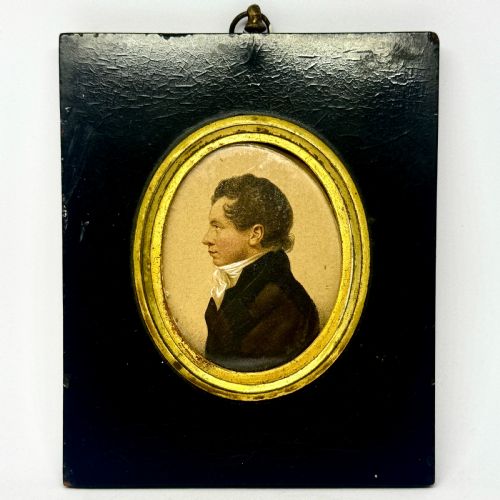


Antique Brass Profile
These antique brass profile pieces capture intimate likenesses in shadow and metal, offering a tangible link to Georgian and Regency sitters.
Antique Brass Profile
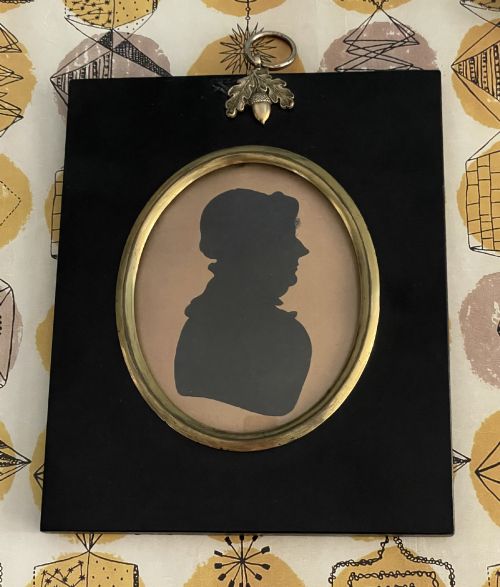
When you search for antique brass profile works, you encounter framed silhouettes, portrait miniatures, and relief plaques that record individual likenesses from past centuries. These items predominantly date from the Georgian, Regency, and Victorian periods, often framed in wood, glass, or papier-mache.
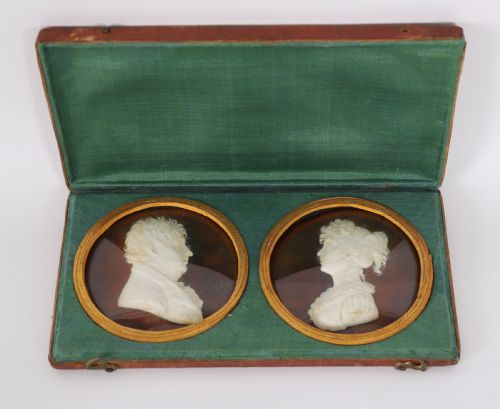
The profile tradition on this page spans distinct mediums, including painted silhouettes with gilded highlights, wax portrait reliefs, and pressed white glass paste cameos. Some pieces bear the names of notable makers like John Miers or George Atkinson, while others record anonymous sitters from the eighteenth and nineteenth centuries.
Judging Quality and Execution
Quality rests upon the precision of the cutter's blade or the fineness of the artist's brush, where sharper contours reveal greater skill. Superior examples demonstrate a lifelike capture of posture and expression despite the strict limitations of the monochrome profile format.
The preservation of the original framing, whether ebony, papier-mache, or brass, significantly elevates the integrity of the piece. Finer works also benefit from documented provenance or legible artist signatures that anchor the identity of the sitter and the maker.
Listings feature works spanning the eighteenth, nineteenth, and early twentieth centuries, executed in brass, glass, paper, and watercolour.
George Atkinson·James Gillespie·Thomas London·J. Deacon·Archibald Skirving·John Miers·Jeremiah Steele
The Antique Brass Profile Glossary
- Silhouette
- A portrait represented as a solid shape of a single colour, usually black on a pale background, outlining the subject's profile. This form gained immense popularity during the eighteenth and nineteenth centuries.
- Miniature Portrait
- A small-scale painting or detailed likeness executed on ivory, card, or vellum. These intimate works were often housed in protective travel cases or wall frames.
- Wax Relief
- A three-dimensional portrait modelled in relief using coloured or tinted wax, frequently mounted on slate or glass. Such pieces required delicate handling due to the soft nature of the material.
- Glass Paste
- A vitreous composition melted and pressed into moulds to imitate carved gemstones or cameos. This technique allowed artisans to replicate classical relief profiles with notable clarity.
- Ebonised Wood
- Timber treated with stain or finish to resemble expensive ebony wood. Makers frequently used this dark framing material to create high contrast against pale silhouette backgrounds.
- Provenance
- The documented history of ownership surrounding an antique piece. Clear provenance adds historical weight and confirms the authenticity of listed works.
Antique Brass Profile: Frequently Asked Questions
What is an antique profile?
An antique profile is a framed portrait depicting a person's head from the side, executed in silhouette, painted glass, wax relief, or glass paste.
These portable likenesses served as personal keepsakes before the widespread adoption of photography in the nineteenth century.
Who was John Miers?
John Miers was a celebrated eighteenth-century profile artist known for his precision silhouettes painted on plaster and ivory.
His work represents a high standard in Georgian profile portraiture and remains sought after by collectors.
How are silhouettes framed?
Period frames typically utilise ebonised wood, papier-mache, or heavy brass mounts fitted with convex glass.
This construction protected the delicate paper cut-outs and watercolours from dust and atmospheric moisture over the centuries.
How do I date a profile?
Dating relies on the sitter's costume, hair styling, framing materials, and any accompanying artist signatures or handwritten notes on the reverse.
Georgian styles often feature high-waisted Regency gowns or powdered hair queues, while Victorian examples show distinct mid-century attire.
Can I hang profiles on walls?
Yes, most framed profiles and brass plaques feature original hanging rings or loops designed for wall display.
Owners should avoid placing them in direct sunlight to prevent the fading of delicate watercolours and paper grounds.