




Antique Brass Pan
When you search for an antique brass pan, you encounter heavy utilitarian kitchenware and preserving vessels forged in Britain and Europe across the Georgian and Victorian eras.
Antique Brass Pan
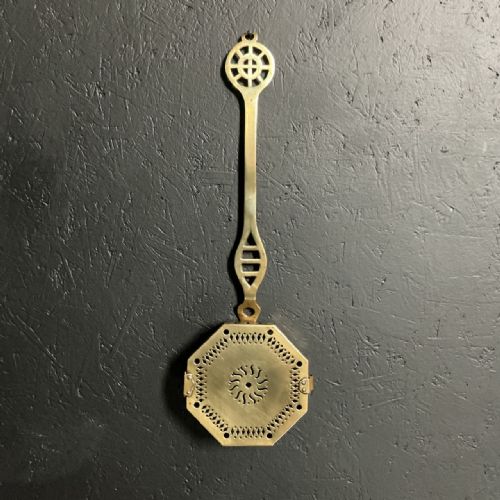
An antique brass pan encompasses domestic cookware, preserve warmers, and warming pans originating from the eighteenth and nineteenth centuries. These vessels served practical culinary and heating functions in period kitchens and hearths.
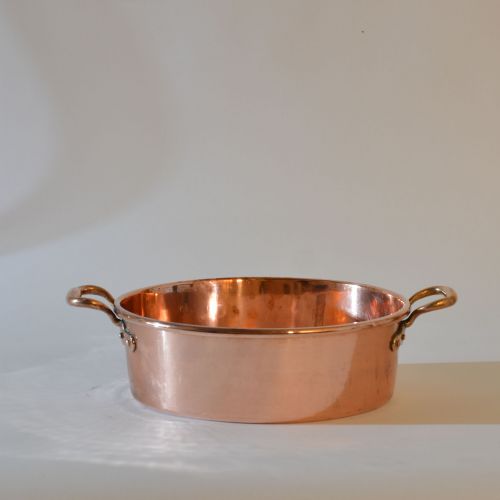
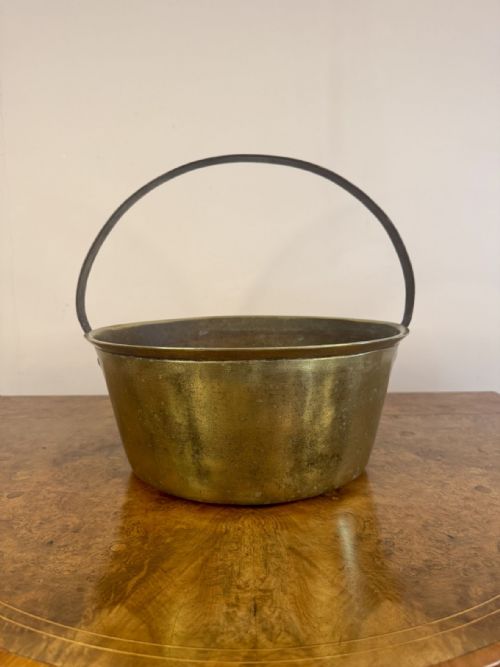
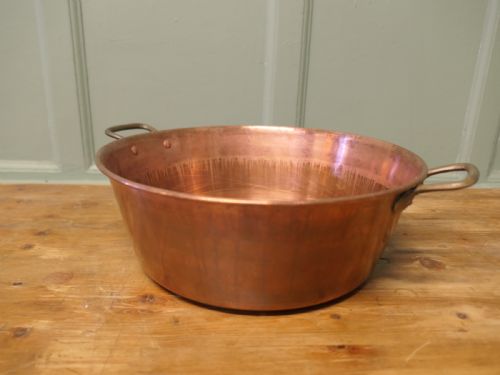
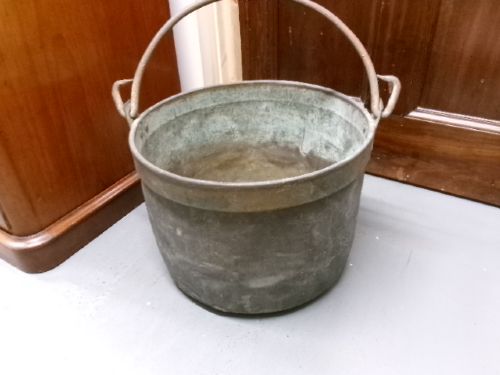
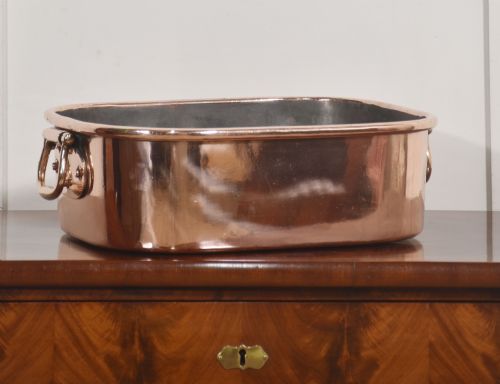
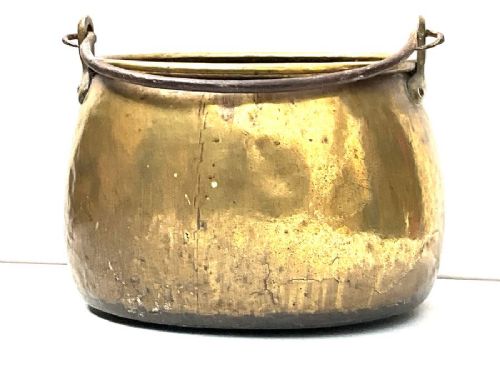
The selections on this page lean heavily toward nineteenth-century Victorian and Georgian examples, including double-handled jam pans, heavy brass saucepans, and chestnut roasters. Many feature contrasting iron handles or swing bails for hanging.
Beyond standard preserving vessels, related forms such as copper-bottomed pans and brazeros appear alongside traditional brass cookware. Pieces span English, French, and Dutch workshops, showing domestic and continental utility.
How they were made
Maker techniques rely heavily on sheet brass or hammered copper bodies joined with visible rivets, paired with wrought iron handles for lifting heavy loads. Casting methods appear in heavier cast brass and bronze specimens, particularly on earlier Georgian items.
Surface finishes reflect working kitchen environments, retaining hammer marks, brazed seams, and age-related patination rather than factory polish. Wooden grips or turned wooden handles occasionally insulate the iron bails on preserving vessels.
Antique Brass Pan Retail Price Guide 2026
Typical asking prices for brass pan among the pieces listed under this phrase on Sellingantiques today, from the lower quarter to the upper quarter. They describe what is for sale here now, not the wider market.
Listings span the eighteenth, nineteenth, and early twentieth centuries, featuring materials such as brass, copper, iron, bronze, and tin.
What varies in quality
Quality rests upon metal thickness, structural integrity, and the retention of original handles and fixings rather than decorative embellishment. Heavy gauge metal resists buckling under heat, separating sturdy culinary workhorses from thin decorative items.
Proportion and execution define the better specimens, where smooth interior hammering, clean rivet placement, and well-balanced swing handles indicate careful workshop production. Maker stamps or retailer attribution add further distinction to surviving kitchenalia.
Hodges and Sons
The Antique Brass Pan Glossary
- Jam pan
- A wide, open preserving vessel designed for boiling fruit and sugar, typically equipped with a swing handle for suspension over a hearth.
- Bail handle
- A curved arched handle attached to opposite sides of a pan, allowing the vessel to hang from a crane or be carried easily.
- Brasero
- A portable hearth or basin used for holding hot embers, common in continental European metalware.
- Wrought iron
- Iron beaten and shaped by hand while hot, commonly utilised for the handles and mounts on heavy brass and copper vessels.
Antique Brass Pan: Frequently Asked Questions
How were antique brass pans used?
These vessels functioned primarily for boiling preserves, heating water, simmering jams, and roasting chestnuts over open hearths or kitchen ranges. Their heavy metal construction ensured even heat distribution for long cooking processes.
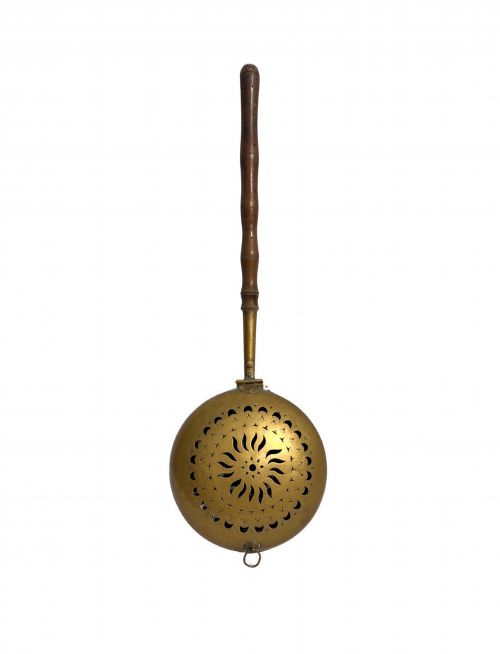
Domestic staff also utilised handled pans for carrying hot coals or warming bedding when paired with pierced covers or long handles. Over time, many transitioned from active kitchen tools to decorative fireside accessories.
How do I clean an antique brass pan?
Preserving the historic surface requires gentle washing with warm soapy water and a soft cloth to remove surface dirt without stripping the aged patina. Avoid harsh abrasive compounds that destroy the natural oxidation built up over centuries.
Collectors generally prefer unpolished metal showing age and use rather than bright modern finishes. If polishing is necessary, use a mild proprietary brass cleaner applied sparingly along the grain.
Can I still cook with an antique brass pan?
Using vintage brass cookware for modern food preparation requires caution regarding interior linings and metal composition. Many surviving vessels lack modern food-safe linings and may contain trace elements unsuitable for daily cooking.
Most buyers display these pieces as decorative items in kitchens, gardens, or beside fireplaces rather than returning them to active culinary service. Inspect the interior thoroughly for corrosion or harmful residues before any practical use.
How do I date an antique brass pan?
Dating relies on manufacturing techniques, handle attachment methods, and the weight of the metal itself. Eighteenth-century Georgian pieces often feature heavier cast components and hand-beaten seams, while Victorian examples frequently utilise machine-rolled sheet brass.
Maker stamps, retailer signatures, and stylistic shifts in handle design also help narrow down the period of origin. Comparing rivet styles and joining techniques against dated benchmark pieces offers reliable chronological markers.