

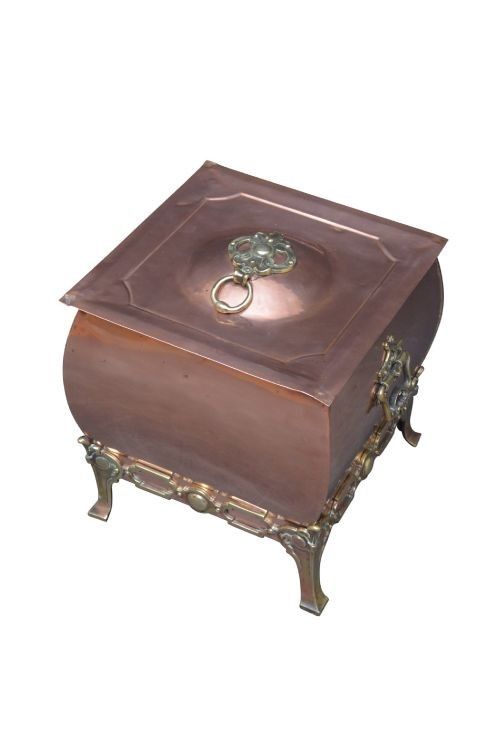
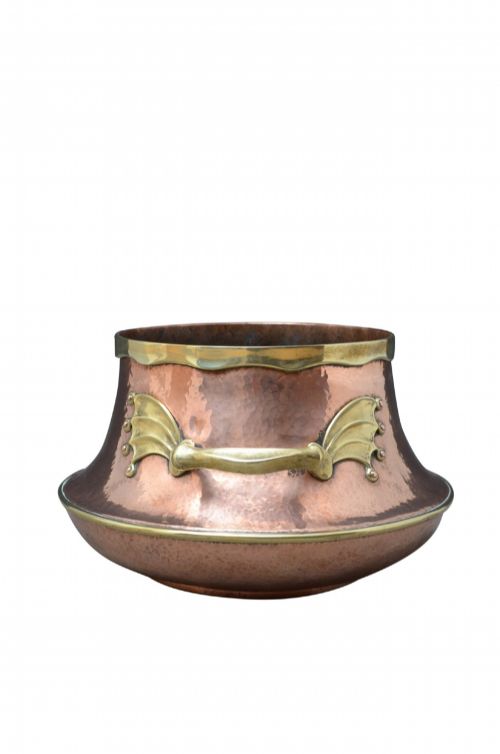


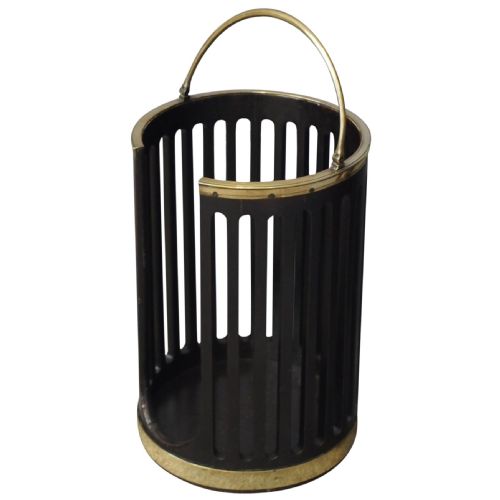


Antique Brass Mounted Bucket
An antique brass mounted bucket brings warmth and function to a room, spanning timber barrels, coal scuttles, and champagne coolers from the Georgian and Victorian eras.
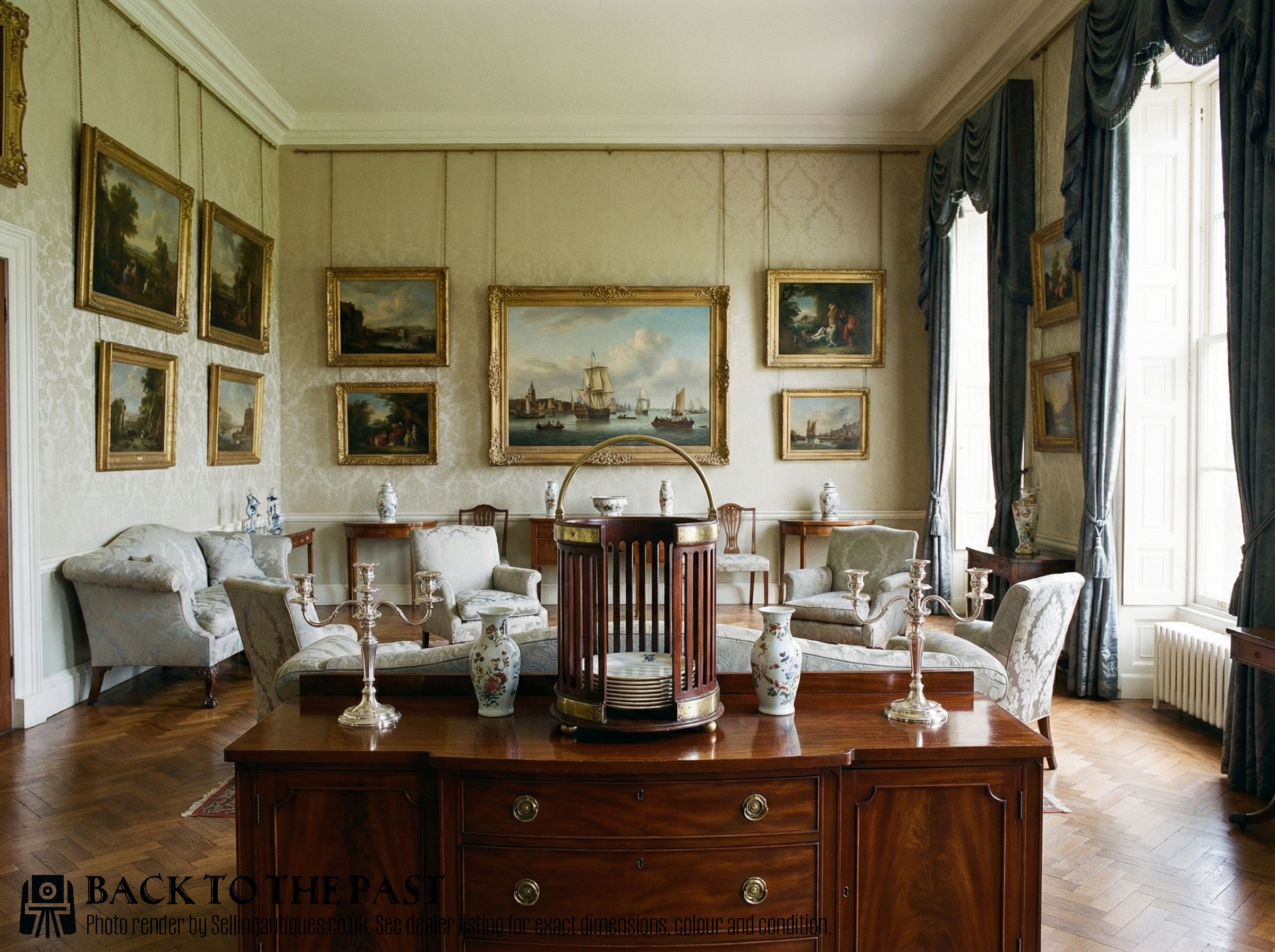
Antique Brass Mounted Bucket
When you search for an antique brass mounted bucket, you find a utilitarian vessel turned decorative object, spanning oak, mahogany, copper, and cut glass forms. These items served practical purposes near the hearth or dining table, holding coal, peat, logs, plates, or champagne.
The version you are most likely to meet on this page is a Victorian or 19th-century copper or brass coal scuttle and planter, alongside George III style mahogany vessels and coopered oak barrels. They range from hammered Arts and Crafts designs to crisp Georgian plate buckets.
Makers utilised these sturdy containers in reception rooms and drawing rooms alike, pairing rich timber or shining metal with robust brass mountings. Their survival reflects solid construction tailored to the domestic routines of past centuries.
How they were made
Makers built timber vessels using traditional coopered barrel techniques, binding staves of oak or mahogany with fitted brass bands to hold the wood secure. Other pieces relied on sheet copper and brass, shaped by hand through hammering and seaming.
Mounts, handles, and paw feet were cast in brass or gilt bronze, then fixed to the bodies with rivets or screws. Liners of tin or zinc were often added inside wooden and metal buckets to protect the materials from moisture and heat.
Antique Brass Mounted Bucket Retail Price Guide 2026
Typical asking prices for brass mounted bucket among the pieces listed under this phrase on Sellingantiques today, from the lower quarter to the upper quarter. They describe what is for sale here now, not the wider market.
Listings feature periods from the 18th century through the Edwardian era, incorporating mahogany, oak, copper, and cut glass.
What varies in quality
Quality rests in the weight of the metal and the selection of timber grain, particularly in the figured mahogany and coopered oak seen across the periods. Thicker gauge copper and crisp casting on brass mounts separate robust everyday items from finer decorative pieces.
Proportion and surface finish dictate the character of each piece, whether it shows the hand-hammered marks of the Arts and Crafts movement or the precise turning of an 18th-century plate bucket.
Samual Norman
The Antique Brass Mounted Bucket Glossary
- Coopered
- Constructed from curved wooden staves fitted together and held tightly by external metal bands, much like a traditional barrel. This method gave strength to wooden buckets and log bins.
- Purdonium
- A specific type of coal box or scuttle, often featuring a sloping front or tipping mechanism designed for domestic hearth use in the Victorian era.
- Cellaret
- A lockable container used to store bottles of wine and spirits near the dining table, often heavily mounted in brass during the Georgian period.
- Gilt bronze
- Metal cast from bronze and treated with a gold wash or mercury gilding to produce a rich, luminous surface finish on mounts and decorative vessels.
Antique Brass Mounted Bucket: Frequently Asked Questions
What did they hold?
These vessels originally held coal, peat, logs, plates, or wine bottles depending on their specific form and domestic setting.
Timber buckets managed tableware or fuel, while metal bins served hearths and dining rooms.
How do I clean brass?
Gentle dusting and occasional cleaning with a mild, non-abrasive metal polish preserve the surface shine without removing historic patination.
Avoid harsh chemical dips that strip away the aged character accumulated over centuries.
Are liners original?
Many wooden and metal buckets include fitted metal liners made of tin or zinc to protect the primary material from damp fuel or melting ice.
These liners often show signs of heavy use that match the wear on the exterior body.
How old is mahogany?
Mahogany pieces span from the Georgian era through later 19th-century revivals, identifiable by timber density and cabinetmaking style.
Earlier examples display simpler, cleaner lines while revival pieces often incorporate heavier brass mounts.