

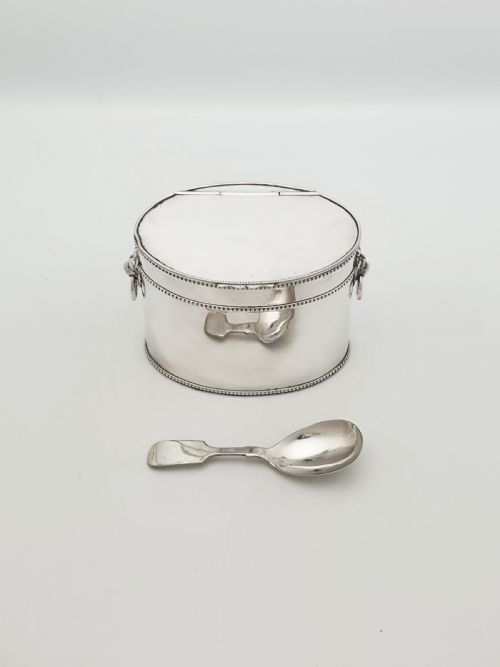


Antique Boxed Spoons
Antique boxed spoons combine fine metals with bespoke fitted cases, offering a complete presentation intended for special occasions or daily dining.
Antique Boxed Spoons
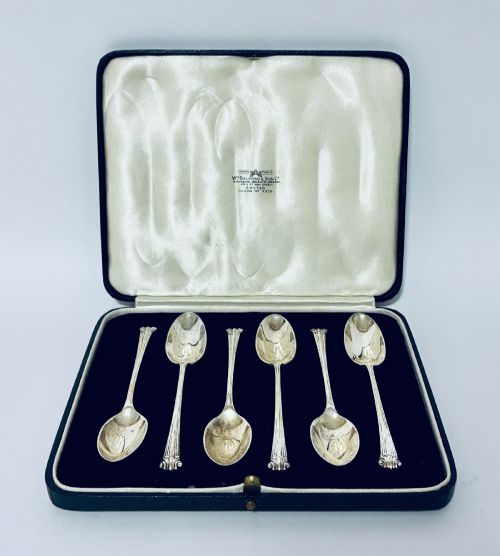
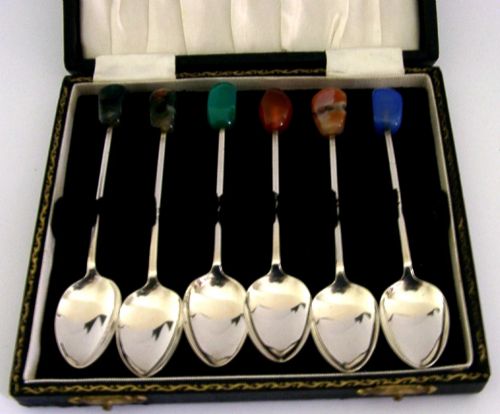
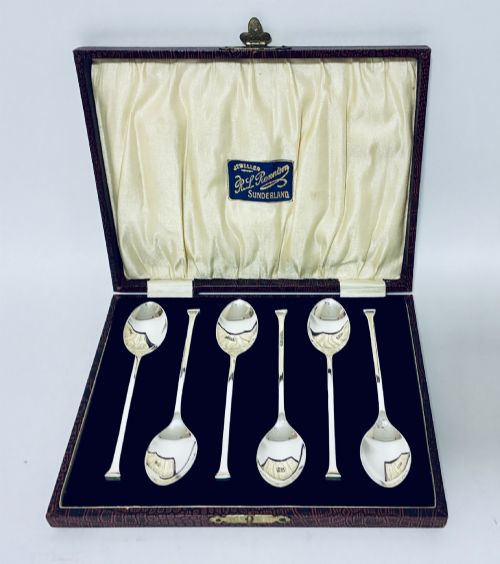
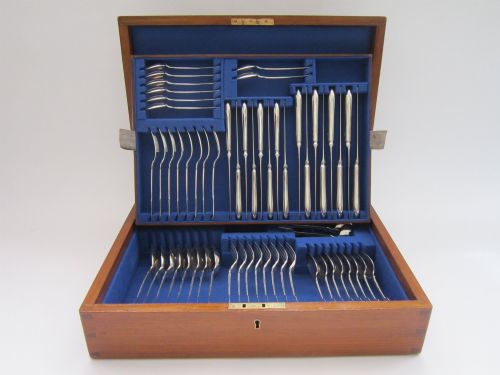
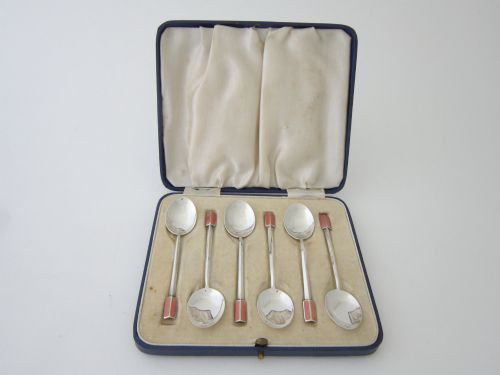
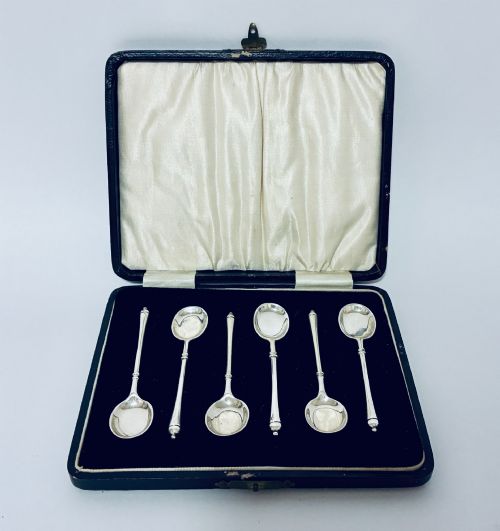
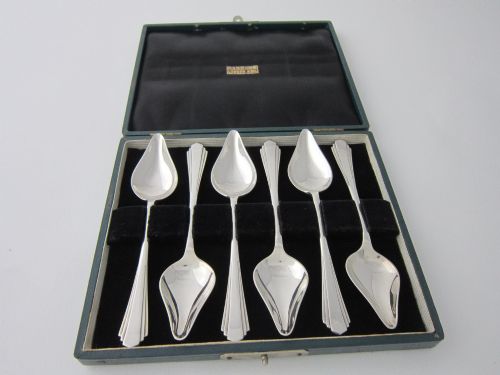
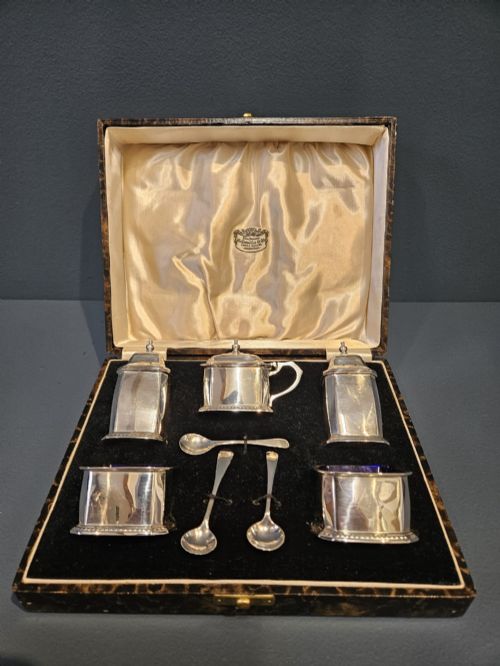
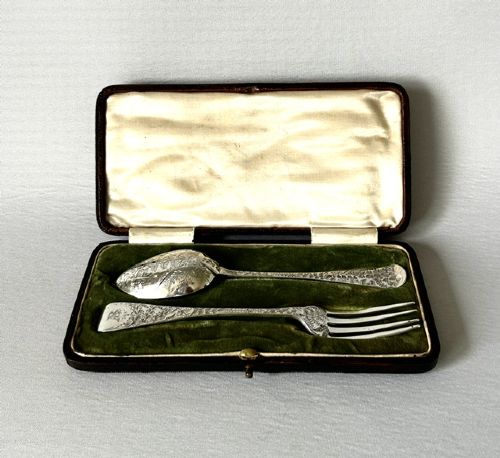
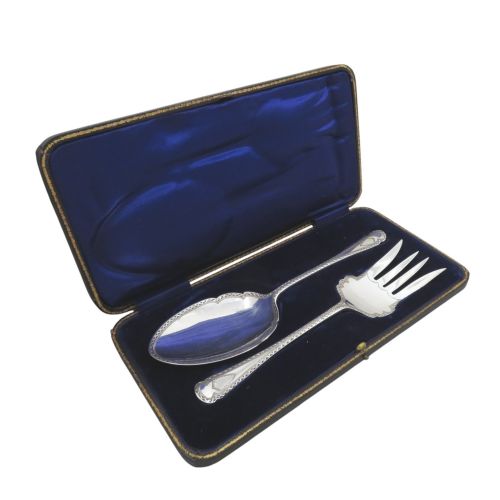
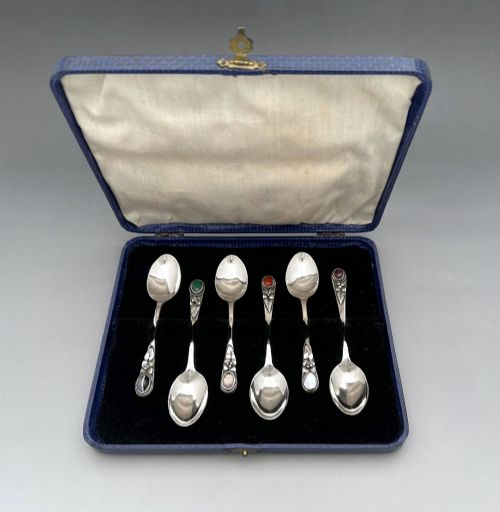
When you search for antique boxed spoons, you encounter matched sets of cutlery resting inside protective velvet, silk, or leatherette lined cases. The forms span individual teaspoons and coffee spoons up to larger serving spoons, fruit sets, and complete christening collections.
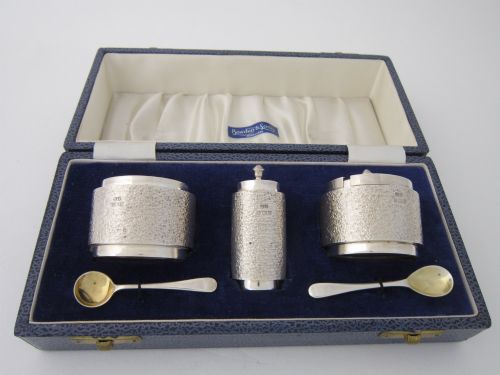
The majority of pieces originate from the Victorian, Edwardian, and Art Deco periods, accompanied by occasional Georgian and mid-century examples. Sets often include matching tongs, sugar bowls, or butter knives alongside the primary spoons.
Presentation boxes vary from simple fitted wooden cases to fabric-lined leather boxes designed to protect the metal from tarnish and wear. These sets were frequently given as gifts for weddings, christenings, and anniversaries.
Materials and construction
The utensils themselves are fashioned primarily from sterling silver, silver gilt, and occasionally plate, sometimes embellished with vitreous enamel, horn, or semi-precious stones. Metalworking techniques include casting, piercing, and hand-engraving, producing distinct styles from Fiddle pattern to elaborate Art Nouveau and Art Deco designs.
Cases utilise rigid frames covered in leather, leatherette, or textured paper, lined internally with moulded silk, satin, or velvet to secure each piece individually. Hinges and clasps are made from brass or base metal, often stamped to match the maker's interior silk lining stamp.
Antique Boxed Spoons Retail Price Guide 2026
Typical asking prices for boxed spoons among the pieces listed under this phrase on Sellingantiques today, from the lower quarter to the upper quarter. They describe what is for sale here now, not the wider market.
The listings show materials spanning sterling silver, enamel, velvet, leather, and horn across periods from Georgian to the mid-twentieth century.
Distinctions in quality
Quality rests in the weight and gauge of the silver, the crispness of the hallmarks, and the integrity of any decorative enamel work. Thicker gauge metal resists bending during use, while sharply struck hallmarks confirm the maker and assay office clearly.
The construction of the accompanying box is a strong indicator of overall grade, with heavy fitted wooden cases lined in thick silk outperforming lightweight cardboard structures. Retaining the complete original set without replacements preserves the unity and desirability of the ensemble.
Goldsmith & Silversmith's·David Andersen·Wilmot Manufacturing Co.·Hukin & Heath·P A W Bateman
The Antique Boxed Spoons Glossary
- Hallmark
- Official stamps struck into precious metals to indicate the maker, standard of purity, and year of assay. These marks provide the primary means for dating British silver.
- Silver gilt
- Sterling silver that has been coated with a thin layer of gold, producing a warm yellow finish. This treatment is often found on the bowls of presentation spoons and christening sets.
- Apostle spoon
- A spoon featuring the figure of an apostle cast on the terminal of the handle. These traditional designs appeared as complete sets or single presentation pieces.
- Cruet set
- A matched group of small containers and spoons designed for condiments like salt, mustard, and pepper. They are frequently housed in fitted leather or velvet cases.
- Fiddle pattern
- A nineteenth-century cutlery style characterised by a stemmed handle that widens into a flattened, shoulders-shaped end resembling a fiddle. It remains one of the most common traditional silver patterns encountered.
Antique Boxed Spoons: Frequently Asked Questions
What were boxed silver spoons used for?
These matched sets served ceremonial and dining purposes, ranging from christening gifts to afternoon tea service and formal dessert courses.
They were kept specifically for guests or milestone events rather than daily kitchen use, which accounts for their surviving in such clean condition.
How should I clean antique silver spoons?
Use a soft microfiber cloth and a mild, specialised silver polish to remove tarnish without abrading the metal surface or any applied enamel.
Avoid immersing antique fitted boxes in water, as moisture damages the internal silk, velvet, and leatherette linings.
How do I identify the date of a boxed set?
Check the reverse of the spoon handles for hallmarks, which include a date letter and assay office mark corresponding to specific years.
The style of the exterior box and the interior typography of the retailer's stamp also help narrow down the decade of production.
Are replacement spoons common in antique boxes?
Spoons can occasionally become separated or replaced over generations, so checking that all hallmarks match the assay year of the set is important.
Matching wear patterns across every utensil indicate that the pieces have remained together since they were first retailed.