

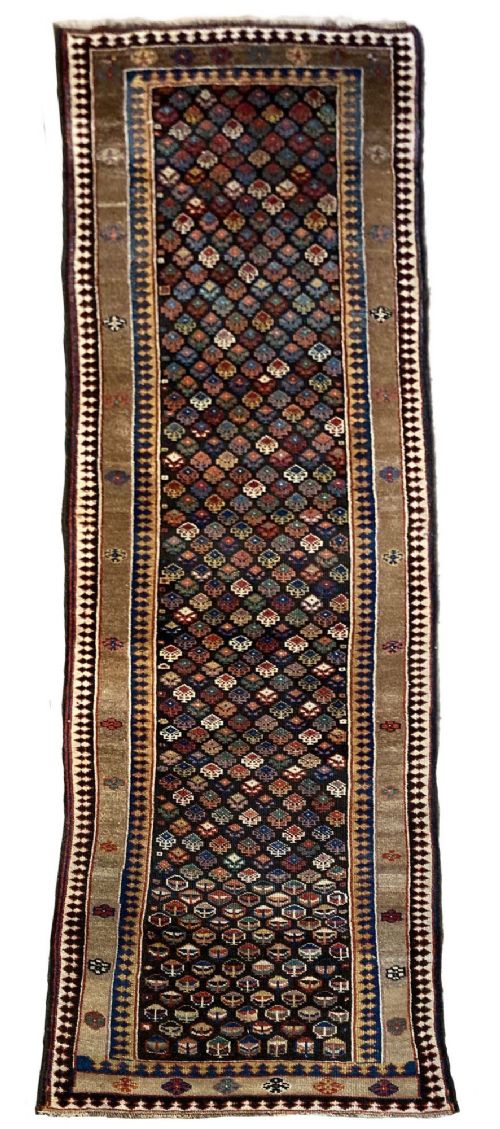


Antique Boteh Carpet
When you search for an antique boteh carpet, you seek a textile bearing the enduring seed or almond motif woven across Persian and Caucasian workshops.
Antique Boteh Carpet
The antique boteh carpet encompasses hand-knotted room-size carpets, smaller rugs, and long runners woven across Persia and the Caucasus during the nineteenth and early twentieth centuries. These textile formats range from the geometric compositions of tribal weavers to the balanced floral layouts produced in urban centres and regional hubs.
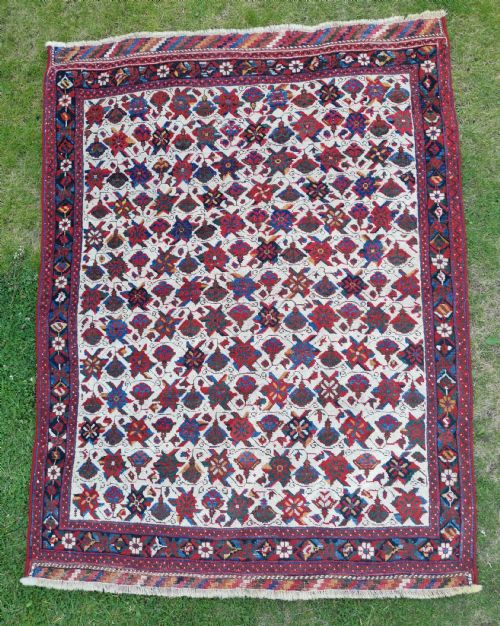
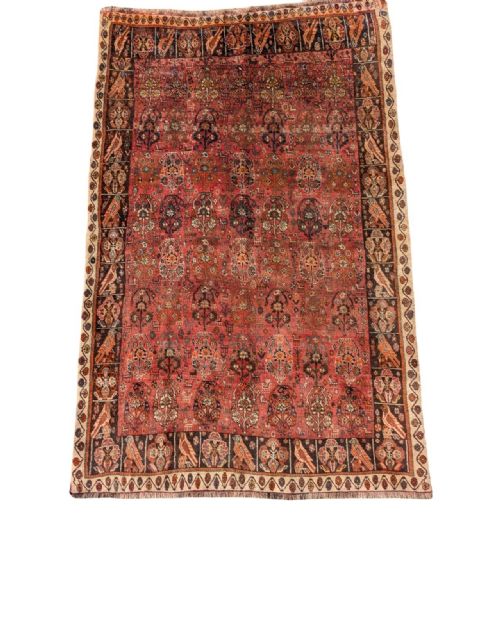
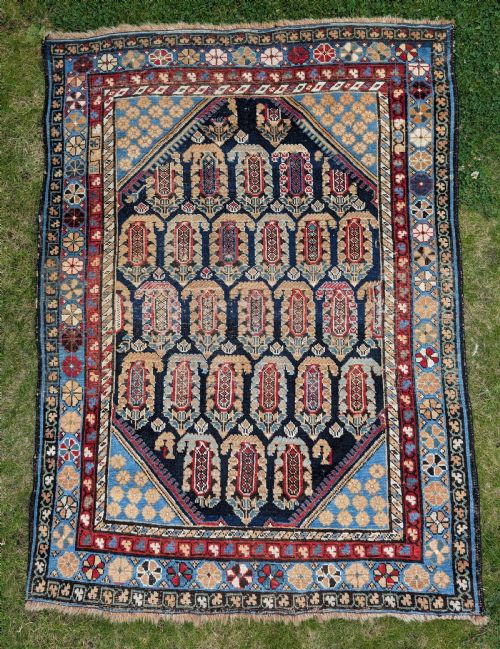
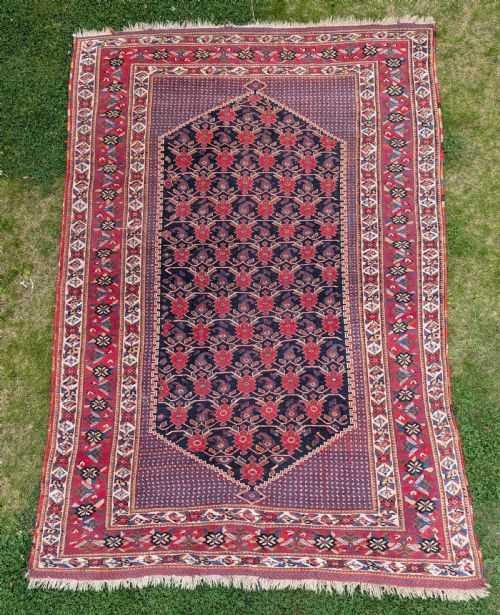
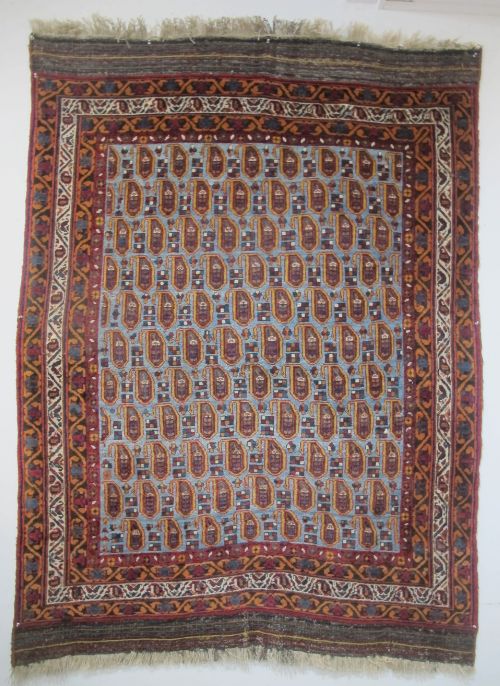
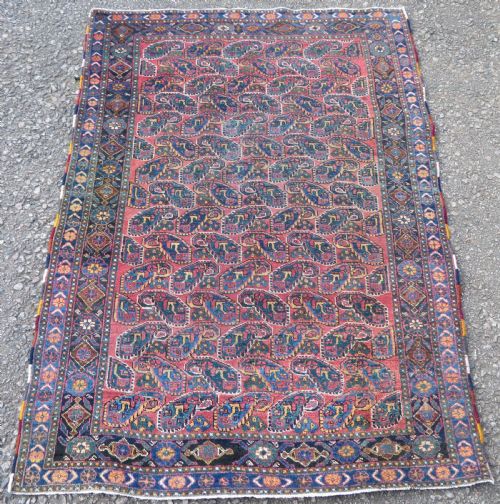
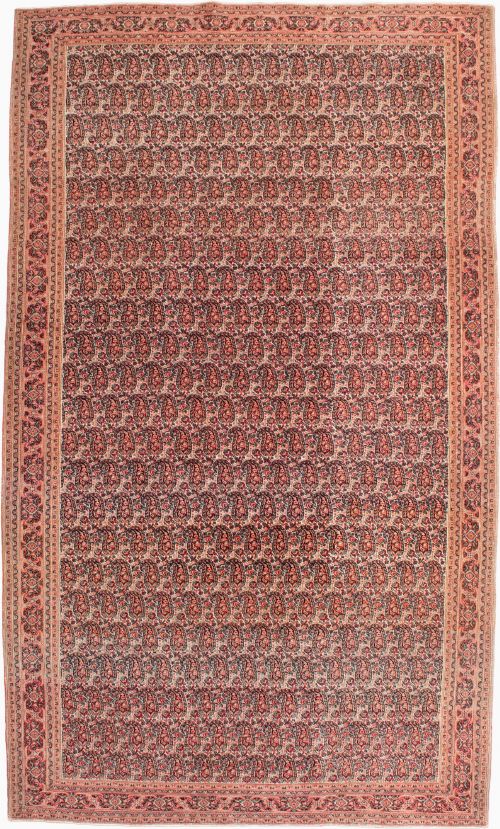
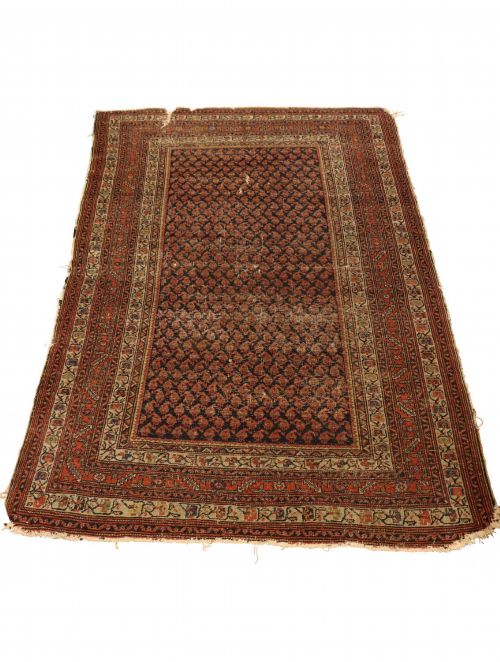
An antique boteh carpet on this page typically displays the distinctive stylised leaf, almond, or flame motif either repeated in all-over patterns, arranged in diagonal rows, or clustered around central medallions. Examples originate from diverse weaving traditions including Afshar, Kurdish, Caucasian, and Khamseh regions, spanning periods from the late nineteenth century up to the 1930s.
How they were made
Weavers constructed these pieces using hand-spun wool and occasional silk foundations tied onto cotton or wool warps, securing the pile with hand-knotted techniques. Many workshops relied on natural dyes to achieve deep colour palettes that developed distinct patinas over decades of use.
The integration of materials dictated the structural integrity of each rug, from the sturdy wool of tribal runners to the finer silk details found in urban carpets.
Antique Boteh Carpet Retail Price Guide 2026
Typical asking prices for boteh carpet among the pieces listed under this phrase on Sellingantiques today, from the lower quarter to the upper quarter. They describe what is for sale here now, not the wider market.
Listings feature wool, cotton, and natural dye materials spanning Persian and Caucasian styles from the nineteenth and early twentieth centuries.
What varies in quality
Quality rests upon knot density, the precision of the drawing, and the depth achieved through natural dyeing methods. Finer pieces demonstrate tight, consistent knotting that preserves the crisp outlines of the boteh motif, whereas coarser weaves adopt a more rustic, geometric interpretation.
The harmony of the palette and the preservation of the original pile and borders further distinguish the finer examples from heavily worn or distressed specimens.
The Antique Boteh Carpet Glossary
- Boteh
- A stylised motif resembling a leaf, almond, or flame, widely used in oriental carpets. It forms the primary decorative element across many Persian and Caucasian tribal designs.
- Knot density
- The count of individual knots per unit of area on the reverse of a rug. Higher densities generally allow for more intricate and curved pattern rendering.
- Natural dyes
- Colourants derived from plants, insects, and minerals rather than synthetic compounds. They yield rich, complex tones that mellow gracefully over time.
- Warp
- The vertical foundation threads stretched tightly on the loom before knotting begins. Weft threads are inserted across these warps to lock the rows of knots in place.
Antique Boteh Carpet: Frequently Asked Questions
How do I identify a genuine boteh carpet?
Examine the reverse of the textile to check for hand-tying and irregular knot structures typical of traditional production. Natural dye variations and hand-spun wool textures provide further indicators of age and origin.
Look closely at the rendering of the boteh motif itself, which varies from geometric tribal interpretations to curved urban styles.
Where were these carpets originally woven?
These carpets originate from diverse regions including Persian tribal areas like Afshar and Khamseh, as well as Caucasian weaving centres such as Gendje and Karabagh. Each region imparted distinct structural traits and colour choices.
Local weaving traditions determined whether a piece took the form of a long runner or a compact area rug.
How should I care for an antique wool carpet?
Protect the textile by placing it in low-traffic areas or using a quality underlay to prevent sliding and excessive friction. Gentle vacuuming without a rotating brush roll helps maintain the wool pile.
Professional cleaning should be undertaken sparingly by specialists experienced in antique plant-dyed textiles.
What does the boteh motif represent?
The boteh is an ancient Persian symbol with interpretations ranging from a floral spray and a cypress tree to a sacred flame. In textile traditions, it serves as a primary decorative building block.
Different weaving groups adapted the shape into distinct regional signatures, from curved floral interpretations to sharp geometric blocks.