

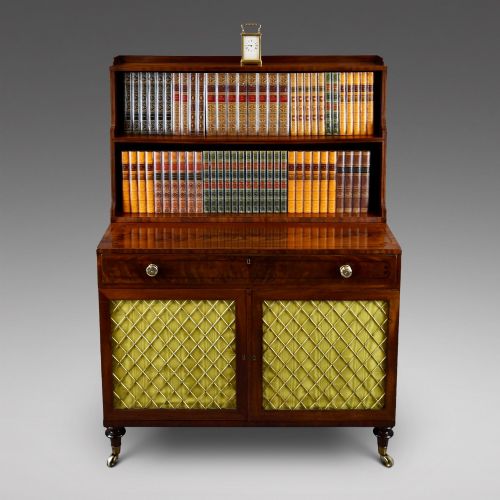


Antique Bookcase with Brass Grilles
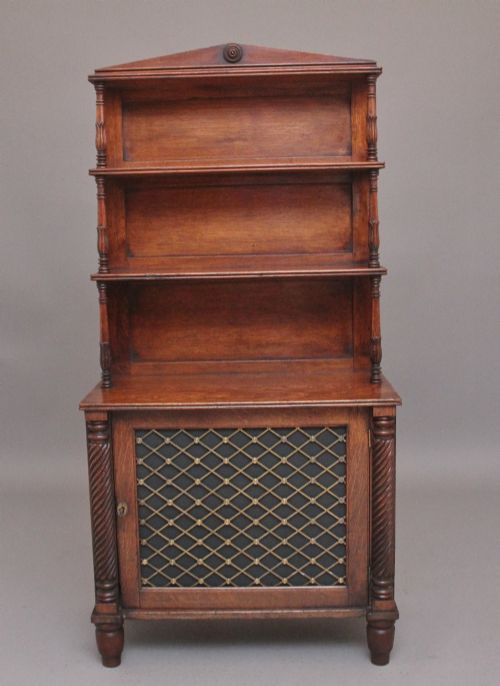
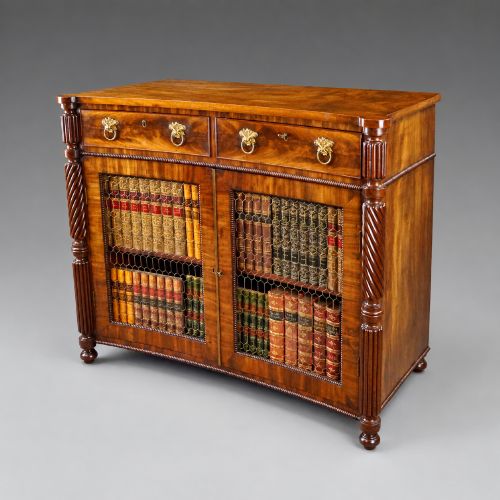
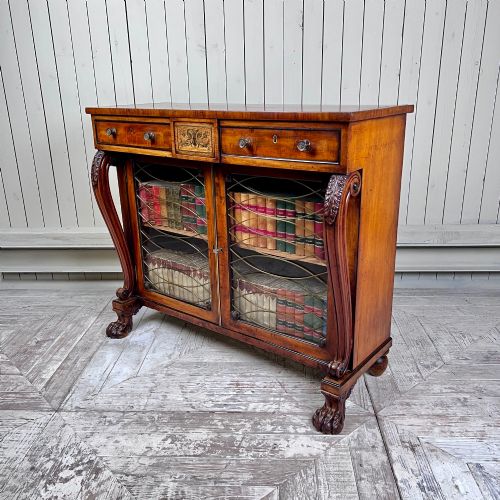
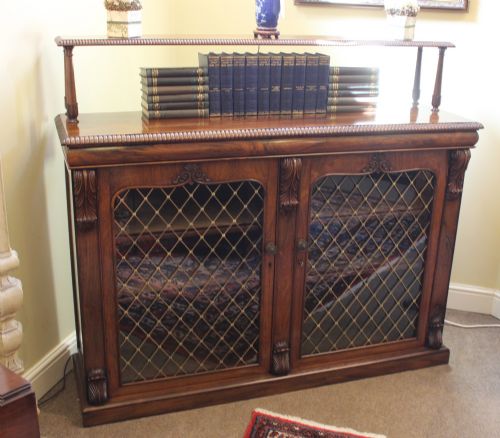
An antique bookcase with brass grilles brings refined storage to a room, keeping volumes visible behind fine wirework doors.
Antique Bookcase with Brass Grilles
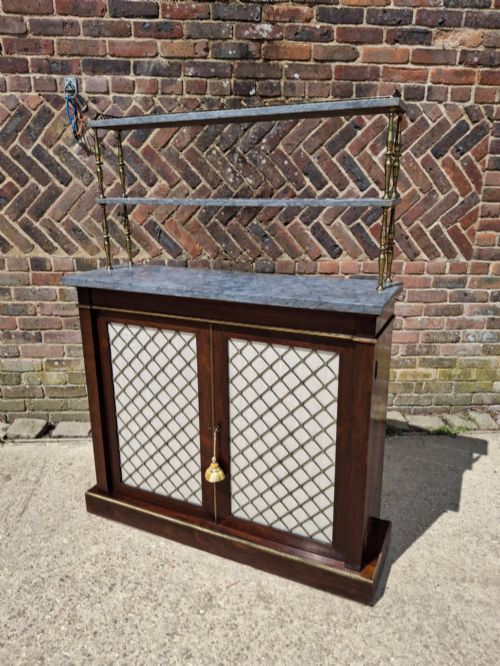
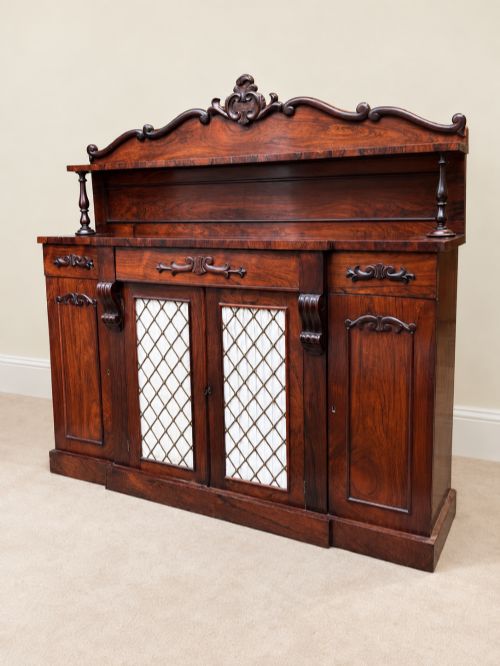
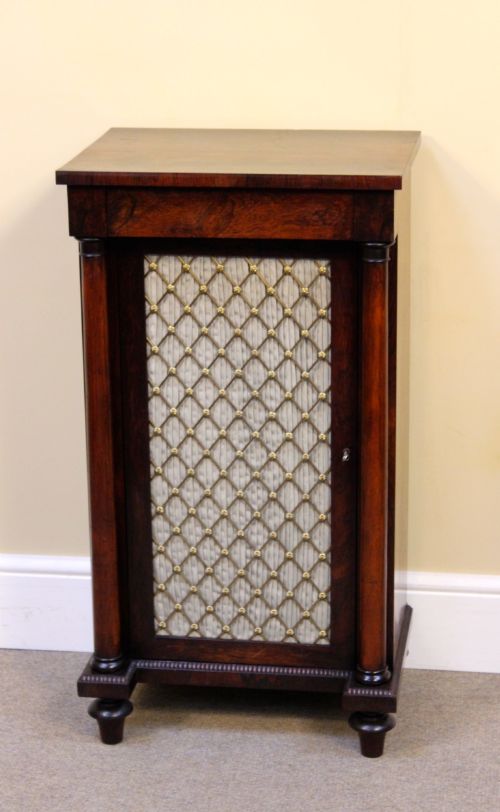
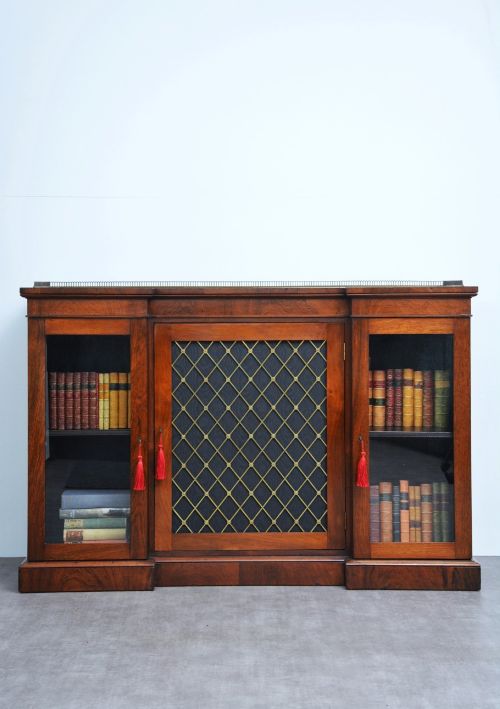
An antique bookcase with brass grilles combines enclosed storage with visibility, using woven wire mesh in place of plain glass panes. These pieces serve as functional library furniture or display cabinets for the home.
The pieces listed here cross several forms, appearing as tall library bookcases, low side cabinets, chiffoniers, and secretaire desks. They date from the Georgian and Regency periods through to the Victorian and Edwardian eras.
Mahogany and rosewood dominate the earlier pieces, whilst walnut and oak appear across nineteenth-century examples. Most versions feature glazed or grilled doors, occasionally accompanied by adjustable internal shelving or integrated writing compartments.
How they were made
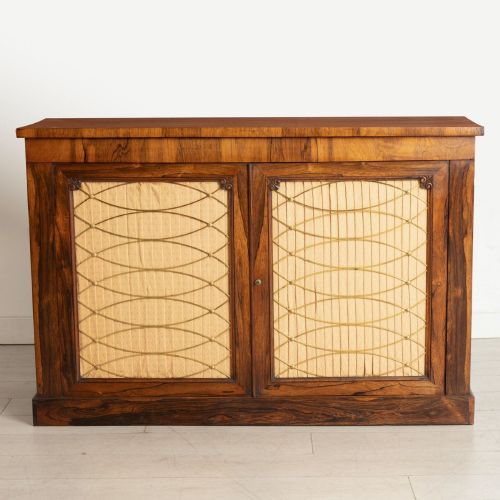
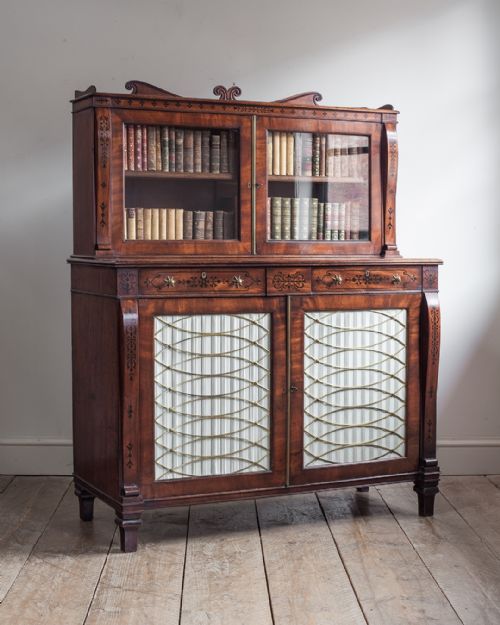
Cabinet makers constructed these pieces using dense hardwoods such as mahogany, rosewood, and walnut, often selecting flame veneers to accent the primary surfaces. Brass featured heavily not only in the woven grilles protecting the contents but also in delicate inlay work and structural mounts.
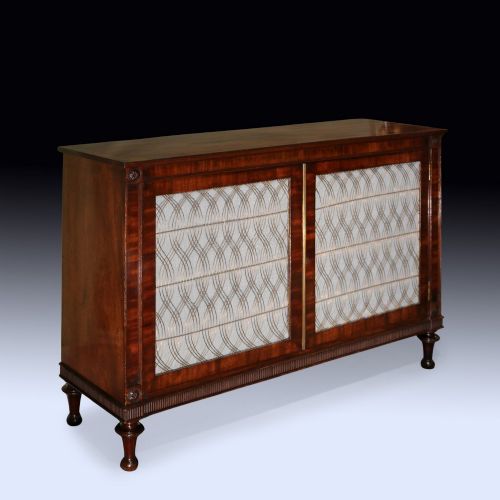
Glazing bars divided the door frames to hold the fine brass wire mesh securely in place, frequently backed by pleated fabric to conceal the shelf interiors. Joinery relied on traditional hand-cut methods, producing robust carcasses designed to support heavy collections of books.
Antique Bookcase with Brass Grilles Retail Price Guide 2026
Typical asking prices for bookcase with brass grilles among the pieces listed under this phrase on Sellingantiques today, from the lower quarter to the upper quarter. They describe what is for sale here now, not the wider market.
Some cabinet doors wear pleated silk behind their brass wirework, hiding a messy bookshelf from polite society.
What varies in quality
Quality rests upon the selection of timber figures, the precision of the brass wirework, and the sophistication of the overall design. Pieces attributed to documented makers demonstrate superior execution in their internal fittings and cabinetwork.
The integration of secondary functions, such as drop-front secretaire drawers and adjustable shelving mechanisms, elevates the construction standard. Subtle details like fine brass inlay and well-matched veneers distinguish higher-tier examples from simpler utilitarian cabinets.
Gillows
The Antique Bookcase with Brass Grilles Glossary
- Brass grille
- A fine network of woven brass wire fitted into cabinet doors to protect books while allowing visibility. It replaced simple glass panes in many formal library pieces.
- Secretaire
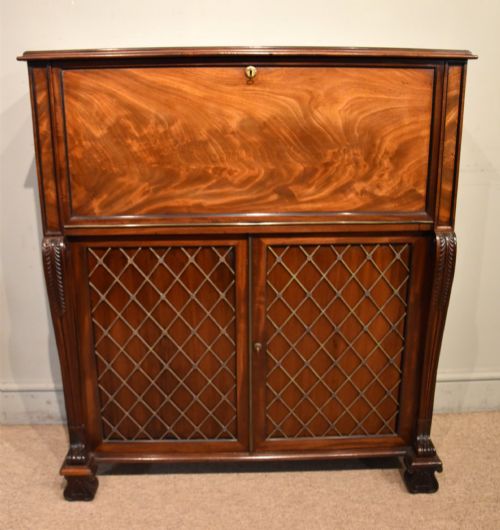
- A desk component featuring a drop-front drawer that conceals small pigeonholes and writing surfaces. This addition turns a standard cabinet into a dual-purpose workstation.
- Chiffonier
- A low nineteenth-century sideboard or cabinet, frequently fitted with enclosed shelves beneath. They often incorporate brass grilles or fabric panels in the doors.
- Flame mahogany
- A distinct timber grain pattern resembling flickering flames, achieved by cutting across the branch junctions of the tree. Cabinet makers prized this for prominent door panels.
- Adjustable shelves
- Internal boards resting on movable supports that allow the user to alter shelf heights. This mechanical feature provides flexibility for varying book sizes.
Antique Bookcase with Brass Grilles: Frequently Asked Questions
What is behind the brass grilles?
The brass grilles cover cabinet doors, protecting the books or display items housed inside. Many examples also feature gathered fabric behind the wirework to soften the view.
This traditional arrangement kept dust away from valuable volumes while maintaining ventilation and visual lightness in a formal library or drawing room.
How do I use one in a modern room?
These cabinets work well in living rooms, studies, or dining spaces to store books, ceramics, or glassware. The enclosed storage keeps clutter hidden while the glass and brass elements lighten the visual weight of heavy timber.
Ensure the piece has adequate clearance for doors to open fully, particularly on designs featuring drop-front secretaire sections.
How do I tell Regency from Victorian pieces?
Regency pieces often display classical proportions, rosewood or mahogany timbers, and delicate brass inlay work. Victorian examples tend to be heavier in scale and frequently utilise walnut or oak.
Examining the construction methods, secondary woods, and hardware styles helps confirm the specific nineteenth-century period of manufacture.
Are the shelves adjustable?
Many library bookcases and cabinets feature adjustable internal shelving to accommodate books of different heights. This was achieved using rack-and-pinion mechanisms or traditional wooden support strips.
Checking the interior reveals whether the shelving system was built as an original adjustable feature or fixed permanently in place.