


Antique Bookcase Drawers
Antique bookcase drawers unite shelving and storage in single timber pieces spanning the Georgian, Victorian, and Edwardian eras.
Antique Bookcase Drawers
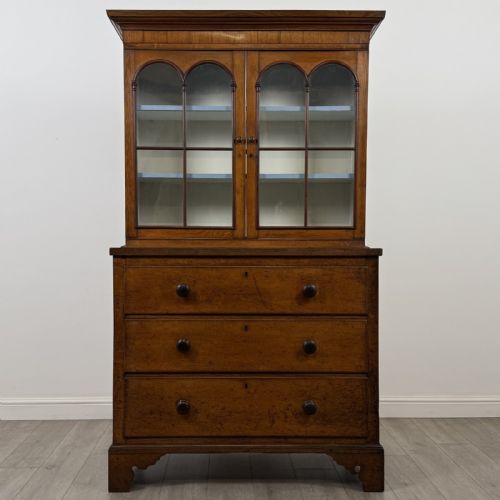
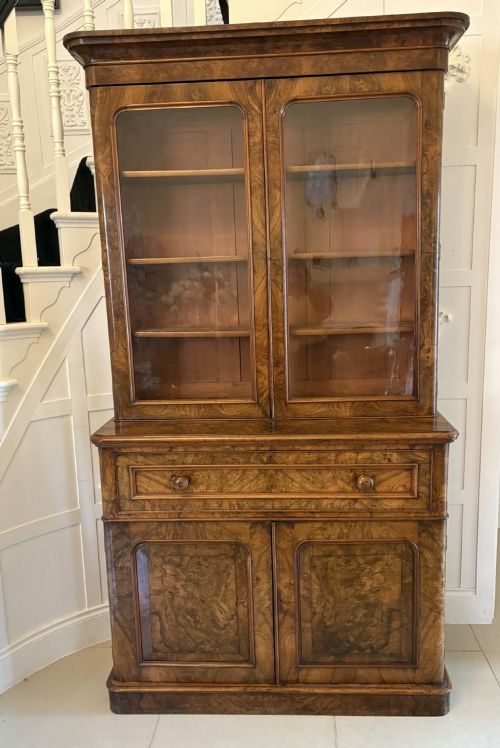
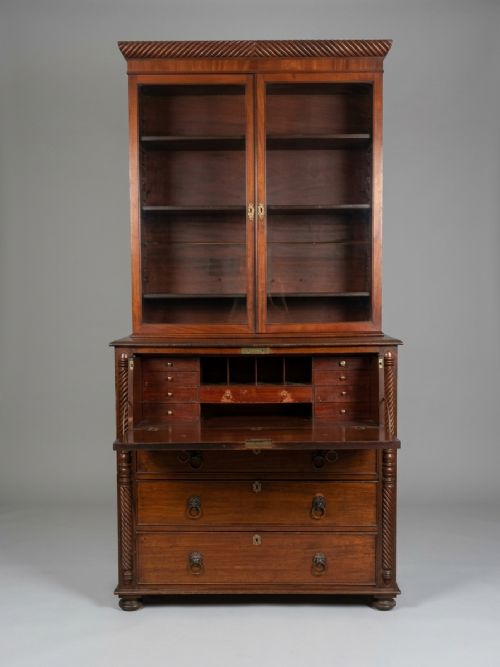
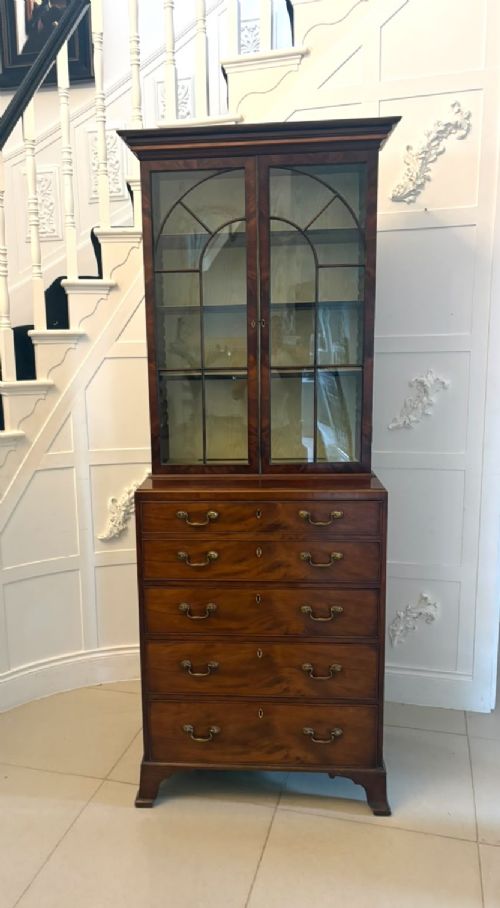
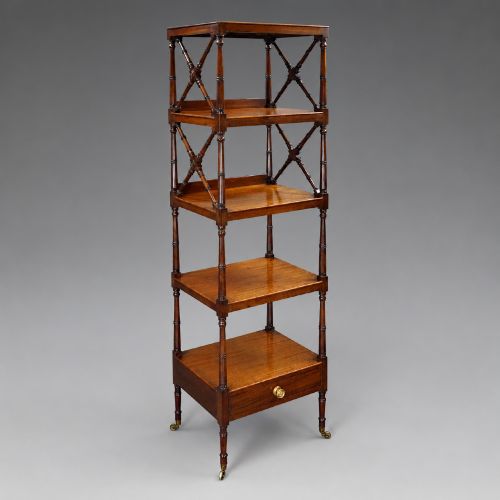
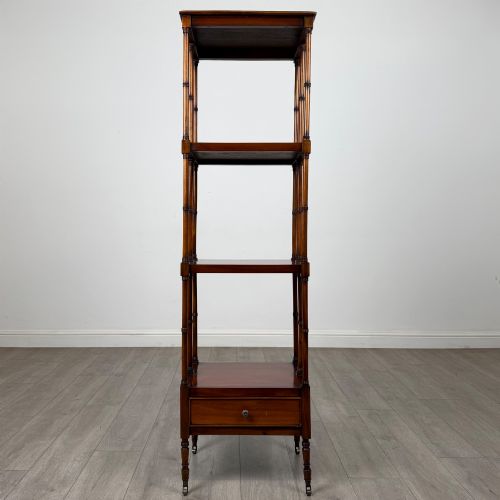
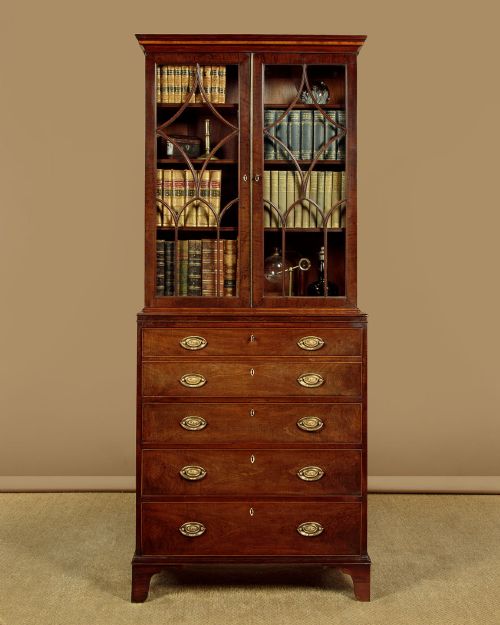
Antique bookcase drawers combine upper display or book storage with lower chest drawers, creating versatile furniture for domestic interiors. These hybrid forms include bureau bookcases with fall fronts, secretaire cabinets with sliding desks, and bookcases built directly over tiered drawer bases.
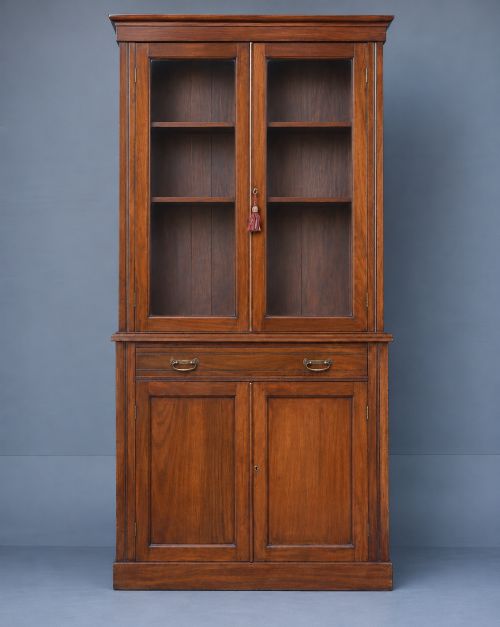
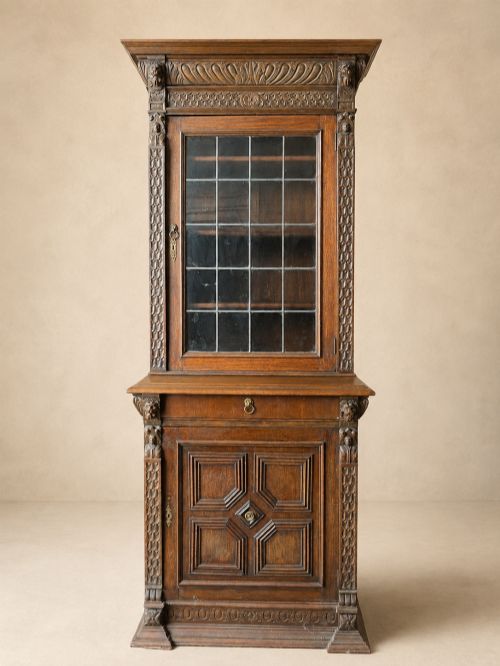
The pieces appearing most frequently range from compact Edwardian and 1920s iterations to substantial Georgian and Victorian library cabinets. Makers combined open shelving, glazed doors, and lower drawer compartments to house books alongside paperwork and household items.
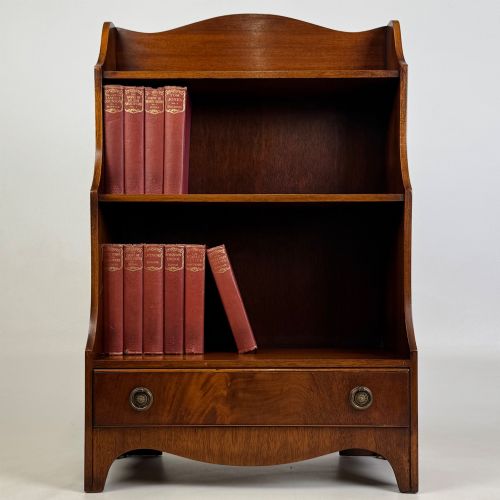
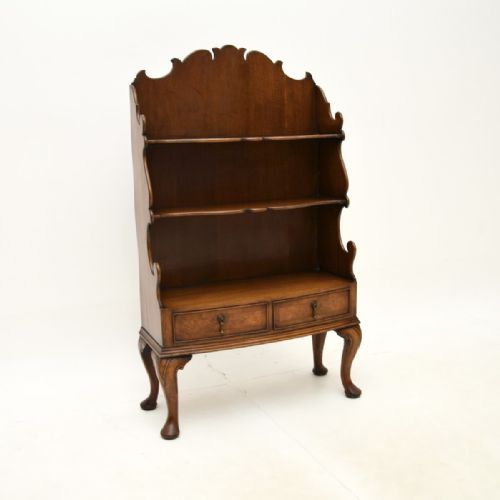
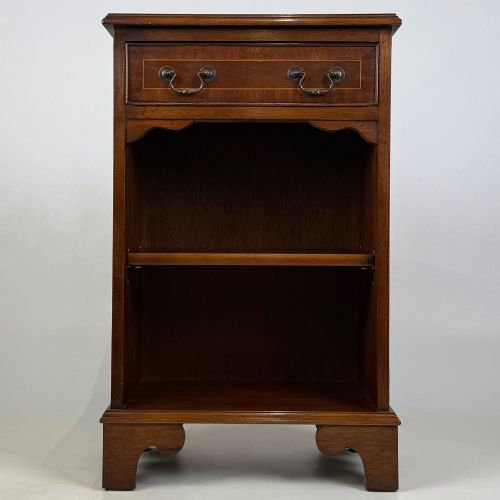
Origins stretch across English workshops as well as continental centres, utilising traditional regional forms from George III styling to Jacobean revivals. Buyers encounter everything from tall architectural library units to small waterfall bookcases fitted with single lower drawers.
How they were made
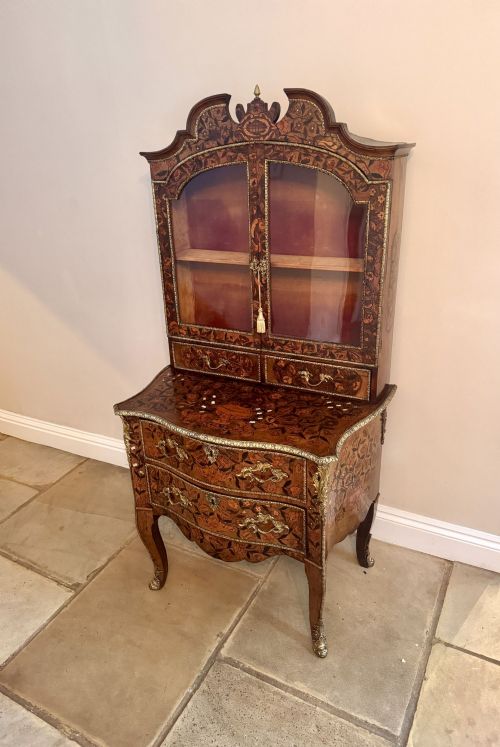
Construction relies heavily on dense hardwoods such as mahogany, oak, and walnut, frequently accented with satinwood inlay or burr maple veneers. Secondary timbers like pine appear on interior drawer linings and backboards.
Glazing bars shape the upper cabinet doors, while brass hardware secures drawers and drop-front desks. Cabinetmakers employed dovetail joints for drawer construction and hand-carved decorative motifs into solid oak and mahogany cornices.
What varies in quality
The standard of execution rests on timber selection and the precision of cabinet joinery, such as tightly fitted dovetails and matching grain patterns across drawer fronts. Superior examples feature carefully chosen veneers, intricate marquetry, and original brass fittings.
Proportion and architectural harmony distinguish finer workshop output from utilitarian regional pieces. Original glazing, intact backboards, and matching keys elevate a piece's integrity above later adaptations.
Gillows·Edwards & Roberts·James Winter & Sons
The Antique Bookcase Drawers Glossary
- Bureau bookcase
- A writing desk with a sloping fall-front combined with a bookcase top. It conceals internal pigeonholes and small compartments above lower chest drawers.
- Secretaire bookcase
- A cabinet featuring a pull-out drawer with a drop-front writing surface instead of a sloping lid. This conceals a fitted interior of small drawers and pigeonholes.
- Waterfall bookcase
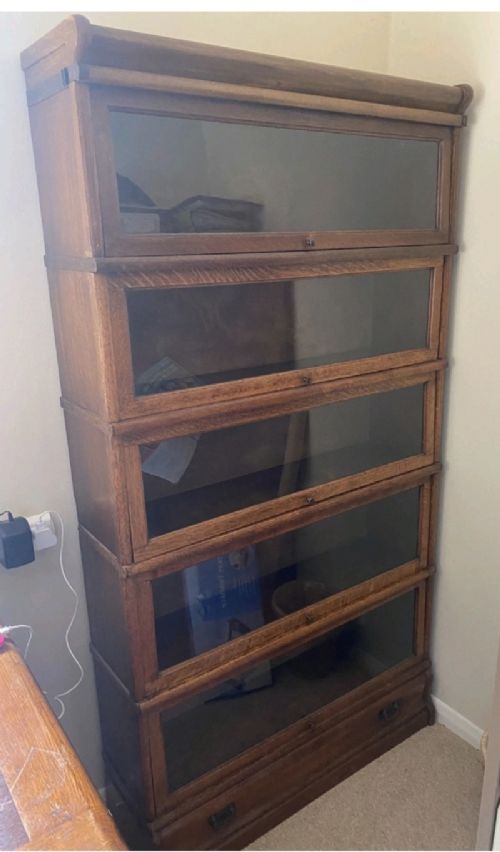
- A set of open shelves diminishing in depth from bottom to top, often incorporating one or more drawers at the base. These emerged in the nineteenth century for compact display.
- Glazing bar
- A wooden strip holding individual panes of glass within a cabinet door. The thickness and profile help indicate the period of manufacture.
- Marquetry
- Decorative veneer work forming pictures or patterns using various coloured woods. Craftsmen applied these patterns to door panels and drawer fronts.
Antique Bookcase Drawers: Frequently Asked Questions
How do I distinguish a bureau bookcase from a secretaire?
A bureau bookcase utilises a sloping hinged flap that pulls down to create a writing surface. The interior reveals a cluster of small drawers and pigeonholes directly behind this angled lid.
A secretaire bookcase uses a horizontal drawer that pulls outward and drops down to form a writing desk. This leaves the exterior profile looking like a standard chest drawer until opened.
Where were these combination bookcases typically used?
These combination pieces served primarily in private libraries, studies, and withdrawing rooms of large houses. They provided upper display space for leather-bound volumes alongside secure lower storage for correspondence and documents.
Smaller iterations later populated Victorian and Edwardian parlours and bedrooms. Their dual function saved floor space in homes needing both a writing desk and a bookcase.
How should I care for antique mahogany and walnut?
Keep antique timber away from direct sunlight and radiators to prevent the wood from drying out and splitting. Consistent indoor humidity protects both solid timber and decorative veneers from lifting.
Apply a microcrystalline wax polish occasionally to nourish the surface and maintain a natural sheen. Avoid silicone-based sprays, which sink into antique finishes and attract dust.
Are the glass panels in these bookcases original?
Early glass panes often exhibit slight irregularities, bubbles, and varying thickness due to older cylinder or crown glass manufacturing methods. Examining the glass under an angle reveals these subtle distortions.
Replacement glass usually appears perfectly flat and uniform without historical imperfections. Matching the age of the glass to the timber frame helps confirm originality.