




Antique Book Holder Table
An antique book holder table gives you a clever way to keep texts and music at hand while adding character to a room.
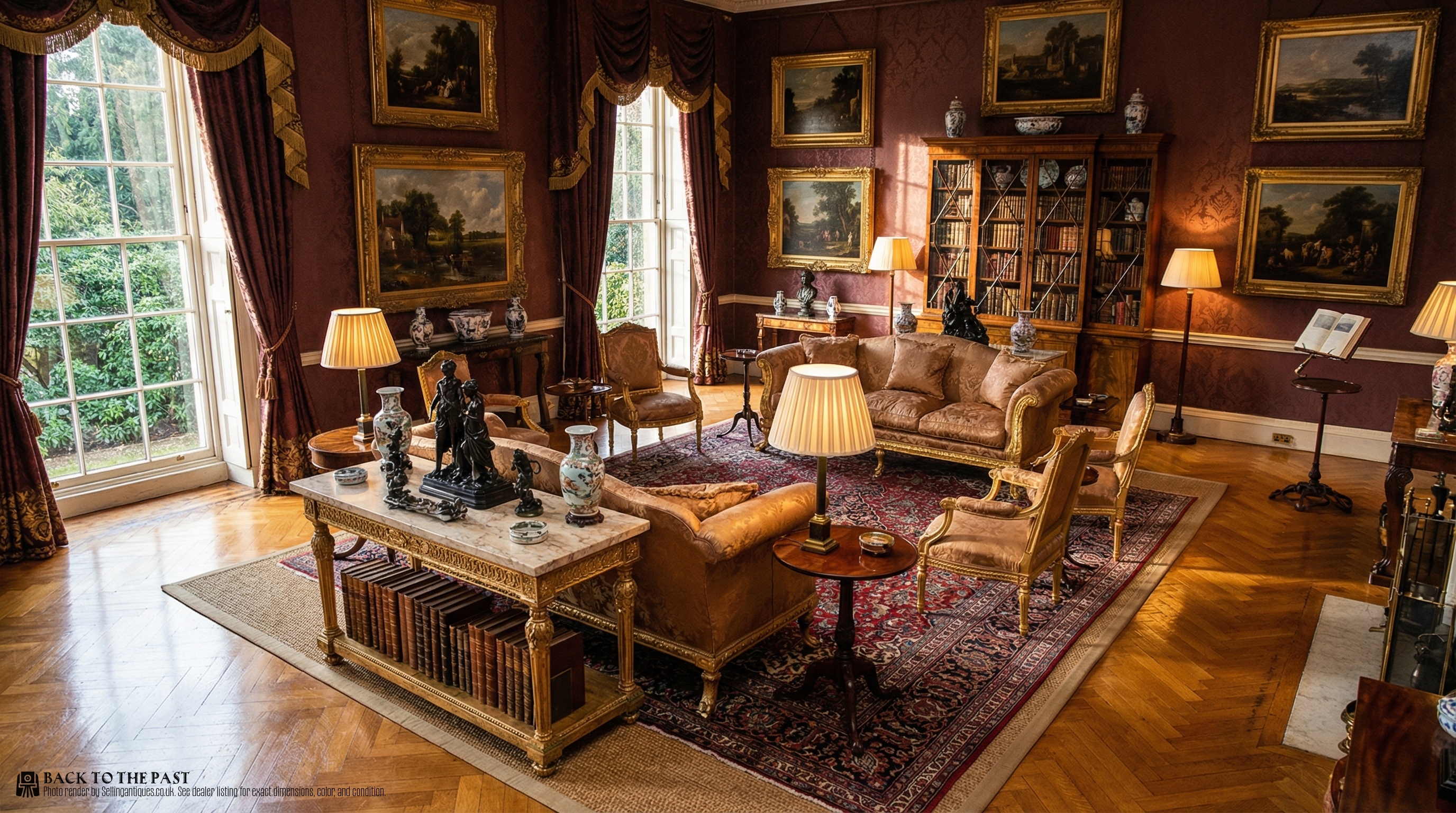
Antique Book Holder Table
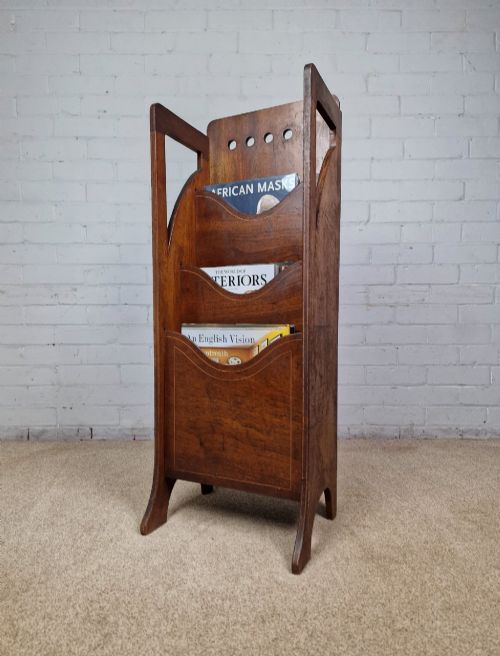
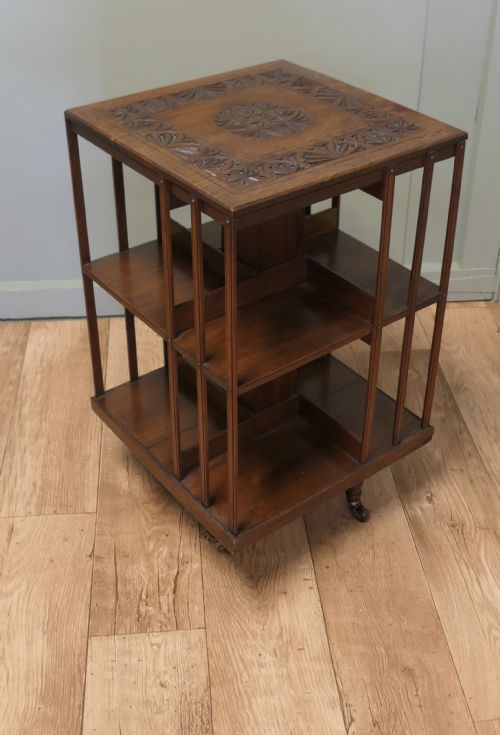
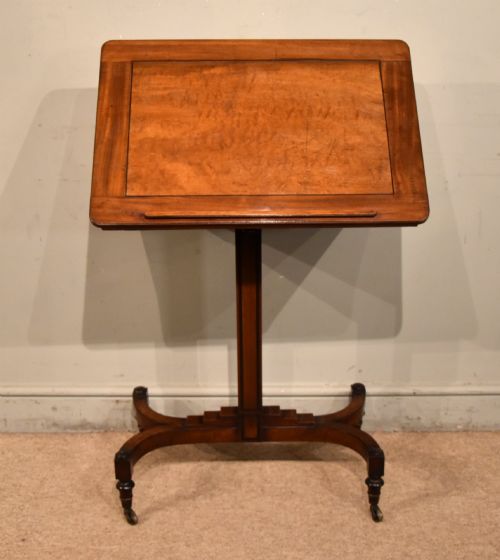
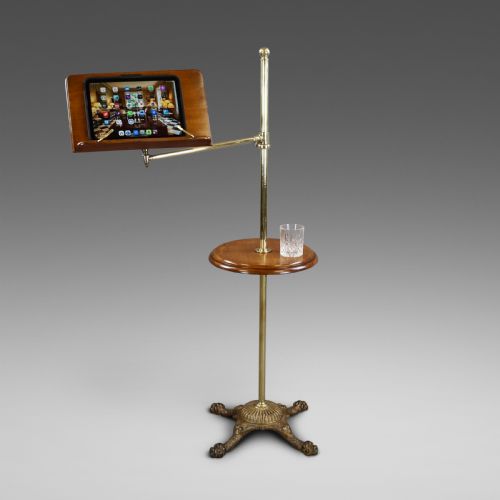
An antique book holder table brings together the utility of a reading stand and the footprint of a small table, serving as a practical station for heavy volumes or sheet music. When you search for an antique book holder table, you encounter diverse forms ranging from floor-standing reading stands to revolving table-top bookcases and extending book slides.
The pieces listed here span the Regency, William IV, and Victorian eras up to the Edwardian period, capturing a time when dedicated furniture solved specific domestic needs. Mahogany, rosewood, and oak dominate the selection, often incorporating adjustable rests or rotating mechanisms designed for ease of use in the library, drawing room, or study.
Materials and construction
Cabinetmakers relied on dense hardwoods such as mahogany and rosewood to provide the necessary stability for heavy volumes and adjustable mechanisms. Brass fittings frequently facilitated the movement of ratchets, hinges, and extending sides, ensuring durable joints that withstood daily handling.
Surfaces often featured fine details like satinwood inlay or carved teak, depending on the regional style and workshop origin. Cast iron also appeared in specialised mobility aids and bed tables, offering industrial strength for functional domestic designs.
Antique Book Holder Table Retail Price Guide 2026
Typical asking prices for book holder table among the pieces listed under this phrase on Sellingantiques today, from the lower quarter to the upper quarter. They describe what is for sale here now, not the wider market.
Several items double as novelty rests and mobility aids, proving that Victorians loved a good gadget for breakfast in bed.
Evaluating craftsmanship and condition
Quality in these pieces rests upon the precision of the adjusting mechanisms and the integrity of the timber used in the main structure. A superior example demonstrates smooth movement in its ratchets and revolving tiers, alongside well-figured grain and clean joinery.
Finer items distinguish themselves through subtle decorative choices, such as precise inlay work or carved maritime themes, rather than sheer ornamentation. The balance between mechanical utility and cabinetmaking skill ultimately defines the finer tiers of the range.
The Antique Book Holder Table Glossary
- Reading Stand
- A piece of furniture designed to hold a book or sheet music at a comfortable viewing angle. Many include adjustable ratchets to alter the height or slope.
- Revolving Bookcase
- A small bookcase mounted on a hidden rotating base that allows access to volumes from all sides. These units typically sit on a table top or a low floor stand.
- Book Slide
- An extending rack placed on a desk or table to keep books upright between two end supports. They often feature concertina or sliding mechanisms to accommodate changing numbers of volumes.
- Regency
- An English design period spanning the early nineteenth century known for classical lines and influences from ancient Greece and Rome. Furniture from this era frequently employs dark hardwoods and brass mounts.
- William IV
- A transitional design style bridging the late Regency and early Victorian periods, characterised by robust proportions and substantial carved details in rosewood or mahogany.
Antique Book Holder Table: Frequently Asked Questions
What is an antique book holder table used for?
These pieces were designed to support heavy reference books, Bibles, or sheet music at a readable angle while seated or standing. They provided a dedicated surface that kept texts secure and accessible in studies, music rooms, and libraries.
Today, they serve a similar function while acting as distinctive occasional furniture. Collectors often place them beside armchairs or use them to display open art volumes.
How do I identify a Regency reading table?
Regency reading tables typically feature classical proportions, dark mahogany timbers, and functional brass ratchets for adjusting the book rest. The styling reflects a restrained elegance popular in the early nineteenth century.
They often incorporate pillar and claw bases or trestle supports. The presence of adjustable brass arms or folding ledges is a key indicator of their original purpose.
What is the difference between a reading stand and a book slide?
A reading stand supports a single open volume or music score at an inclined angle, often with an adjustable height or slope. It is built as a distinct table or floor-standing unit.
A book slide is a linear rack with expandable sides designed to hold a row of closed books upright on a desk or table. It lacks the inclined reading slope found on traditional stands.