




Victorian Bed Desk
These Victorian bed desk pieces are practical wooden and iron pieces designed for reading and writing in bed, built to bring comfort to the morning routine.
Victorian Bed Desk
When you search for a Victorian bed desk, you are looking at utilitarian furniture designed to sit across a bed or chair for reading, writing, and morning tasks. These pieces mostly date from the Victorian and Edwardian periods, stretching from the mid-nineteenth century into the early twentieth century.
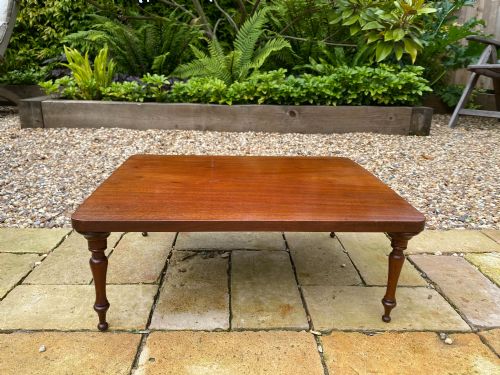
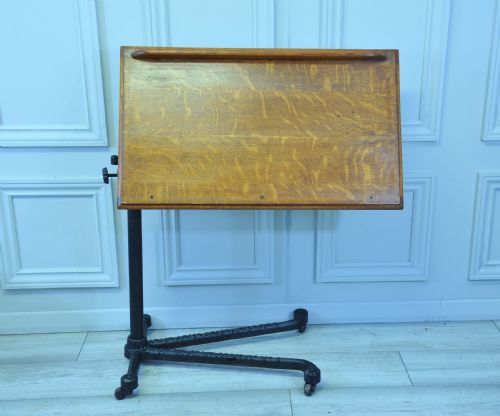
The versions you are most likely to meet on this page take the form of adjustable reading tables and bed tray tables constructed from mahogany or oak. Makers often incorporated brass fittings and cast iron mechanisms to allow the height and angle of the surface to shift according to the user's needs.
Beyond the standard tray and table forms, the broader category includes related items like campaign table top reading stands and mobility aids intended for invalid use. These objects reflect a nineteenth-century preoccupation with comfort and domestic convenience.
How they were made
Makers relied heavily on solid mahogany and oak for the main surfaces and frames, choosing dense hardwoods that could withstand daily movement and adjustment. These timbers were frequently polished to a warm finish that highlighted the natural grain.
Functional metal components, notably cast iron and brass, formed the complex mechanisms that made these tables adjustable. Screws, ratchets, and heavy iron bases provided the necessary weight and stability to support a book or writing slope safely above a bed.
Victorian Bed Desk Retail Price Guide 2026
Typical asking prices for victorian bed desk among the pieces listed under this phrase on Sellingantiques today, from the lower quarter to the upper quarter. They describe what is for sale here now, not the wider market.
Some adjustable reading tables doubled as mobility aids, bringing Victorian engineering directly to breakfast in bed.
What varies in quality
The sophistication of the mechanical adjustment mechanism separates standard pieces from more elaborate examples. Tables bearing patented designs, such as those by Carters of London, display superior engineering in their iron and brass gearing compared to simpler fixed models.
The choice of timber and the quality of the cabinet work also define the range. Finely figured mahogany tops with secure edge mouldings and robust pedestal bases represent the higher tier of domestic comfort furniture.
Carters Of London
The Victorian Bed Desk Glossary
- Campaign table
- A portable folding or knock-down piece of furniture designed for travel and military use. These items feature sturdy joints and hardware built to withstand frequent dismantling.
- Reading table
- A specialised adjustable table intended to hold books or papers at a comfortable angle for the reader. They often include ledges to prevent volumes from sliding off the sloping surface.
- Cast iron
- A strong, heavy alloy used for structural frames and bases. Its substantial weight prevents adjustable reading desks from tipping during use.
Victorian Bed Desk: Frequently Asked Questions
What is a Victorian bed desk?
A Victorian bed desk is an adjustable table or tray designed to sit over a bed for reading or writing. These pieces use wood and metal frames to support books and papers comfortably.
They emerged during the nineteenth century as domestic furniture focused on personal comfort and invalid care. Most examples utilise mahogany or oak surfaces paired with cast iron mechanisms.
How do you adjust the height?
Adjustment typically relies on a central iron column fitted with a screw mechanism or ratchet. Turning a handle or releasing a catch allows the wooden top to slide up and down.
Patent designs from makers like Carters allowed users to alter both the height and the tilt of the reading surface with minimal effort.
What woods were used?
Makers predominantly selected mahogany and oak for the structural framework and table tops. These hardwoods offered durability and a smooth surface suitable for daily writing tasks.
Secondary materials included brass for hinges and fittings, alongside heavy cast iron for the supportive floor bases.
Were these used only in bed?
While primarily built to span a bed for invalids or morning readers, they also functioned as occasional tables beside armchairs. The adjustable design made them versatile for various seating arrangements.
Some smaller forms served as portable writing surfaces or table top reading stands that could rest on existing desks.