

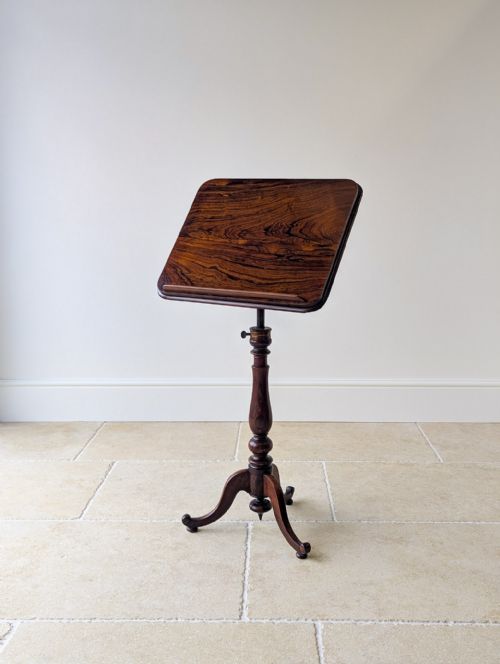
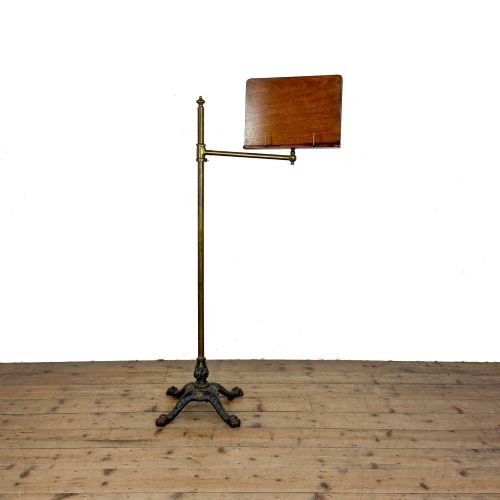
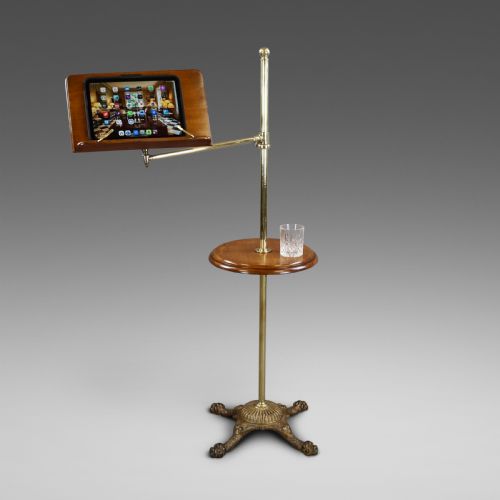


Adjustable Brass Book Lectern
An adjustable brass book lectern offers a steadfast perch for heavy volumes and music sheets, bringing mechanical precision to your study or parlour.
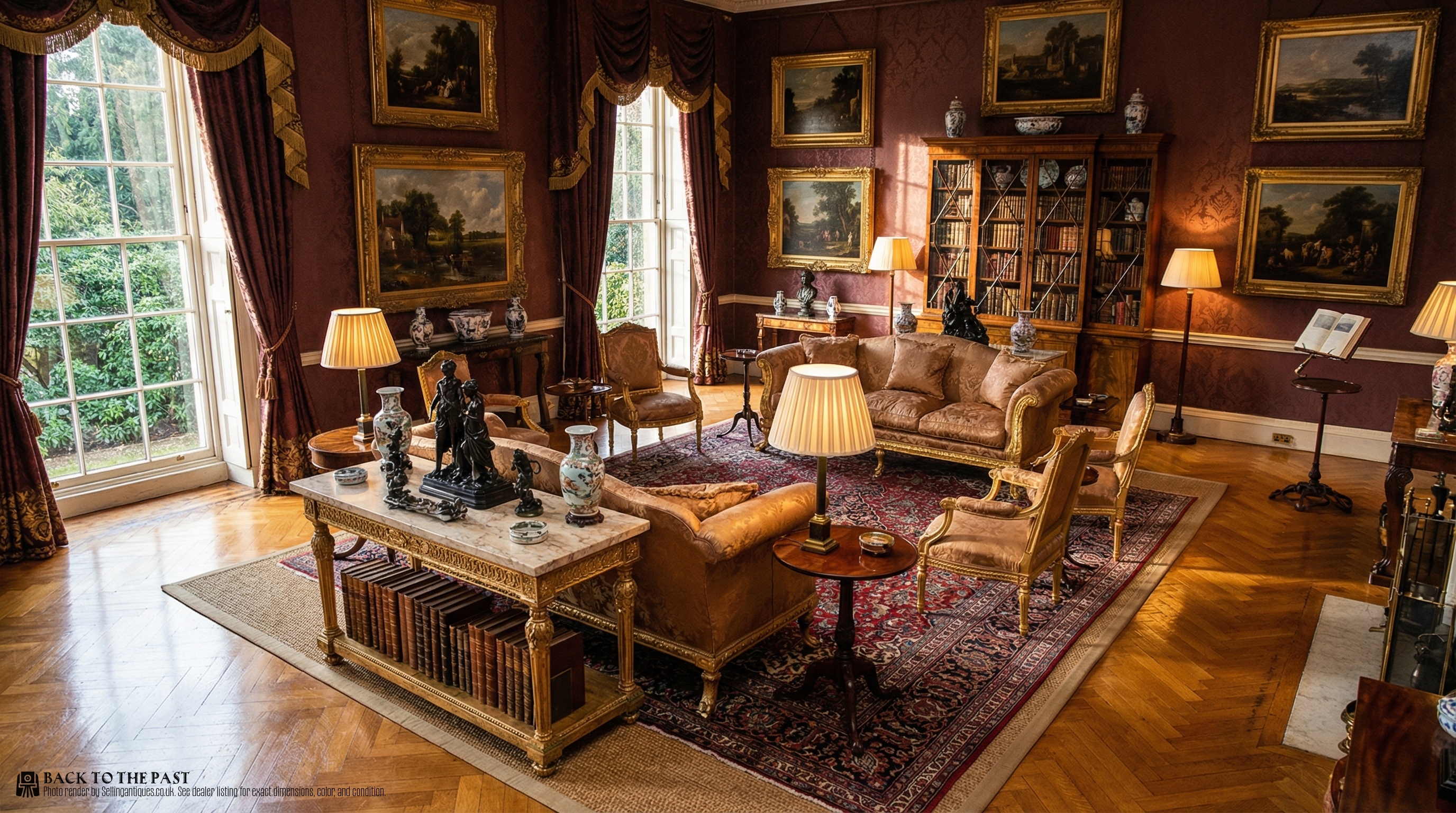
Adjustable Brass Book Lectern
When you search for an adjustable brass book lectern, you are looking at practical desk accessories and freestanding stands designed to prop open heavy books at a comfortable reading angle. The versions you are most likely to meet on this page combine polished metal ratchets or hinges with rich timber frames, spanning the nineteenth and twentieth centuries.
The selection here encompasses reading stands, music stands, and folio tables originating from the Victorian era back through William IV and George III periods. These pieces range from compact campaign table tops to substantial occasional tables and music stands, all unified by adjustable book rests.
How they were made
Maker's workshops built these stands using durable brass for the mechanical adjustments, hinges, and book rests, pairing the metal with dense timbers like mahogany, rosewood, walnut, and ebonised wood. Cast iron also appears in the structural supports to ensure stability when heavy folios rest upon the ledge.
Craftsmen utilised traditional joinery and turning techniques for the wooden columns and bases, often incorporating inlay work or marine-themed details on the reading tops. The brass components were engineered to allow smooth pivoting and height or angle adjustments without straining the wood.
Adjustable Brass Book Lectern Retail Price Guide 2026
Typical asking prices for adjustable brass book lectern among the pieces listed under this phrase on Sellingantiques today, from the lower quarter to the upper quarter. They describe what is for sale here now, not the wider market.
Periods represented span from the George III era through William IV and Victorian times into the interwar twentieth century.
What varies in quality
The distinction between ordinary pieces and superior examples lies in the precision of the brass mechanism and the choice of cabinet timber. Finer pieces display crisp casting in the brass ratchets and seamless movement in the adjustable joints, paired with highly figured mahogany or rosewood veneers.
Design complexity also separates the tiers, with simpler table tops standing apart from multi-functional pieces that double as occasional tables or incorporate folio storage. Maker attribution further elevates an example, as seen in specialised firm output compared to anonymous workshop production.
Jones and Willis
The Adjustable Brass Book Lectern Glossary
- Lectern
- A desk or stand with a slanted top designed to hold a book or speech at a height and angle convenient for a standing or seated reader. These often feature adjustable mechanisms to alter the viewing angle.
- Campaign
- Describing portable furniture made for travel, typically featuring folding elements or compact designs that dismantle easily. Such pieces utilised sturdy brass mounts and durable timbers to withstand transit.
- Ebonised
- Wood treated with a dark stain or finish to imitate the appearance of ebony. This technique gained popularity in nineteenth-century cabinet making for a striking, formal aesthetic.
- Folio
- A large book size or a specialised table designed to hold large sheets of paper, music, or prints. Folio stands usually provide a wide, flat surface with adjustable supports.
Adjustable Brass Book Lectern: Frequently Asked Questions
What is an adjustable brass book lectern?
An adjustable brass book lectern is a reading stand equipped with metal mechanisms to tilt books at various angles. They were built to support heavy volumes, folios, and music sheets.
These pieces combine functional metal ratchets with timber columns and table tops, offering utility alongside traditional cabinet making.
How were these stands used historically?
Readers placed heavy reference books, Bibles, or sheet music upon the ledges to study or practice comfortably. The adjustable mechanisms allowed users to alter the height and reading angle.
They served scholars, musicians, and readers in libraries, drawing rooms, and studies, often doubling as decorative occasional tables.
How do I identify a Victorian reading stand?
Victorian stands typically feature dense woods like mahogany and walnut, paired with heavy brass adjustable hardware. Stylistic clues include turned columns and sometimes inlay or ebonised finishes.
Evidence from this period also points toward marine themes and campaign designs suited for portability or shipboard use.
Can I use an antique lectern for modern books?
Yes, the adjustable brass rests and sturdy wooden ledges handle modern cookbooks, art books, and tablets securely. The mechanical joints are designed to bear weight at multiple angles.
Placing them on desks or using freestanding models allows you to read heavy volumes hands-free in any room.