




Antique Bombee Commode
These antique bombee commode pieces bring sweeping serpentine fronts and rich marquetry to a room, offering both statement storage and centuries of continental craftsmanship.
Antique Bombee Commode
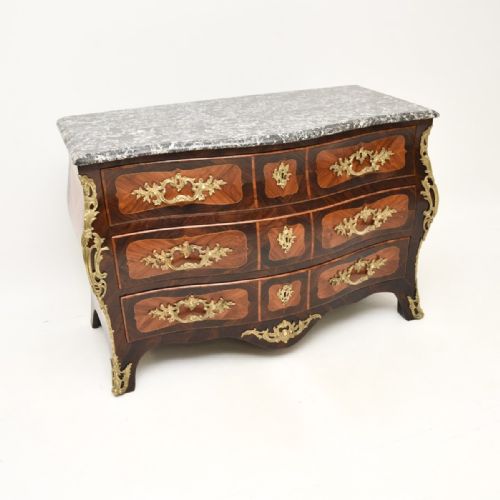
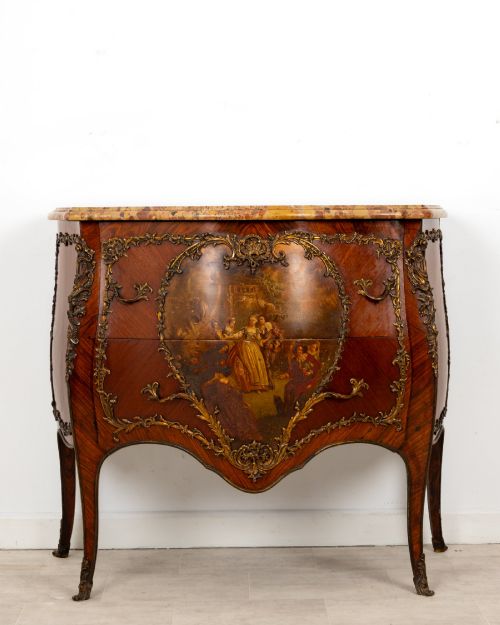
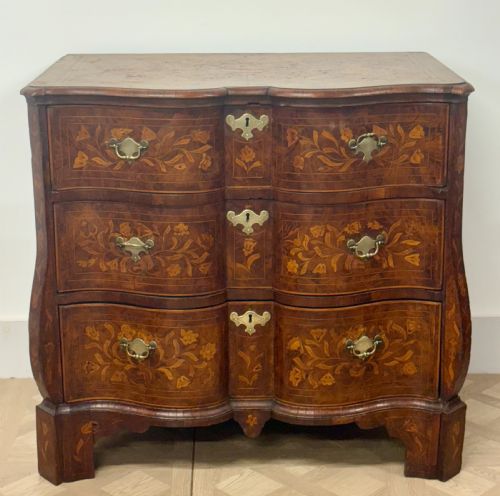
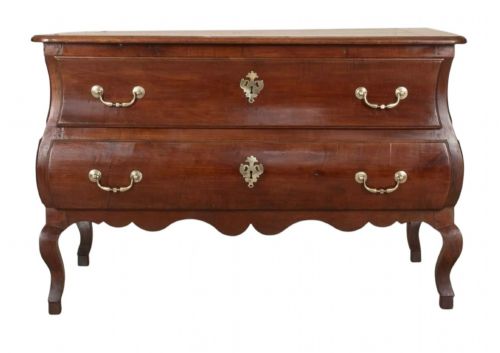
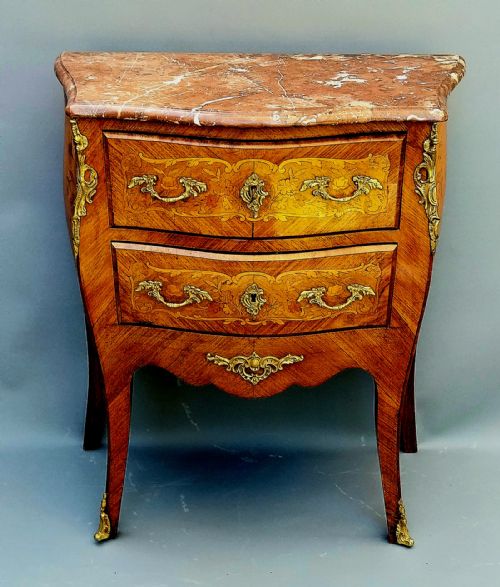
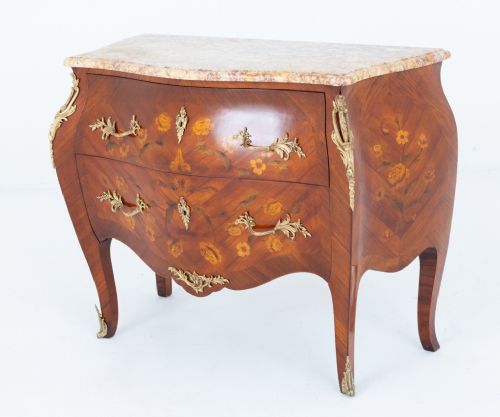
An antique bombee commode represents a distinct form of continental storage furniture, defined by its swelling, curved body and prominent serpentine lines. When searching for an antique bombee commode, buyers encounter examples stretching from the eighteenth century into the revival periods of the nineteenth century. These pieces serve as grand chests of drawers or cabinets, heavily influenced by French Louis XV and Dutch rococo traditions.
The versions most commonly met on this page span walnut, mahogany, and cherrywood constructions, frequently ornamented with elaborate floral marquetry or veneers of kingwood and rosewood. Many pieces feature shaped marble tops that follow the contour of the bulging wooden carcase below. Origins range across French provincial workshops, Parisian ateliers, and Dutch centres of cabinetmaking.
How they were made
Cabinetmakers built the curving carcase of an antique bombee commode using softwood or oak as a foundational frame, onto which richly figured timbers like walnut, kingwood, and rosewood were laid as veneers. Achieving the characteristic bombé swell required painstaking shaping of solid timber and angled sawing to maintain structural integrity across the curves. Marquetry panels were assembled from contrasting wood types, meticulously cut and fitted by hand to create floral motifs.
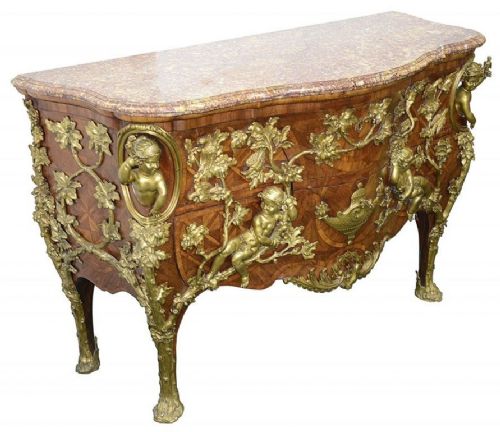
Mounts in gilt bronze, brass, or ormolu were cast and chased to highlight the corners, aprons, and handles of the piece, following the asymmetric contours of the rococo style. Marble tops were slabbed and hand-polished to match the exact profile of the commode beneath, often resting unsecured or pinned simply to the upper frame. Surface finishes relied on traditional polish applied to bring out the natural grain and colour of the timber.
Apprentice chests provided miniature models for aspiring cabinetmakers to prove their mastery of complex bombé curves before tackling full-sized furniture.
What varies in quality
The standard of an antique bombee commode rests upon the ambition of its timber selection and the precision of its veneer matching across compound curves. Superior examples display continuous, balanced grain patterns that wrap seamlessly around the bulging sides, whereas simpler pieces rely on straightforward flat panels or less complex woods like cherrywood. The complexity of the marquetry work, from simple geometric banding to intricate floral pictorial scenes, dictates the tier of the piece.
Finishing details such as the weight, chasing, and integration of the ormolu or gilt-bronze mounts separate high-atelier production from provincial or later revival work. The thickness and quality of the marble top, along with the hand-cut dovetailing inside the drawer construction, reveal the level of care invested by the original cabinetmaker.
Jacques Bircklé·Charles Cressant
The Antique Bombee Commode Glossary
- Bombé
- A swelling, outwardly curving shape characteristic of rococo case furniture. This bulging profile requires advanced woodworking skill to construct.
- Marquetry
- Decorative veneer work arranged in pictorial or floral patterns using various coloured woods. Craftsmen cut these thin slices to fit together like a puzzle.
- Ormolu
- Gilt bronze mounts applied to furniture for decorative accent. The technique involves coating bronze in a gold amalgam and firing.
- Vernis Martin
- European imitation of East Asian lacquer developed in France. It produces a glossy, translucent finish layered over painted designs.
- Sauteuse
- A small commode featuring a single drawer above an open space or doors. This specific form was popular in eighteenth-century French cabinetmaking.
Antique Bombee Commode: Frequently Asked Questions
How do I spot a later revival commode?
Nineteenth-century revival pieces often display machine-sawn timber elements and standardised bronze mounts rather than hand-chased ormolu. Examining the interior construction and secondary woods reveals the manufacturing methods of the period.
Stylistic cues also help, as revival makers sometimes exaggerated the swelling proportions beyond authentic eighteenth-century tolerances. Closer inspection of the varnish and wear patterns provides further context for dating.
Are marble tops original to these commodes?
Many antique commodes retain their original shaped marble slabs, which were quarried and cut specifically to fit the idiosyncratic curves of the wooden carcase. Replacement marble is common due to historic breakage over centuries of use.
Checking the underside of the stone and the matching wear on the wood supports helps determine if the top has been with the piece long-term. Edges should align precisely with the moulding profile.
Where were these commodes placed historically?
These grand pieces stood primarily in principal reception rooms, salons, and formal bedrooms of affluent European residences. Their decorative facades and practical storage made them focal points for displaying porcelain or clocks.
Smaller variants functioned beside beds or within private boudoirs, holding personal items and documents within their curving drawers.
How should I care for the wood surface?
Maintenance requires keeping the piece away from direct sunlight and steady heat sources that can dry out old veneers and cause cracking. Gentle dusting with a soft, dry cloth preserves the polish without introducing moisture.
Professional waxing should occur sparingly using traditional formulations suited to antique furniture finishes. Avoid silicone-based sprays entirely.