


Antique Bombe Cabinet
An antique bombe cabinet brings sweeping, swollen lines and rich timber figuring into a room, offering both sculptural presence and deep storage.
Antique Bombe Cabinet
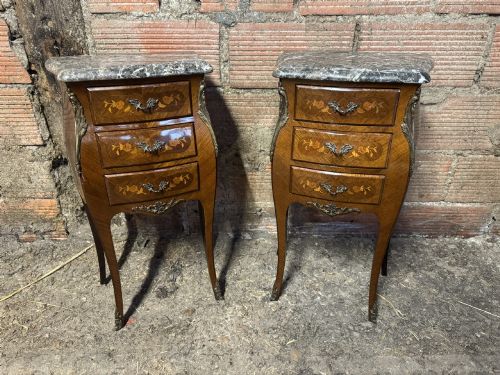
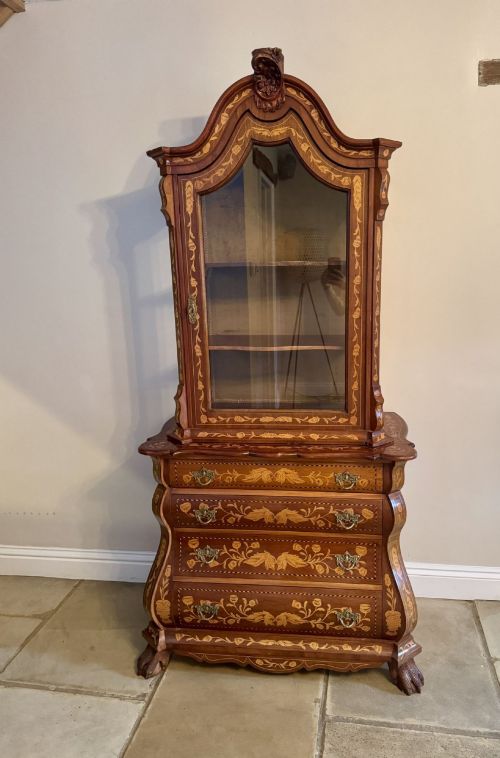
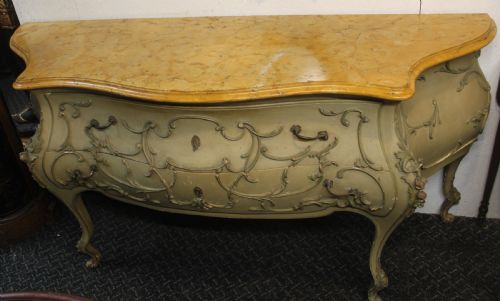
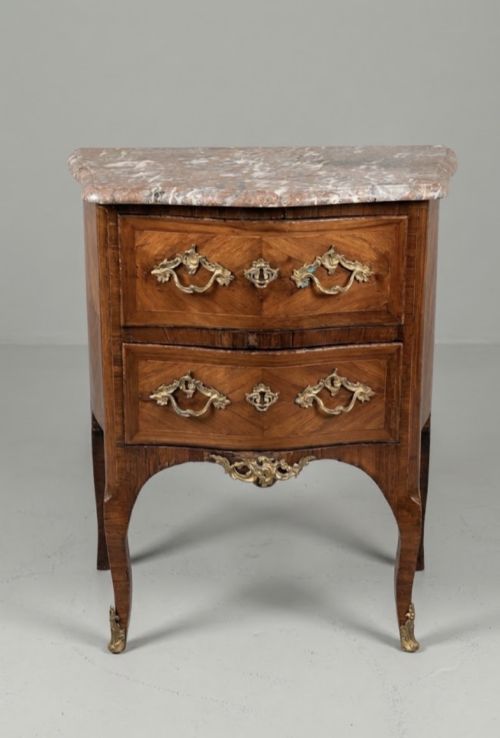
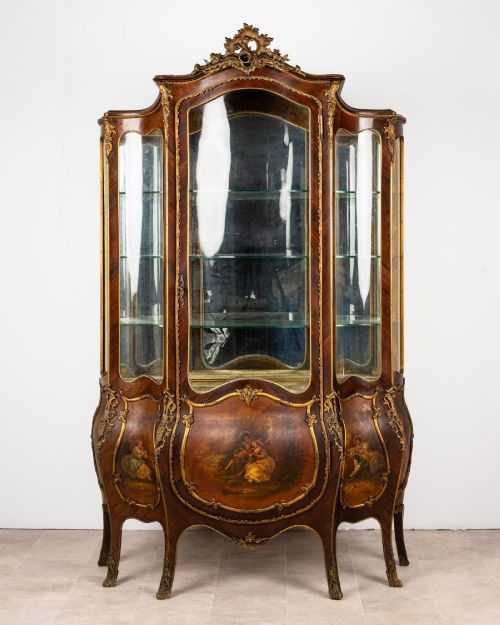
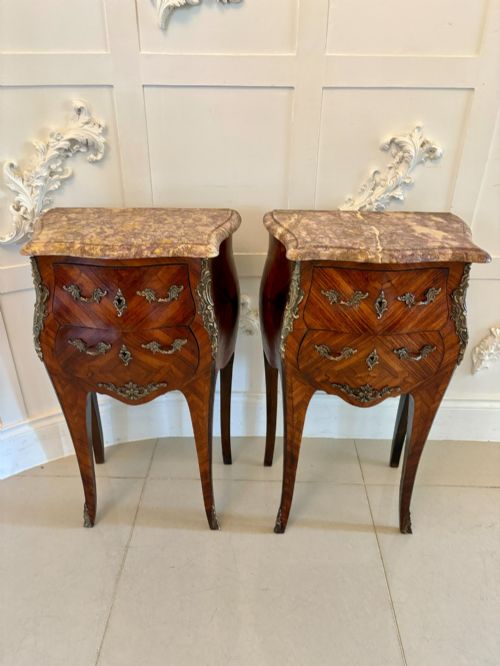
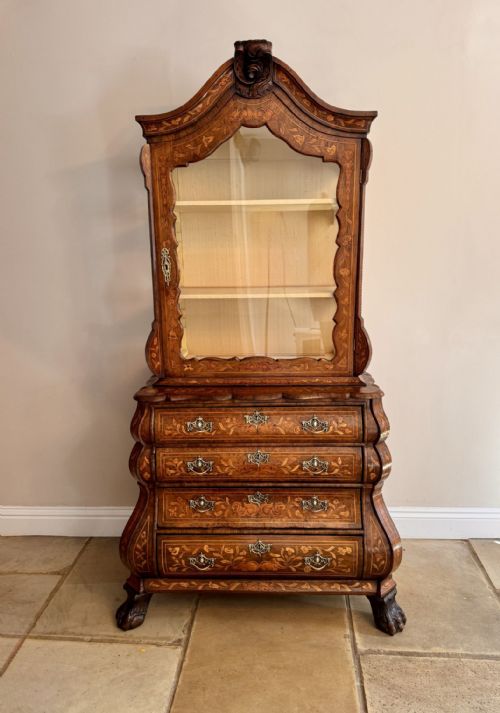
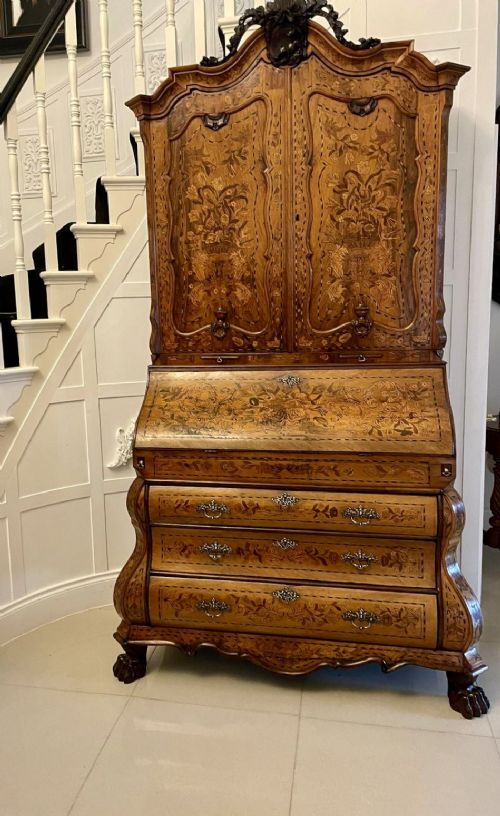
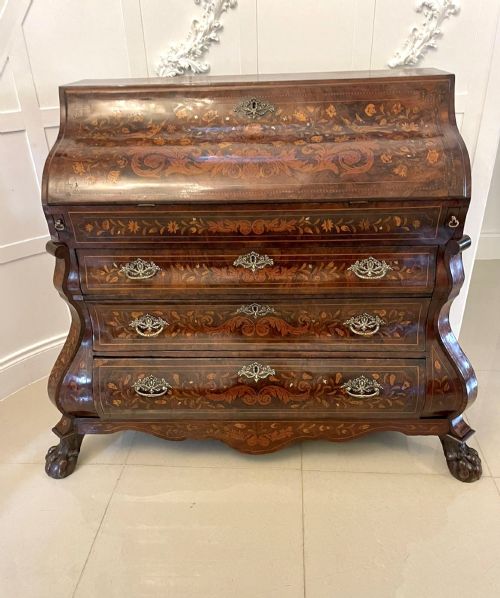
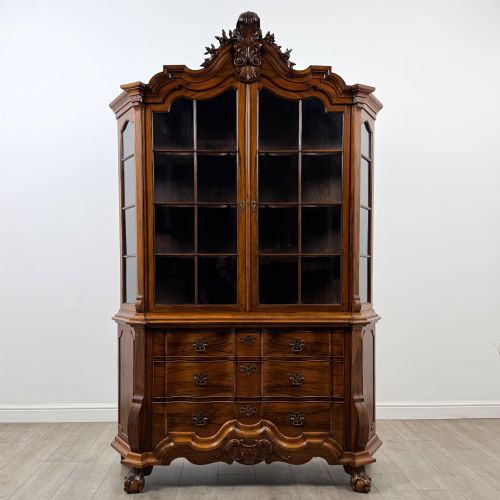
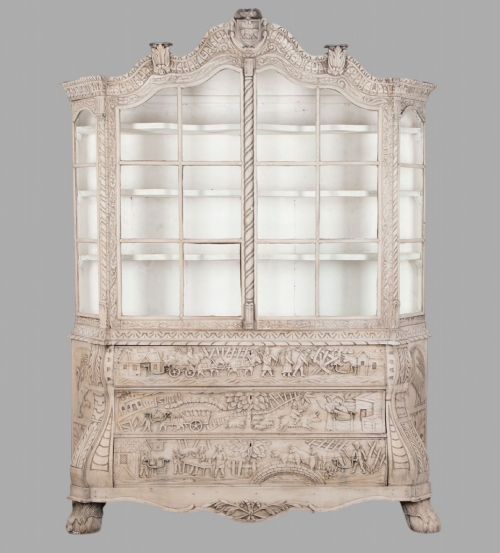
When searching for an antique bombe cabinet, buyers encounter pieces defined by their outward-swelling sides and rounded fronts, which demand exceptional cabinetmaking skill to construct. These items emerge predominantly in Dutch and French forms, ranging from towering bureau bookcases and display cabinets to low commodes and bedside chests.
Buyers frequently meet display cabinets on chests and vitrines fitted with glass doors alongside robust chest of drawers variants. Each variation showcases the distinct regional taste, whether through the exuberant floral inlay of Dutch workshops or the refined mounts of French ateliers.
Materials and construction methods
Cabinetmakers built these curved carcasses using dense foundational timbers like oak or fruitwood, onto which they laid fine veneers of walnut, burr walnut, and kingwood. The characteristic swelling profile required segmented framing and meticulous hand-shaping to ensure the timber maintained structural integrity over time.
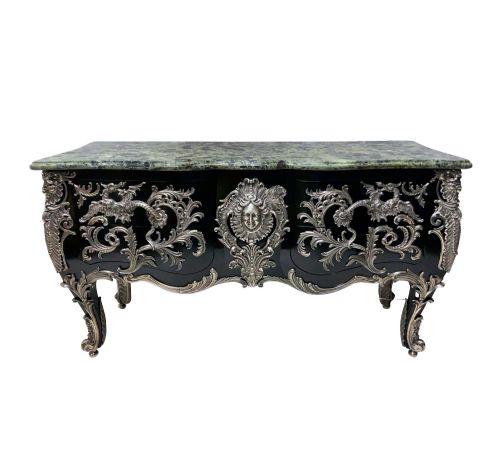
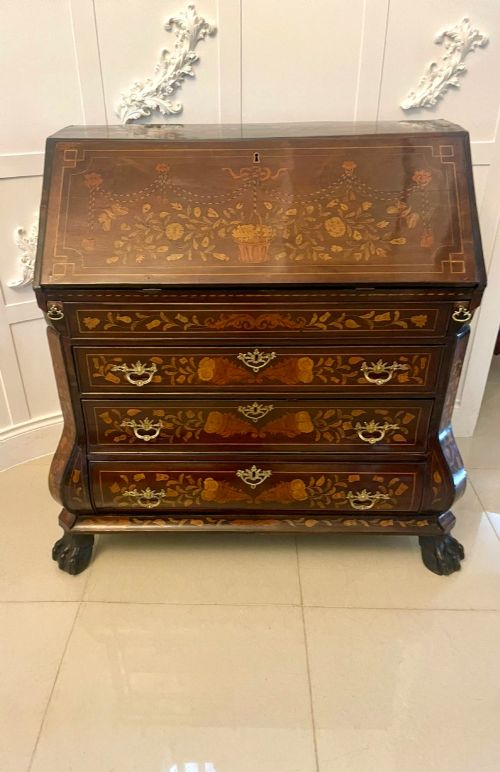
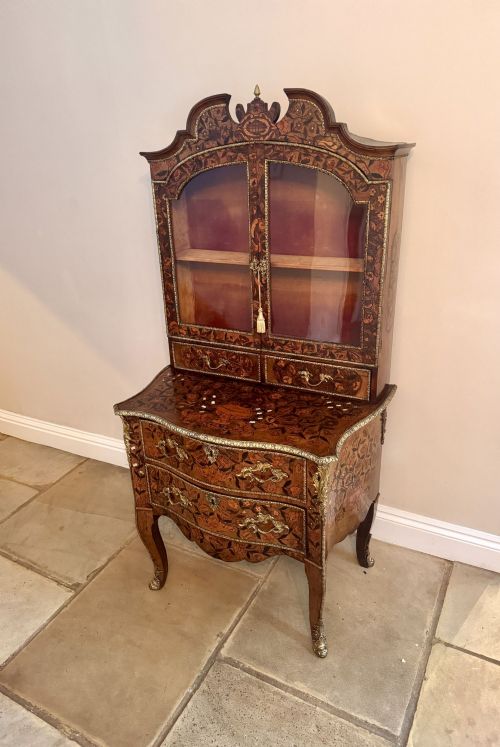
Surface ornamentation relied heavily on intricate marquetry using varied woods to form floral and foliage motifs, alongside parquetry geometric arrangements. Metalwork played a central role, with cast or chased ormolu and gilt bronze mounts fitted to corners, handles, and apron centres to accent the swelling contours.
French and continental pieces often incorporated marble slabs fitted precisely to the upper surface of commodes and cabinets, while others utilised glazed panels and hand-painted Vernis Martin lacquer work to complete the decorative scheme.
Antique Bombe Cabinet Retail Price Guide 2026
Typical asking prices for bombe cabinet among the pieces listed under this phrase on Sellingantiques today, from the lower quarter to the upper quarter. They describe what is for sale here now, not the wider market.
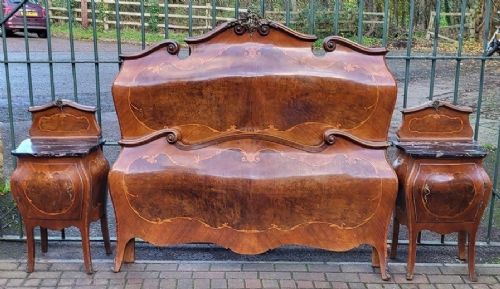
Some nineteenth-century French bedside cabinets secretly hide entire beds behind their grand bombe facades.
Distinguishing quality across the range
The tier of a piece depends largely on the precision of the veneer work and the complexity of the marquetry, where natural timber figuring flows seamlessly across the undulating surfaces. Superior examples demonstrate rigorous symmetry in floral inlay and flawless alignment of wood grains around drawer fronts and curved corners.
Hardware and secondary materials signal grade, with heavy, finely chased ormolu mounts indicating a higher workshop standard than pressed or simple brass alternatives. Furthermore, the fluidity of the bombastic sweep itself dictates merit; master makers achieved a balanced, organic swell rather than an abrupt or clumsy distortion of the timber.
E. Kahn·Edwards & Roberts
The Antique Bombe Cabinet Glossary
- Bombé
- A swelling, outward-curved profile found on the sides and fronts of chests and cabinets. This contour requires specialised joinery to accommodate the compound curves of the timber.
- Marquetry
- Decorative veneer work arranged in pictorial patterns using different coloured woods, shells, or ivories. Craftsmen cut these elements meticulously to form elaborate floral and scroll designs.
- Ormolu
- Gilt bronze mounts applied to furniture edges, feet, and handles for ornamentation. The technique involves coating bronze in a gold amalgam and firing it.
- Vernis Martin
- A type of simulated oriental lacquer developed in France during the eighteenth century. It uses multiple layers of varnish to achieve a translucent, glossy finish often decorated with Chinoiserie scenes.
- Parquetry
- Geometric wood inlay forming repeating patterns such as cubes or chequers. Unlike marquetry, it relies on strict geometric geometry rather than pictorial motifs.
Antique Bombe Cabinet: Frequently Asked Questions
What is an antique bombe cabinet?
An antique bombe cabinet is a storage piece featuring convex, swelling sides and fronts that create a dramatic, rounded silhouette. These items include display cabinets, bureau bookcases, and commodes.
originating mainly from continental Europe, they utilise rich timbers like walnut and kingwood, often enhanced with marquetry or ormolu mounts.
How do I tell Dutch and French styles apart?
Dutch examples typically emphasise dense floral marquetry in walnut and robust proportions, often seen in tall bureau bookcases and display cabinets.
French versions lean towards refined kingwood veneers, marble tops, and elaborate ormolu mounts, frequently following Louis XV and XVI revival aesthetics.
Where were bombe cabinets used in the home?
These pieces served as prominent display and storage items in formal reception rooms, drawing rooms, and master bedrooms.
Cabinets with glass doors exhibited prized possessions, while commodes and bedside chests functioned as practical yet decorative storage surfaces.
How do I care for a marquetry cabinet?
Keep the piece away from direct sunlight and steady temperature fluctuations to prevent the delicate veneer and inlay from drying out or lifting.
Apply a gentle, appropriate wax polish occasionally and dust with a soft, dry cloth to preserve the historical timber finish.