


Antique Blue White Server
These antique blue white server pieces are functional serving vessels and dishes adorned in cobalt, offering timeless table charm for any dining room.
Antique Blue White Server
When you search for an antique blue white server, you encounter a selection of utilitarian tableware designed for presenting food at the table. The evidence records items ranging from vegetable tureens and butter dishes to asparagus servers, sauceboats, and large serving platters.
The pieces appearing on this page span the 18th century, Georgian and Victorian eras, alongside 1880 examples. English earthenware and porcelain dominate, accompanied by French faience, Imperial Russian porcelain, and Chinese export ceramics.
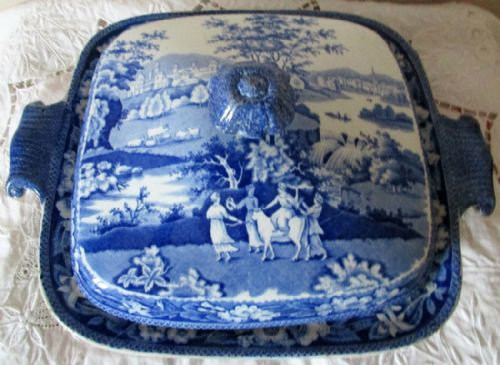
Buyers are most likely to meet transfer-printed earthenware vegetable tureens and serving platters from English potteries, alongside specialised servers like the recorded asparagus server from Spode. These forms reflect the dining habits of past centuries when coordinated tableware was essential for formal meals.
How they were made
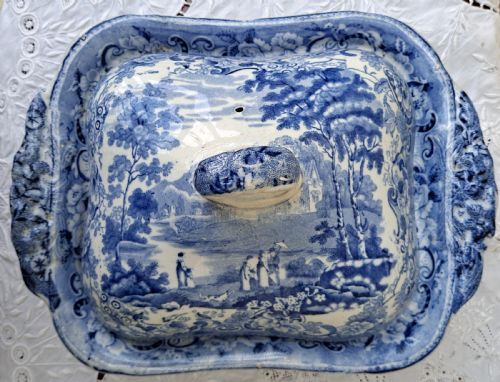
Potters utilised earthenware, soft-paste porcelain, and tin-glazed earthenware as the primary ceramic bodies for these serving vessels. Cobalt underglaze was applied to create the characteristic blue decoration, often enhanced by transfer-printing techniques that allowed intricate scenes like 'Rural Scenery' or 'Europa' to be transferred onto the pottery before glazing.
Firing techniques varied depending on whether the object was standard earthenware or delicate porcelain such as Worcester or Sevres pieces. A protective glaze sealed the ceramic body and fixed the blue pigment, sometimes showing crazing or enamel touches characteristic of 18th and 19th-century kilns.
An Imperial Russian porcelain butter dish takes the delightful form of a bird, proving that 1880s dining tables possessed a distinct sense of humour.
What varies in quality
The clarity and depth of the cobalt underglaze transfer printing separate the finest examples from standard production. Crisp outlines and rich, uniform blue tones indicate superior execution by the pottery.
The crispness of moulded details on specialised servers, butter dishes, and tureens distinguishes exceptional items. Well-preserved covers, matching stands, and minimal kiln faults elevate the desirability of a piece within its period.
James Wallace & Co·John and Richard Riley·Kuznetsov·Don Pottery·Copeland & Garrett·Spode
The Antique Blue White Server Glossary
- Cobalt Underglaze
- A blue pigment applied to ceramic pieces before the final glaze and firing. This method ensures the decoration is protected beneath a glassy surface.
- Transfer-Printed
- A decoration technique where an engraved copper plate transfers a design onto paper and then onto the ceramic body. It allowed complex pictorial scenes to be replicated consistently.
- Tureen
- A deep covered bowl used for serving soups, vegetables, or sauces at the table. They frequently include matching covers and stands in the evidence.
- Faience
- Tin-glazed earthenware produced in France and other European regions. It provides an opaque white background for painted or decorated motifs.
- Soft-paste Porcelain
- A ceramic material composed of clay and glass frit, fired at lower temperatures than hard-paste porcelain. It was widely used by 18th-century English factories.
Antique Blue White Server: Frequently Asked Questions
What are antique blue white servers used for?
These ceramic pieces were created to serve specific foods at the dining table, from asparagus and butter to vegetables and sauces. Their varied forms catered to the elaborate presentation of meals during the Georgian and Victorian periods.
Today, collectors use them both as functional tableware for special dinners and as decorative display items in dining rooms or kitchens.
How do I tell Georgian from Victorian pieces?
Georgian pieces often exhibit hand-painted details or early transfer-printing styles associated with Spode and the Don Pottery. They typically reflect lighter neoclassical forms or traditional chinoiserie patterns.
Victorian examples frequently showcase heavier earthenware bodies with dense transfer patterns, such as the 'Rural Scenery' designs by James Wallace and Co. Maker marks and registration numbers stamped into the ceramic can also help pinpoint the exact decade.
Are these servers safe to use?
While many of these items remain structurally sound for serving dry or cold foods, antique ceramics require careful handling. The porous nature of older earthenware and soft-paste porcelain means they can absorb liquids or stain over time.
Hand washing in warm water is essential, as modern dishwashers can damage the historic glaze and fade the cobalt underglaze decoration.
Why are some pieces marked as transferware?
Transferware refers to a manufacturing process developed in the 18th century where a printed paper design transferred onto the unglazed clay body. This innovation allowed potteries to produce intricate pictorial patterns efficiently.
It explains why patterns like 'Europa' appear across multiple pieces from different makers while maintaining consistent artistic detail.