
Antique Blue Stone Ring
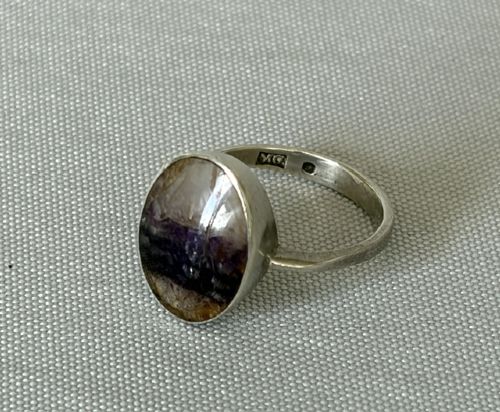
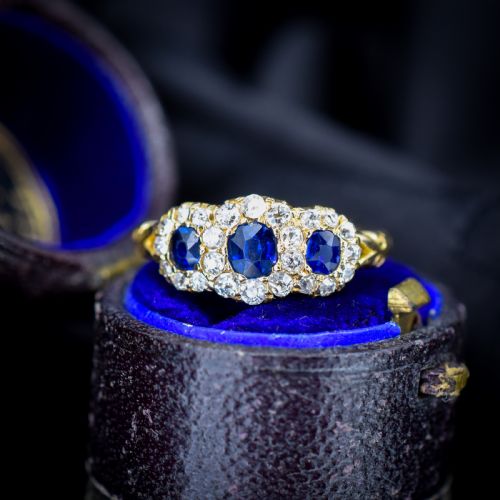
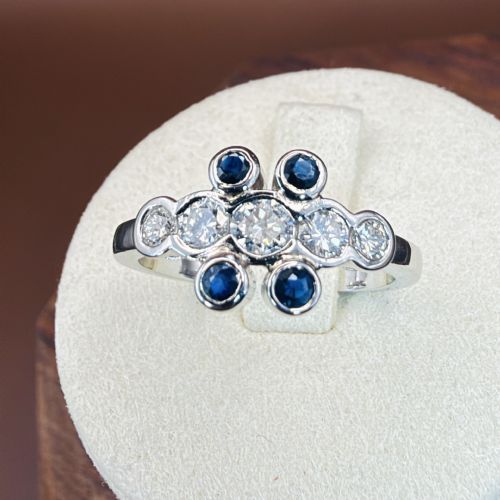
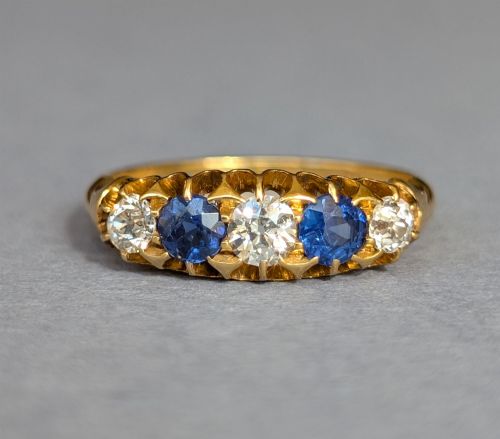
An antique blue stone ring brings together historic gold and platinum work with vibrant sapphires, turquoise, zircon, and spinel.
Antique Blue Stone Ring
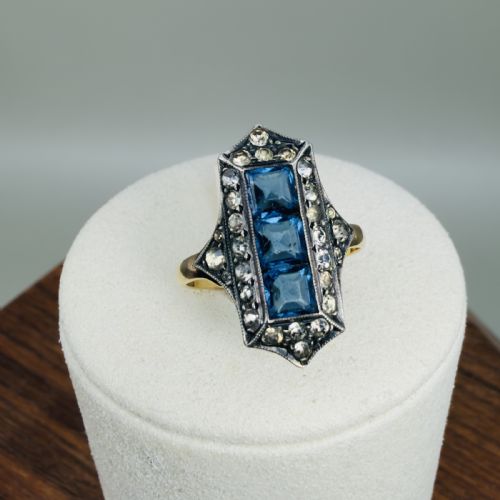
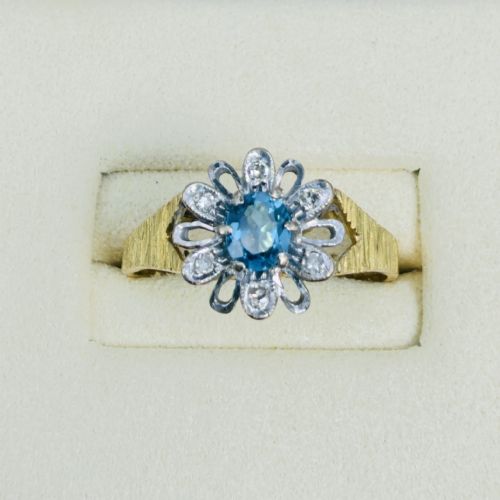
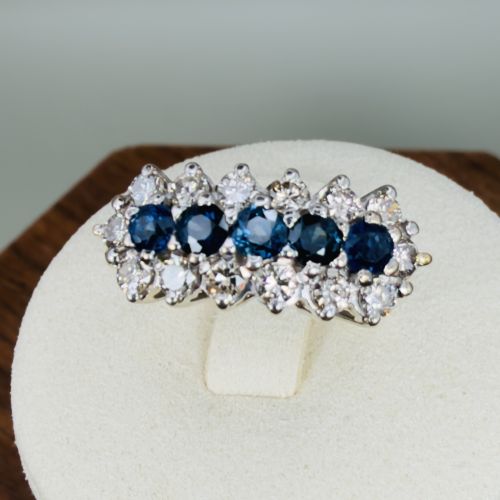
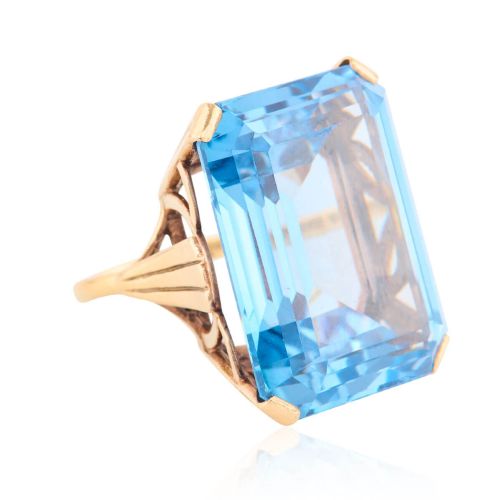
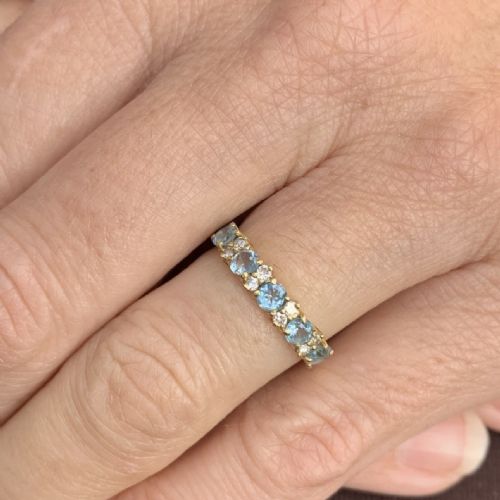
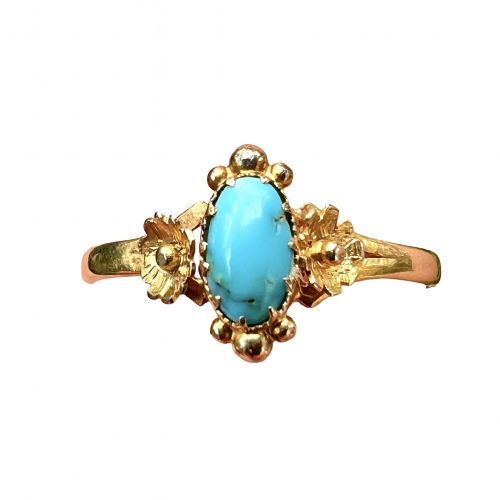
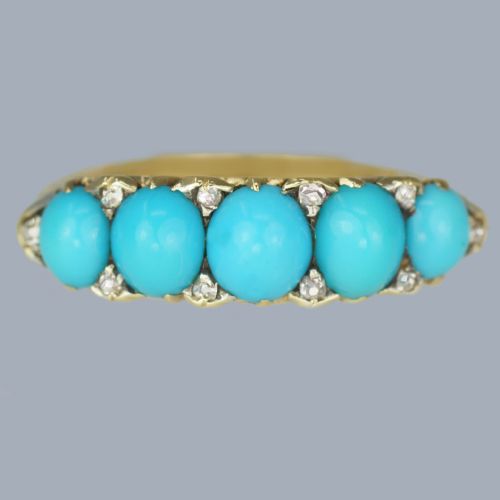
An antique blue stone ring encompasses finger ornaments set primarily with sapphires, turquoise, zircon, and spinel, often accompanied by diamonds or paste stones. These pieces span from the Georgian period through the Victorian, Edwardian, and Art Deco eras into the mid-twentieth century.
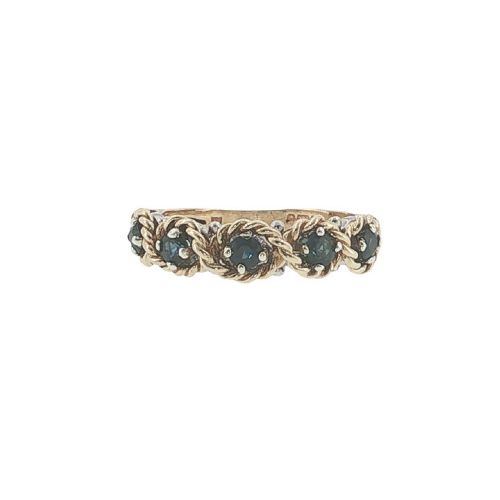
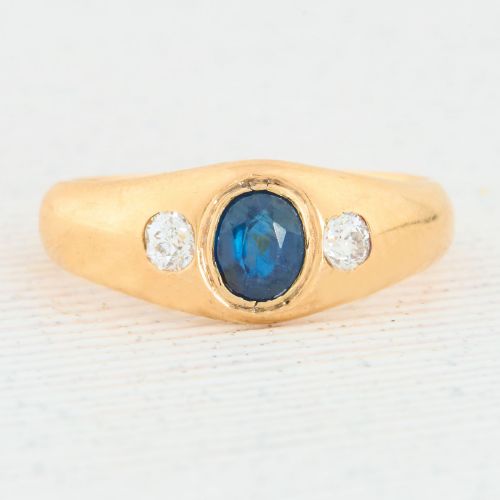
The form is predominantly a ring, appearing as clusters, boat shapes, gypsy settings, trilogies, and twists. Buyers searching for an antique blue stone ring will encounter yellow gold, white gold, and platinum bands housing these varied blue minerals.
How they were made
Goldsmiths constructed these bands utilising 18ct yellow gold, 15ct gold, 9ct gold, and platinum, frequently combining yellow gold Shanks with silver settings to enhance white diamond brilliance. Stones were secured via claw settings, bezels, and flush gypsy mountings.
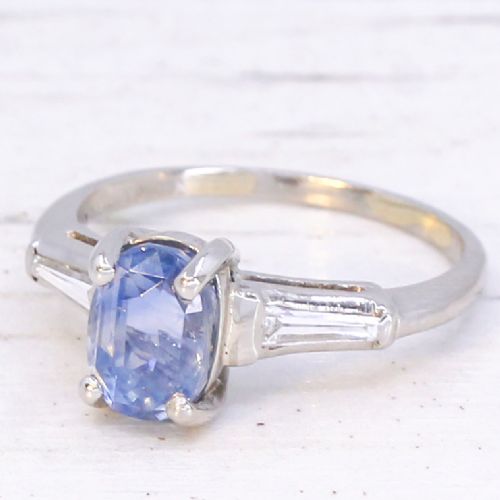
Gemstones such as sapphires, turquoise, and zircon were hand-cut into old cuts, rose cuts, and geometric facets. Platinum emerged strongly in Edwardian and Art Deco pieces for intricate milgrain detailing and durable openwork.
Gemstone varieties in the inventory include sapphire, turquoise, blue zircon, spinel, paste, and diamond.
What varies in quality
Quality rests upon the origin, treatment, and depth of colour in the central blue stone, alongside the weight and clarity of accompanying diamonds. Natural unheated Kashmir, Burma, or Ceylon sapphires sit at the upper end of the scale compared to standard basaltic stones.
Construction integrity also dictates standard, visible in the crispness of milgrain edges, the thickness of the gold shank, and the precision with which cluster stones are aligned.
The Antique Blue Stone Ring Glossary
- Cluster ring
- A ring featuring a central gemstone surrounded by a border of smaller stones, typically diamonds.
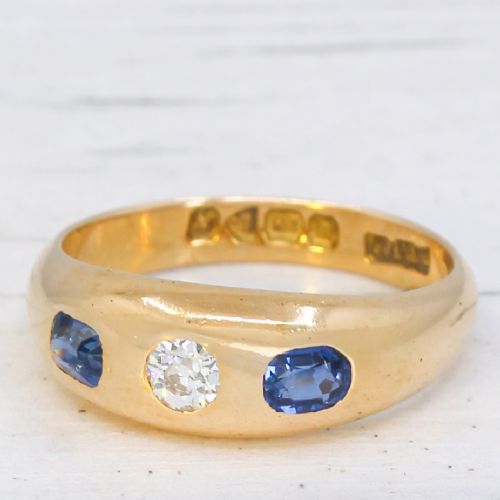
- Gypsy ring
- A style where stones are flush-set directly into a thick, tapering gold band.
- Trilogy ring
- A three-stone ring often symbolizing past, present, and future, frequently pairing a blue centre stone with two diamonds.
- Boat ring
- A navette-shaped setting tapering to points at either side of the finger, popular in Georgian and Victorian jewellery.
- Milgrain
- A decorative technique creating a fine beaded border of metal along the edges of a setting.
- Paste
- Faceted glass used as an alternative to diamonds or precious stones in historic jewellery.
Antique Blue Stone Ring: Frequently Asked Questions
How do I identify an Edwardian blue stone ring?
Edwardian rings typically employ platinum settings, delicate milgrain work, and lighter gold bands framing sapphires or diamonds. The style emphasises airy, lace-like craftsmanship popular around the start of the twentieth century.
Look for refined proportions and Edwardian hallmarks or cipher stamps where preserved inside the band.
Are turquoise rings durable enough for daily wear?
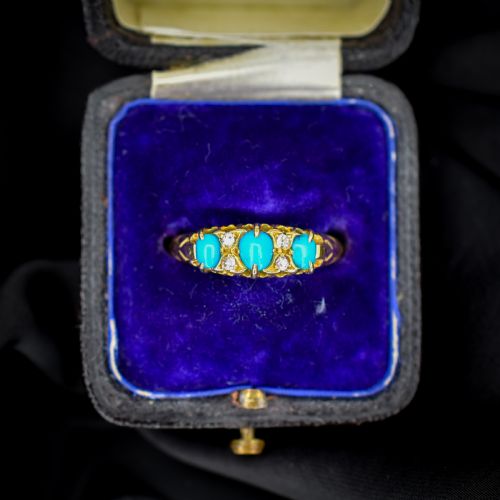
Turquoise is a softer stone compared to sapphire or diamond, requiring more careful handling during everyday tasks. Victorian and Edwardian makers frequently paired turquoise with diamonds in 15ct or 18ct gold.
Owners should remove these rings before swimming, cleaning, or heavy manual work.
How do I care for an antique gold ring?
Antique gold and platinum settings benefit from gentle cleaning using warm water, mild soap, and a soft brush. Harsh chemical dips can damage softer gems like turquoise or pearls.
Regular inspection by a jeweller ensures prongs and bezels remain secure around the stones.