




Antique Blue Satsuma
These antique blue satsuma pieces combine deep cobalt grounds with intricate gilt painting, offering a striking focal point for any room.
Antique Blue Satsuma
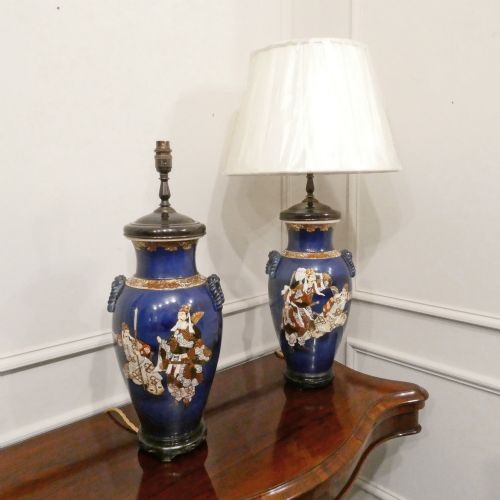
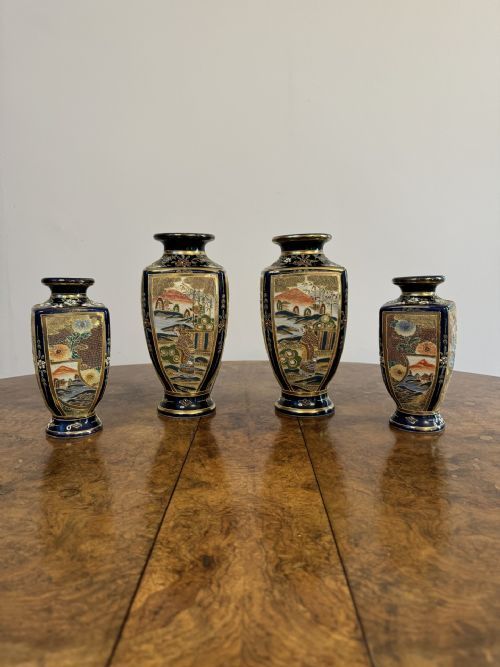
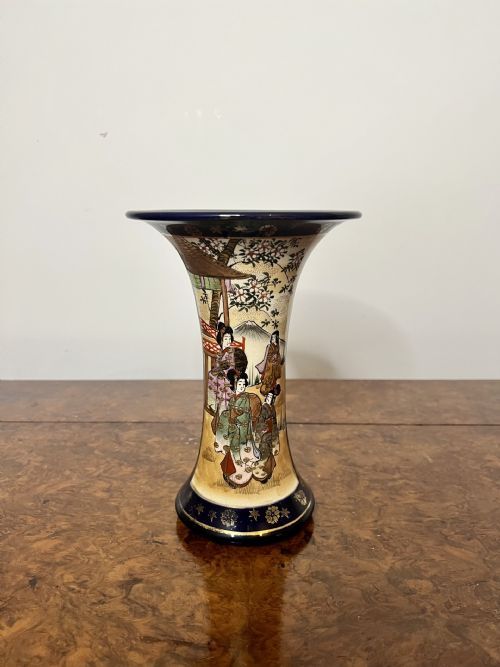
Antique blue satsuma encompasses Japanese ceramic vessels and figures characterised by rich cobalt blue grounds paired with detailed enamel decoration. Buyers seeking this aesthetic will frequently encounter pairs of vases, decorative bowls, and table lamps from the Meiji period.
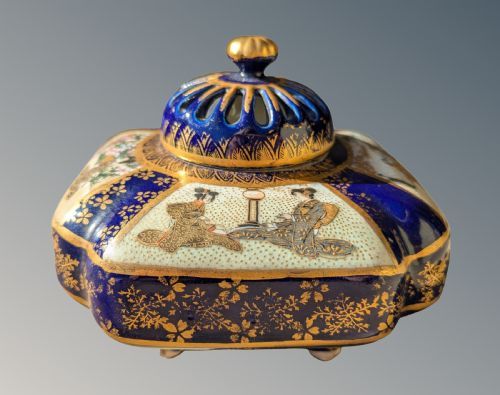
The objects span from the late nineteenth century into the early twentieth century, reflecting both traditional Kyoto workshop traditions and later production. Forms range from monumental garnitures and incense burners to sculptural figures depicting traditional subjects.
How they were made
Potters shaped these pieces from earthenware and porcelain before applying vibrant enamel colours and substantial gold leaf detailing. Many examples utilise moriage technique, building up raised enamel and gilt paste to create tactile relief on the ceramic surface.
Makers integrated brass mounts or silk elements on specific utilitarian forms like table lamps and incense burners. Artisans applied cobalt glaze to create deep blue backgrounds that contrasted sharply with the intricate gilt and polychrome figural panels.
Antique Blue Satsuma Retail Price Guide 2026
Typical asking prices for blue satsuma among the pieces listed under this phrase on Sellingantiques today, from the lower quarter to the upper quarter. They describe what is for sale here now, not the wider market.
Listings feature items spanning the Victorian era through the Taisho and early Showa period, predominantly utilising earthenware and porcelain with heavy gilding.
What varies in quality
Execution of the hand-painted detail and the density of the moriage relief separate standard commercial exports from masterwork pieces. The precision of the gilt work and the clarity of court figures or landscape panels dictate the visual distinction of an object.
Attribution to notable Kyoto potteries or specific master circles elevates the standing of a piece within this tradition. The balance between the rich cobalt ground and the refined enamel palette determines the overall harmony of the design.
Kinkozan·Nanzan
The Antique Blue Satsuma Glossary
- Satsuma
- A type of Japanese earthenware originating from Satsuma Province, traditionally characterised by an ivory crackle glaze, though later Meiji variants introduced rich cobalt grounds.
- Moriage
- A ceramic decoration technique where clay slip or enamel is piped onto the surface in raised dots or lines, creating a textured, three-dimensional effect.
- Meiji Period
- The era of Japanese history spanning from 1868 to 1912, noted for a significant increase in decorative arts exported to Western markets.
- Koro
- A traditional Japanese incense burner, often supported on three legs and fitted with a pierced decorative cover.
- Mon
- A Japanese heraldic badge or emblem used to identify families, clans, or governmental organisations, frequently incorporated into ceramic decoration.
Antique Blue Satsuma: Frequently Asked Questions
What is blue satsuma?
Blue satsuma refers to Japanese ceramics featuring a deep cobalt blue ground combined with traditional gilt and enamel decoration. These pieces depart from the standard pale crackle-glaze aesthetic while maintaining classic Meiji period motifs.
Such items gained popularity during the late nineteenth century as export wares tailored for international collectors. They showcase vibrant contrast between the dark blue background and detailed figural panels.
How do I date these pieces?
Dating relies on stylistic indicators, potting characteristics, and known workshop signatures from the Meiji and Taisho eras. Pieces from the late nineteenth century often exhibit finer hand-painting and substantial moriage relief.
Markings on the base, such as artist signatures or kiln seals, help narrow the period of production. Comparing the complexity of the cobalt and gilt decoration to documented examples further clarifies the timeline.
Where were they made?
The majority of these ceramics originated in major production centres such as Kyoto, where prominent workshops like Kinkozan operated. Export demand drove production specifically for Western markets during the late nineteenth and early twentieth centuries.
Artisans combined traditional Japanese iconography with forms that appealed to contemporary European and American interiors. This cross-cultural exchange shaped the specific shapes and garnitures found today.
How should I display them?
Positioning these vessels where natural light can catch the gilt detailing enhances their visual impact. Pairing large vases as mantel garnitures or placing decorative bowls on central tables highlights their traditional symmetry.
Ensuring stable placement protects the raised moriage decoration and delicate enamel surfaces from accidental impact. Table lamps should be positioned to complement existing room illumination without crowding the ceramic base.