





Antique Blue Planter
When you search for an antique blue planter, you are looking at ceramic and earthenware vessels designed to hold plants.
Antique Blue Planter
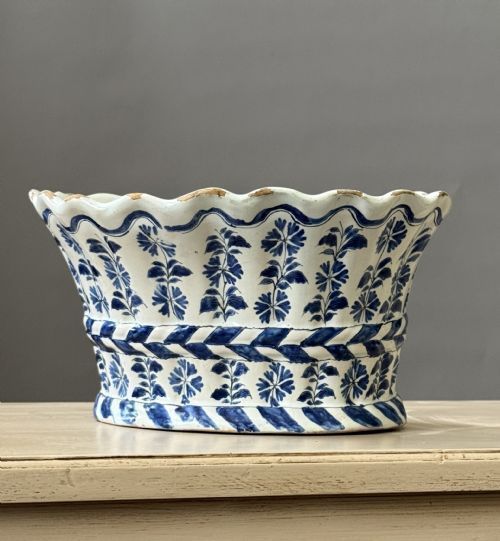
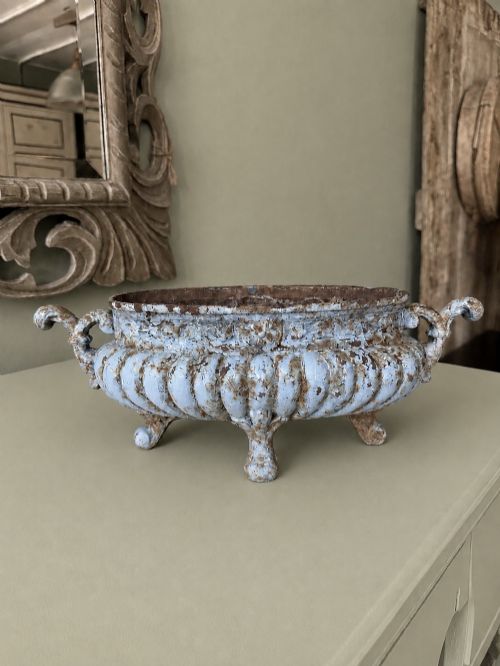
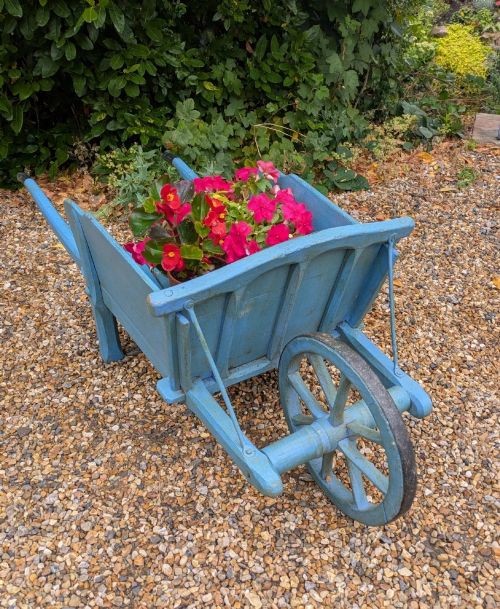
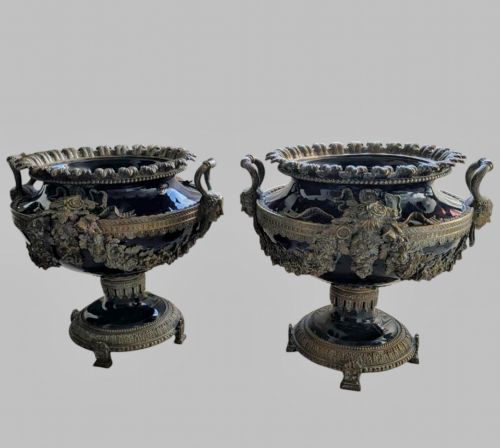
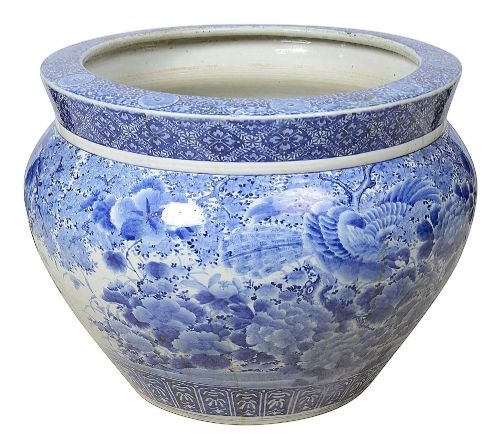
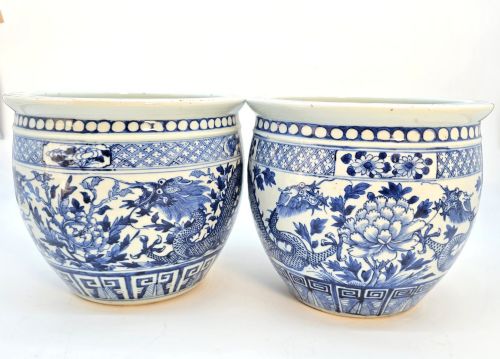
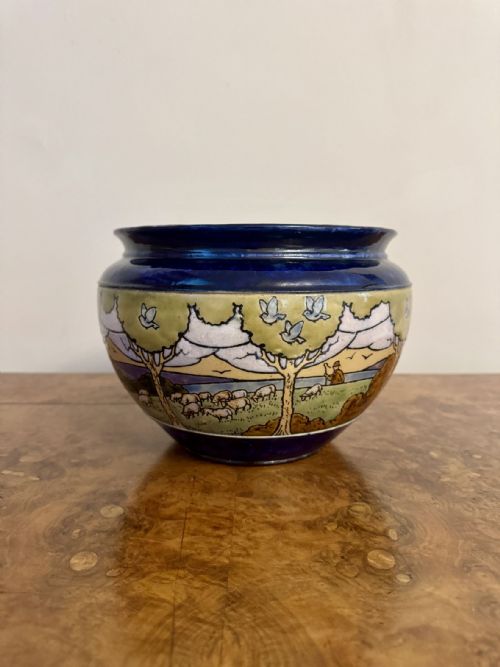
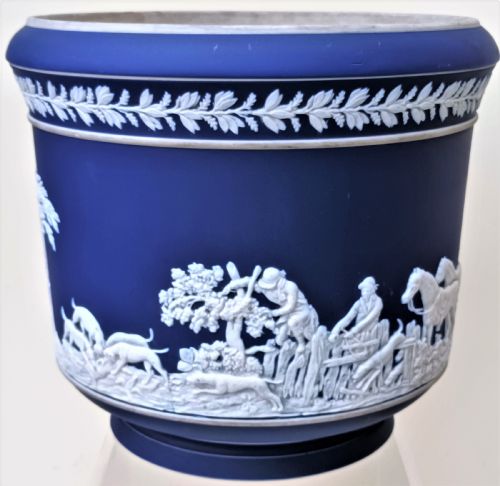
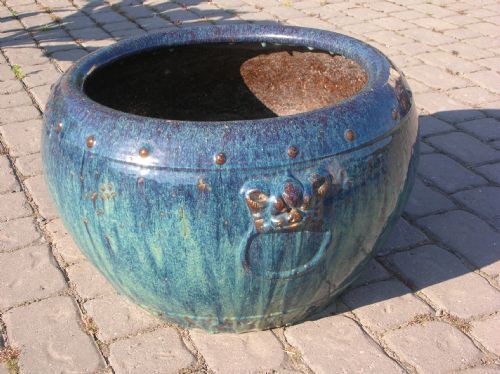
An antique blue planter takes many forms across different centuries and origins, appearing as jardinières, footbaths, cachepots, and garden urns. These pieces serve to house potted greenery or display floral arrangements within domestic and garden spaces.
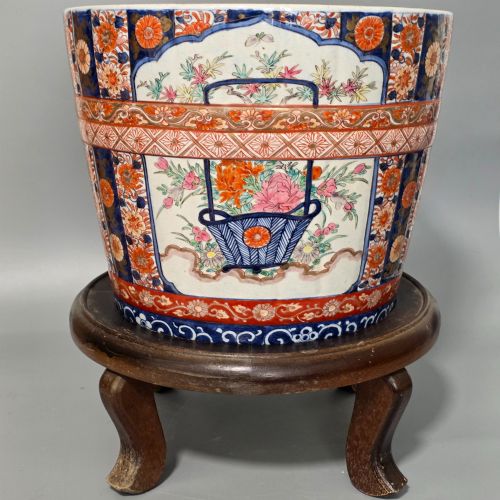
The selection ranges from eighteenth-century Delft bough pots and Chinese export porcelain to nineteenth-century English earthenware, stoneware, and Japanese Imari pieces. Buyers will frequently encounter Victorian examples produced by prominent British potteries alongside continental and Asian imports.
Makers shaped these vessels for utilitarian function or purely decorative display, utilising blue glazes, transfer printing, and hand-painted cobalt decoration. Each item reflects the aesthetic preferences of its period, from Chinoiserie motifs to rustic country designs.
How they were made
Potters shaped clay on the wheel or pressed it into moulds, creating earthenware, stoneware, and porcelain bodies before firing them in kilns. Artisans applied cobalt blue pigments directly onto the unglazed clay or over white tin glazes, sealing the colour beneath a clear glossy finish during the final high-temperature firing.
Transfer printing allowed workshops to apply intricate blue and white patterns onto earthenware surfaces efficiently. Painters also worked by hand, using fine brushes to execute detailed Japanese Imari and Chinese blue and white scenes.
Listings feature ceramics spanning the eighteenth to the twentieth centuries, encompassing earthenware, porcelain, and salt-glazed stoneware.
What varies in quality
The clarity and depth of the blue pigment dictate much of the visual success of a piece, separating crisp, controlled painting from muddy or blurred decoration. Superior vessels display a harmonious relationship between the form of the jardinière and the complexity of its hand-painted or transfer-printed scenes.
The weight and density of the ceramic body, alongside the evenness of the glaze application, mark the distinction between standard utilitarian wares and high-status studio or factory production. Potters who achieved precise control during the kiln firing produced pieces with stable glazes and sharp surface details that endure without discolouration.
Royal Doulton·William Adams and Sons·Lauder Pottery Barnstaple·Doulton Burslem·Doulton Lambeth·Clement Massier·Spode·Royal Worcester·Wedgwood·Minton
The Antique Blue Planter Glossary
- Jardiniere
- A large ornamental pot or stand designed to hold a plant or flower arrangement. These vessels sit on tables or directly on the floor.
- Cachepot
- An ornamental flowerpot cover used to hide a plain inner pot. The term derives from the French words for hiding a pot.
- Imari
- A style of Japanese porcelain decorated in underglaze blue, iron red, gold, and supplementary colours. These wares were widely exported to Europe from the Meiji period onward.
- Delft
- Tin-glazed earthenware produced in the Netherlands and England, typically featuring blue and white decoration inspired by Chinese porcelain. It gained popularity during the seventeenth and eighteenth centuries.
- Transferware
- Pottery decorated by applying a design from an engraved copper plate onto tissue paper, which was then transferred onto the ceramic surface before glazing. This technique allowed for consistent mass production of complex patterns.
Antique Blue Planter: Frequently Asked Questions
What is an antique blue planter used for?
These vessels were originally manufactured to hold live potted plants, large floral arrangements, or indoor bulbs. In historical interiors, they protected fine furniture from water damage while displaying greenery.
Today, collectors use them for the same botanical purposes or display them empty as decorative objects. Their robust construction allows them to function in conservatories, hallways, and living rooms.
How do I care for an antique blue planter?
Protect antique ceramics by placing a plastic liner inside the vessel rather than planting directly into the historic earth. This prevents moisture from seeping into porous earthenware or stoneware bodies.
Clean the surface gently with a soft cloth and warm water, avoiding harsh chemical cleaners that might damage the glaze. Keep the vessels away from freezing outdoor temperatures if they are made of vulnerable earthenware.
How can I tell the difference between Japanese and European styles?
Japanese pieces from the Meiji period often feature dense cobalt painting, Imari palettes, or motifs such as fish bowls and dragons. European interpretations frequently draw on Chinese export styles or Victorian transfer printing techniques.
Examine the base of the vessel for factory marks, stampings, or stylistic clues that point to specific potteries in England, France, or Asia. The composition of the clay body also helps distinguish European stoneware from Asian porcelain.
Were footbaths used as planters in the past?
Large ceramic footbaths were originally designed for personal hygiene in wealthy households before indoor plumbing became common. Their deep basins and sturdy handles made them convenient for secondary uses.
Later households repurposed these deep vessels to hold large floral arrangements, fruit, or indoor plants. This historical crossover explains why footbaths appear alongside traditional jardinières in antique listings.