



Antique Black Trinket Box
An antique black trinket box brings dark lustre, refined utility and small-scale storage to a dressing table.
Antique Black Trinket Box
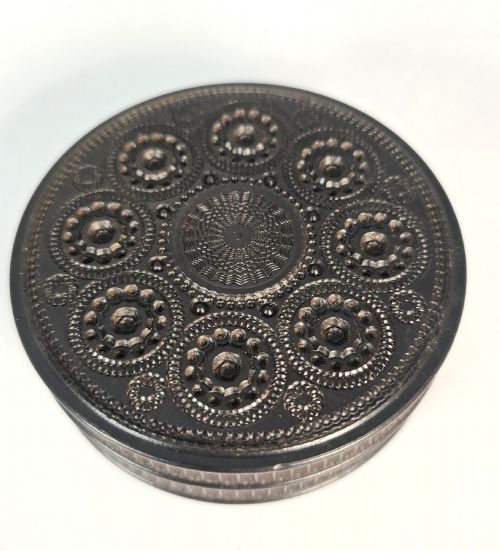
An antique black trinket box spans small pocket containers, stationary cases and heavy jewellery caskets made across Europe, Russia and Asia. When you search for this phrase, you meet lacquered papier-mâché, carved wood and ebonised pieces originating in the Georgian, Victorian, Regency and early twentieth-century periods.
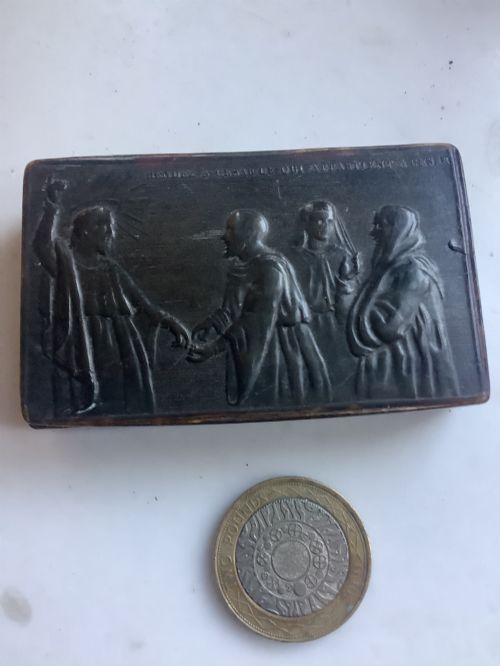
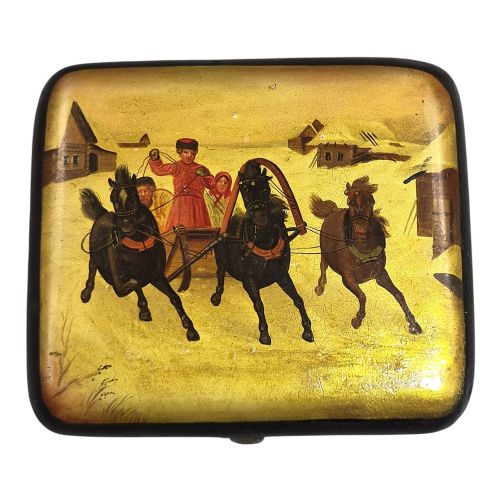
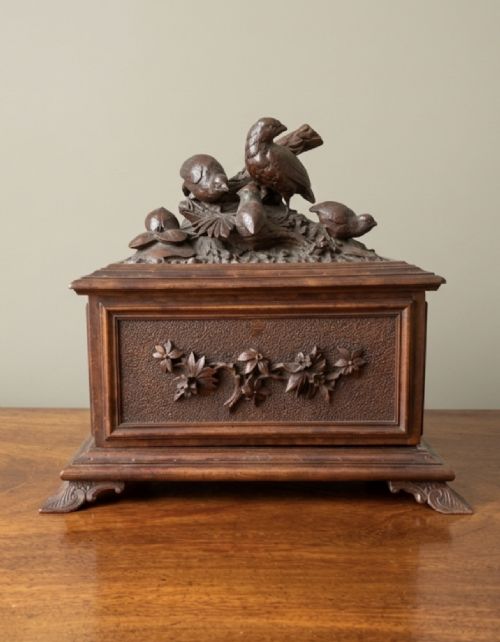
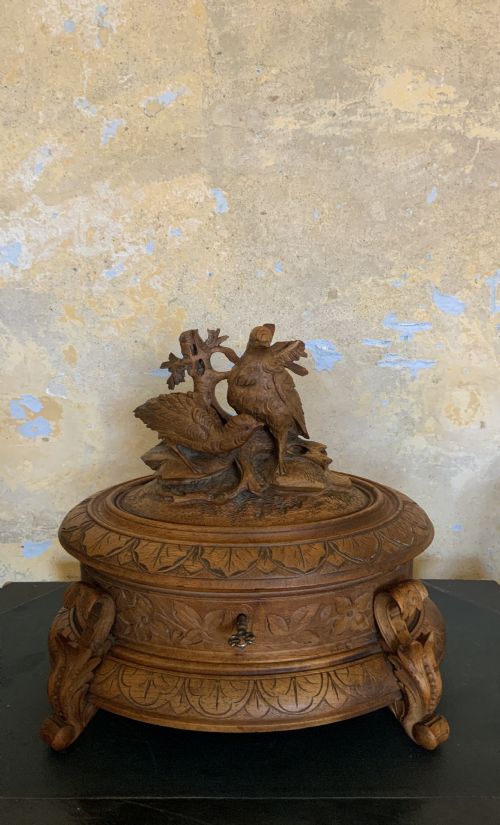
The most common versions on this page are nineteenth-century papier-mâché boxes featuring hand-painted lids, along with carved wooden Black Forest caskets and Japanese lacquered pieces. These vessels served diverse past uses, from holding snuff and cigarettes to containing letters, stamps and jewellery.
Materials and Technique
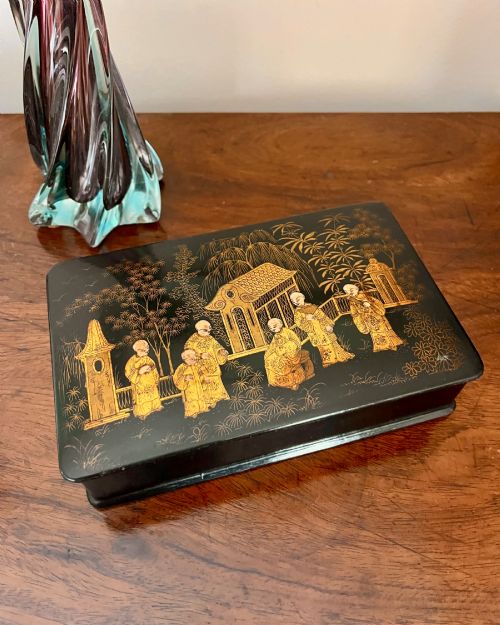
Maker's workshops built these boxes from papier-mâché, pine, walnut, ebony and coromandel, often applying deep black lacquer or dark ebonised finishes to the exterior surfaces. Skilled artisans then decorated the dark grounds using gold leaf, polychrome paint, intricate penwork or pokerwork.
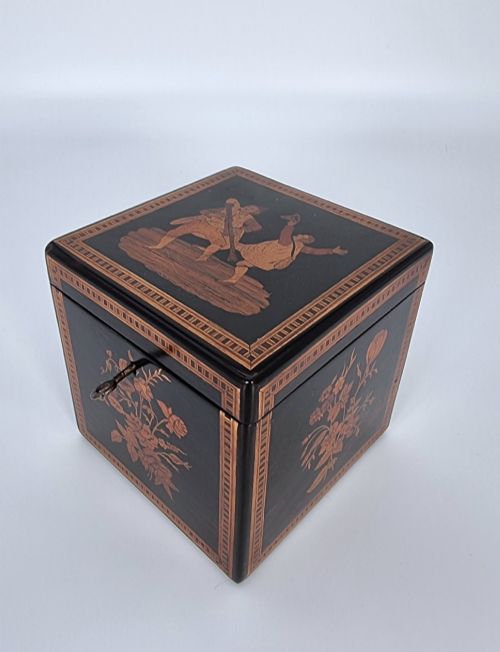
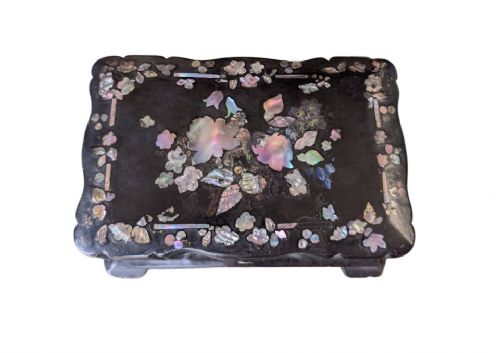
Many examples incorporate contrasting inlays of mother of pearl, ivory, stone or metal wire to create detailed pictorial scenes or geometric patterns. Hinges, locks and mounts of brass, ormolu or silver complete the construction of the finer containers.
Antique Black Trinket Box Retail Price Guide 2026
Typical asking prices for black trinket box among the pieces listed under this phrase on Sellingantiques today, from the lower quarter to the upper quarter. They describe what is for sale here now, not the wider market.
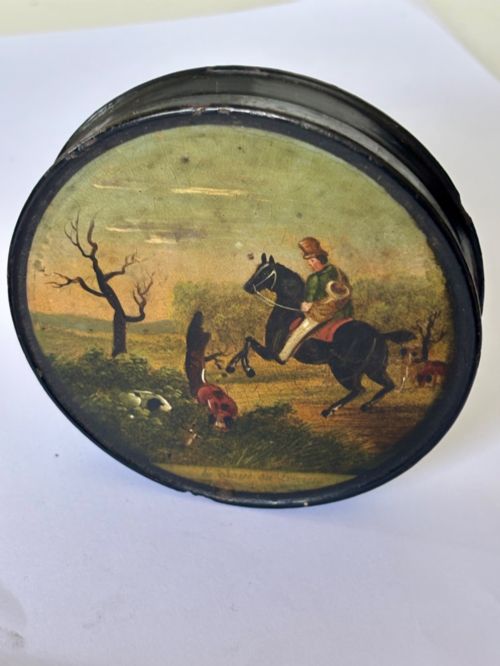
Some nineteenth-century French snuff boxes depict lively hunting scenes labelled 'La Chasse' upon their polished lids.
Assessing Quality
Quality rests upon the crispness of the carving, the depth of the lacquer finish and the precision of the applied inlay work. Superior items display meticulous hand-painted details or fine engine-turning rather than crude stencilling or flat monochrome surfaces.
The integrity of the construction also dictates standing, with top-tier examples retaining their original working brass locks, tightly fitted lids and intact interior linings of silk, velvet or paper.
Vishnyakov Workshop
The Antique Black Trinket Box Glossary
- Papier-mâché
- A composite material made from paper pulp or reinforced sheets of paper mixed with glue, moulded and dried until rigid. It forms the smooth, dark body of many nineteenth-century boxes.
- Pietra dura
- An Italian technique of inlaying cut and fitted polished coloured stones to create pictorial designs. It appears on the lids of select nineteenth-century caskets.
- Penwork
- A decorative technique using pen and ink to draw intricate designs onto a prepared wooden or bone surface, often finished with a clear protective varnish.
- Ebonisation
- A chemical or pigment treatment applied to cheaper woods like fruitwood or pine to imitate the deep, dark appearance of solid ebony.
- Takamaki-e
- A Japanese lacquer technique where the design is raised above the surface by mixing lacquer with charcoal or clay powder before applying metallic dust.
Antique Black Trinket Box: Frequently Asked Questions
What did people keep in these boxes?
Past owners used these small vessels to secure personal valuables, including rings, brooches, loose coins and pocket watches. Deeper boxes held daily writing materials, stamps and folded correspondence.
Smaller flat variants served specifically to carry snuff, dry tobacco or cigarettes for gentlemanly use during the nineteenth and early twentieth centuries.
How do I date a papier-mâché box?
Examining the interior linings, hinge types and hand-painted motifs helps determine the age of a dark papier-mâché container. Georgian and early Victorian pieces often feature simple brass hardware and hand-brushwork depicting romantic or hunting scenes.
Later Victorian and Edwardian examples lean towards geometric mother-of-pearl inlay or stylised floral borders reflecting the shifting tastes of the period.
Are black lacquer and ebonised wood the same?
Black lacquer involves applying successive coats of processed tree sap or resin to a prepared wood or papier-mâché base, resulting in a deep, glossy, polished finish. Ebonisation is simply staining or treating a lighter timber to darken it.
Lacquer yields a harder, more reflective surface that resists wear, whereas ebonised wood reveals the natural grain of the underlying timber beneath the dark stain.
How should I clean an antique box?
Dust surfaces gently with a soft, dry microfibre cloth to remove everyday particles without abrading delicate painted decoration or inlays. Avoid using chemical sprays, wet sponges or modern furniture polishes, which damage aged lacquer and exposed wood.
Leather-covered examples benefit from very light conditioning only if the hide is dry, while metal mounts require careful isolation from surrounding materials during cleaning.