
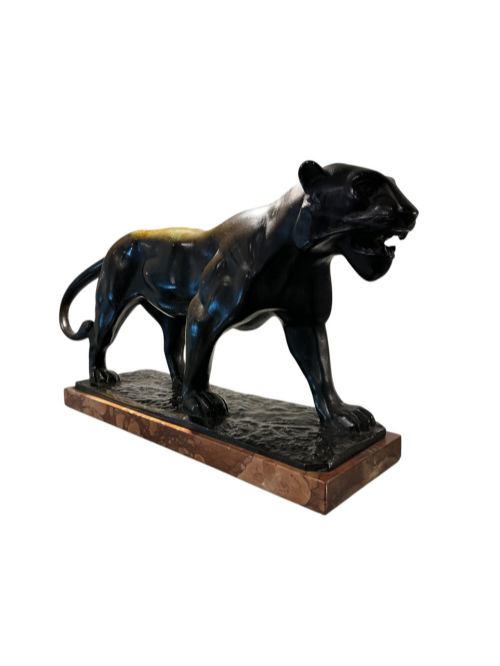
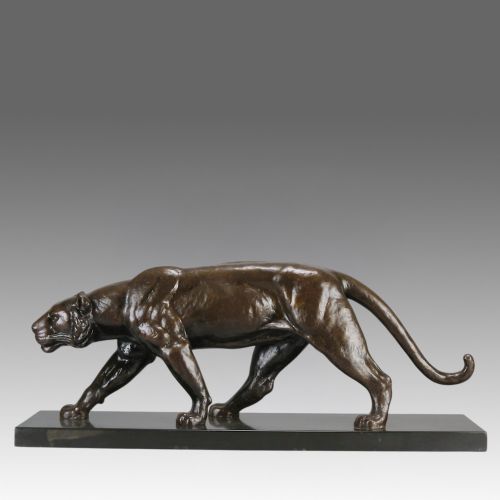


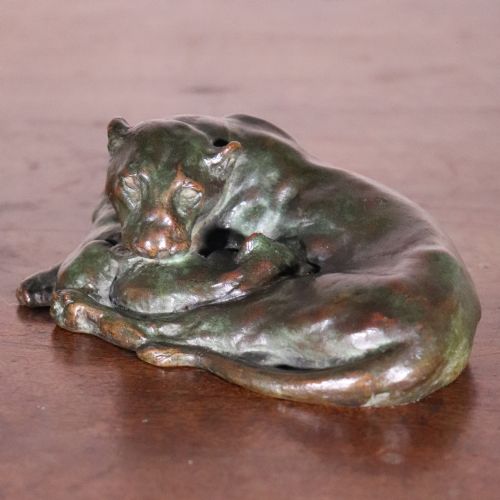


Antique Big Cat Statue
An antique big cat statue captures the raw power of lions, tigers, and panthers through the skilled hands of nineteenth and twentieth-century sculptors.
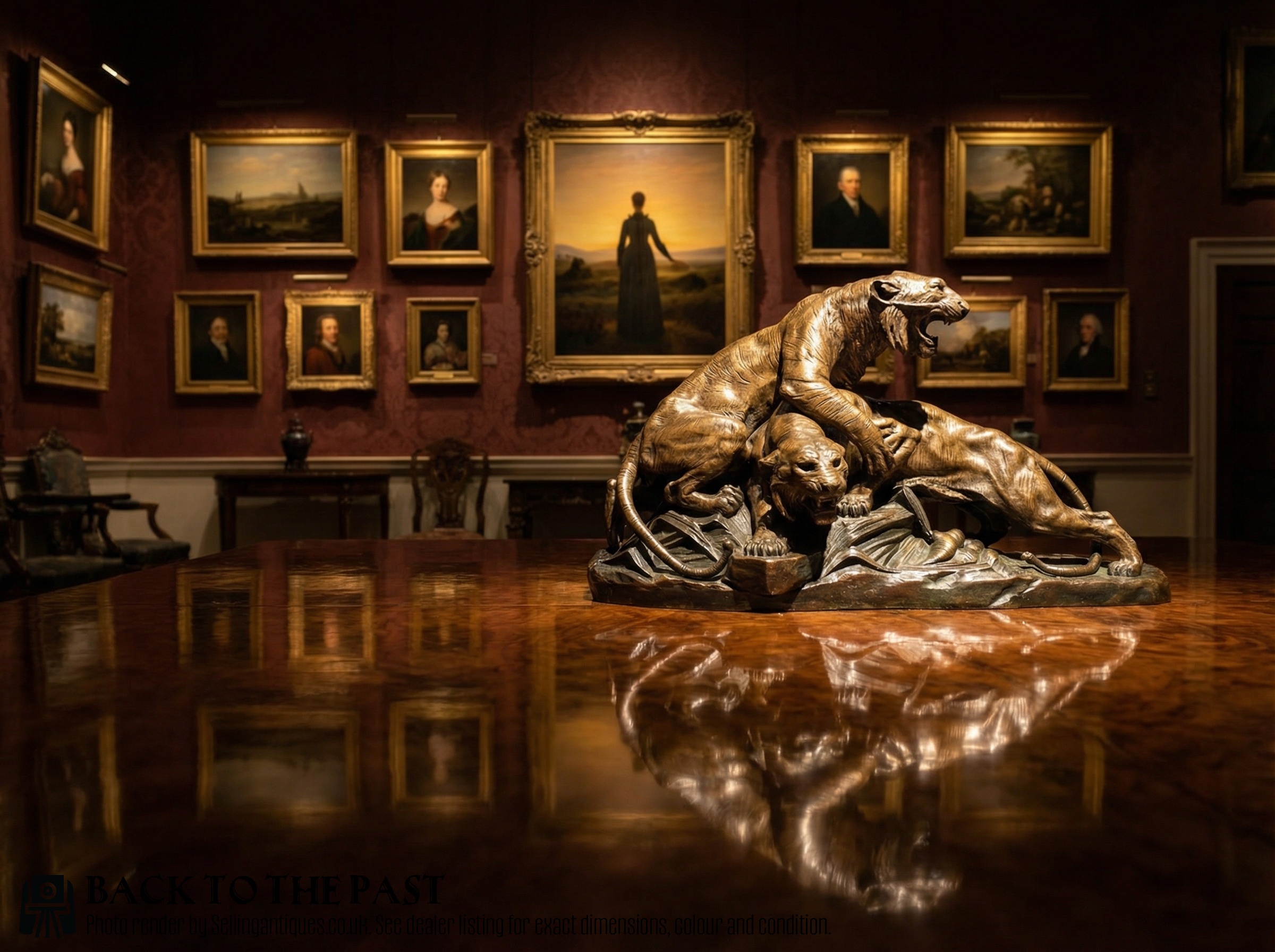
Antique Big Cat Statue
When you search for an antique big cat statue, you encounter powerful depictions of lions, tigers, leopards, and panthers rendered in bronze, spelter, and ceramic. These sculptures span the nineteenth century through the Art Deco period of the 1920s, 1930s, and 1940s.
You are most likely to meet French Animalier bronzes mounted on marble bases, alongside distinctive Art Deco prowling panthers and Victorian Staffordshire pottery figures. The forms range from solitary stalking predators to dramatic hunting scenes involving prey.
The origins stretch across French, Austrian, and German studios, capturing the intense naturalism of the 19th Century French school as well as the sleek, stylised lines of later twentieth-century design.
Materials and construction
Foundries utilised the lost-wax casting method for bronze pieces, allowing sculptors to capture musculature, fur texture, and dynamic motion with precision. Spelter served as a more accessible metallic alternative during the Art Deco era.
Marble and alabaster provided heavy, contrasting plinths for metallic figures, whilst earthenware and porcelain works received hand-painted enamel glazes and cold-painted finishes to bring realistic colour to the animals.
Several big cats share their bronze plinths with surprisingly resilient snakes and pythons.
Assessing quality in sculpture
The refinement of the surface chasing and chiselling after casting distinguishes superior bronzes, separating crisp anatomical detail from softer, blurred rendering. The weight and grain of the marble base also indicate the ambition of the original maker.
Foundry marks and legible signatures from established sculptors elevate the standing of a piece, showing documented authorship rather than anonymous workshop production.
Alexandre Ouline·G.Gardet·Vannetti·Anna Vaughn Hyatt Huntington·Clovis Masson·Michel Decoux·Andrey·Georges Gardet·Louis Riche·Barye·Barbedienne·E.Drouot
The Antique Big Cat Statue Glossary
- Animalier
- A nineteenth-century artistic movement dedicated to the realistic portrayal of animals, particularly wild beasts in motion or repose. French sculptors dominated this genre.
- Spelter
- A zinc-based alloy commonly used as a cost-effective substitute for bronze, frequently painted or patinated to simulate heavier metal. It appears often in Art Deco figures.
- Cold painted
- A finishing technique where paint is applied to metal without high-temperature firing, requiring delicate handling to preserve the pigment over decades.
- Patinated bronze
- Metal treated with chemical solutions to produce a specific surface colour and aged appearance, protecting the underlying alloy while enhancing visual depth.
Antique Big Cat Statue: Frequently Asked Questions
What is an animalier bronze?
An animalier bronze is a nineteenth-century sculpture focused specifically on the realistic anatomy and behaviour of animals. These works capture predators in moments of tension or movement.
They reflect a period when European naturalism and scientific study heavily influenced fine art sculpture production.
How do I spot spelter instead of bronze?
Spelter is lighter than bronze and often reveals a grey or silvery metal underneath where the surface finish has worn thin. It also tends to feel softer to the touch.
Bronze maintains a heavier, denser weight and develops a stable, deep patina over many decades of handling.
Why are marble bases common on these sculptures?
Marble bases provided necessary physical weight and stability to anchor heavy metal figures of stalking cats. They also created a clean, architectural boundary between the naturalistic animal and the domestic interior.
Black and veined marble variants were particularly favoured during the Art Deco period to complement dark patinated metals.
How should I clean my big cat sculpture?
Dust bronze and marble surfaces gently with a soft, dry microfibre cloth to prevent the accumulation of grit. Avoid chemical polishes, water, or abrasive cleaners which can strip historic patinas.
Natural wax may be applied sparingly to bronze by experienced collectors to protect the metal from atmospheric moisture.