

Antique Bentwood Rack
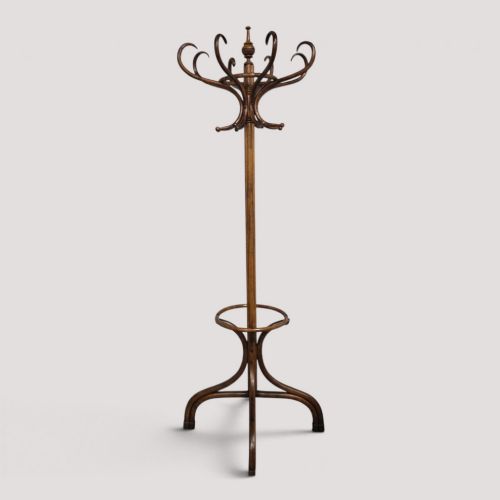
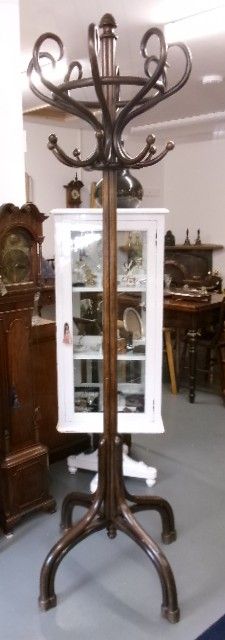
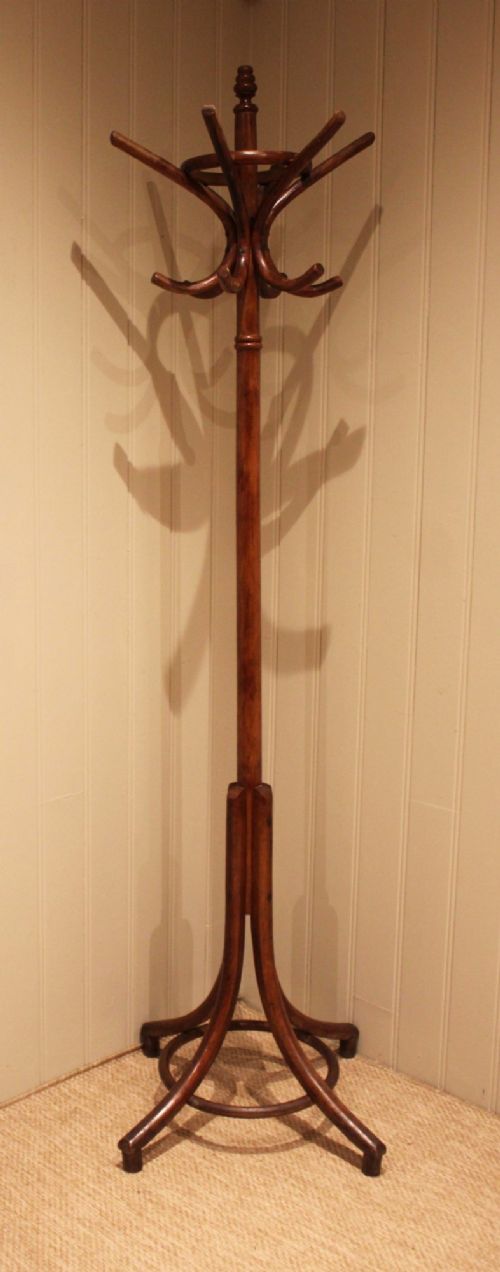
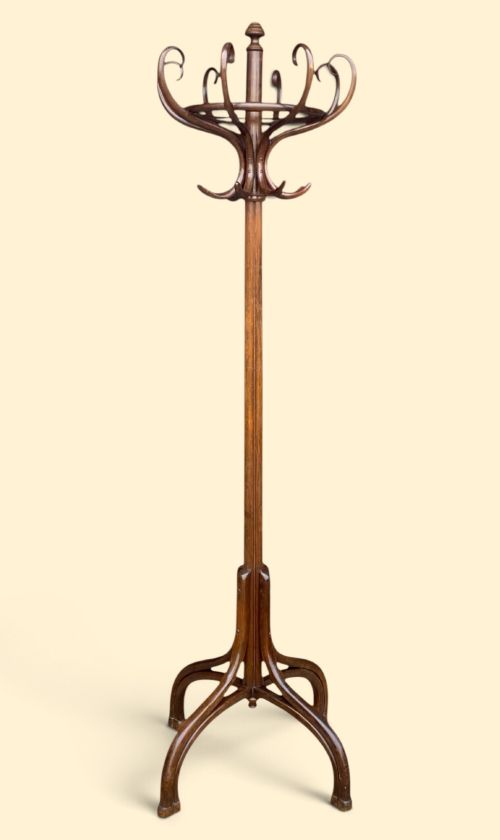
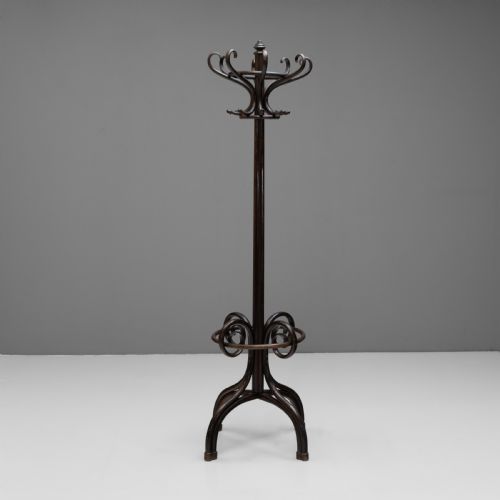
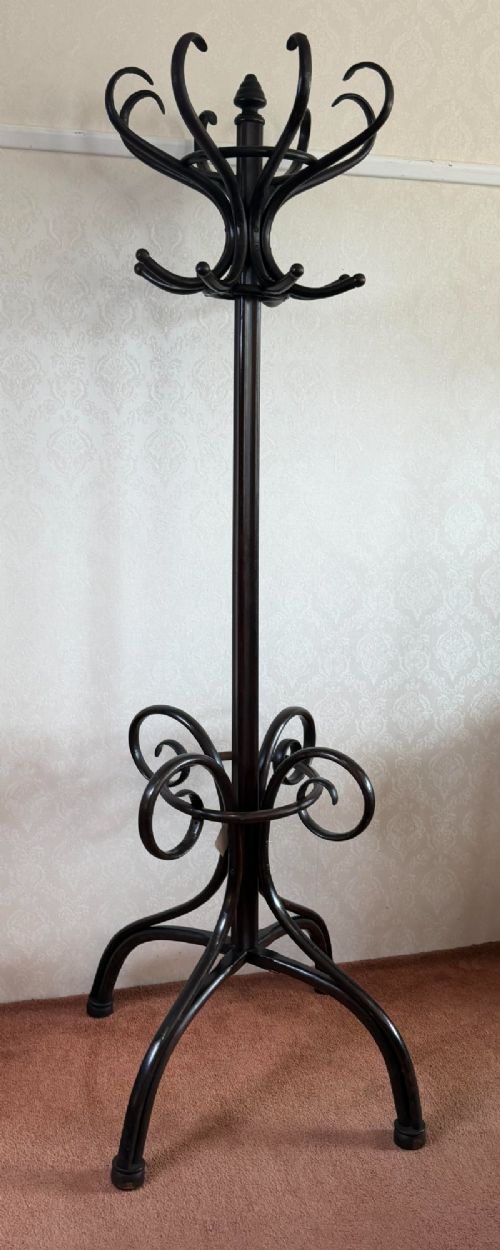
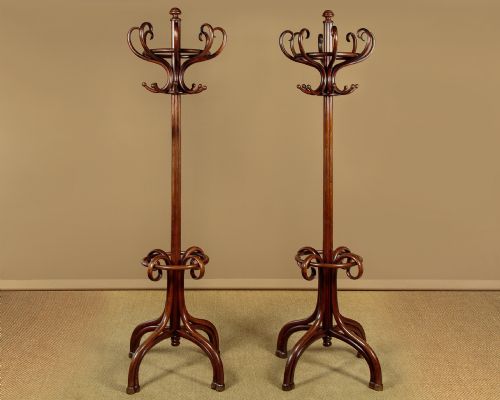
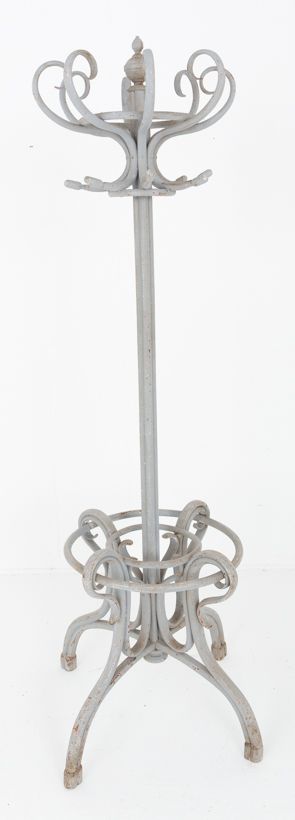
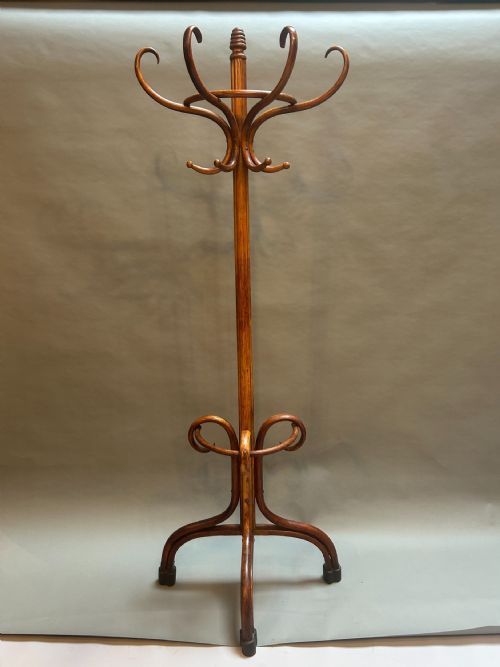
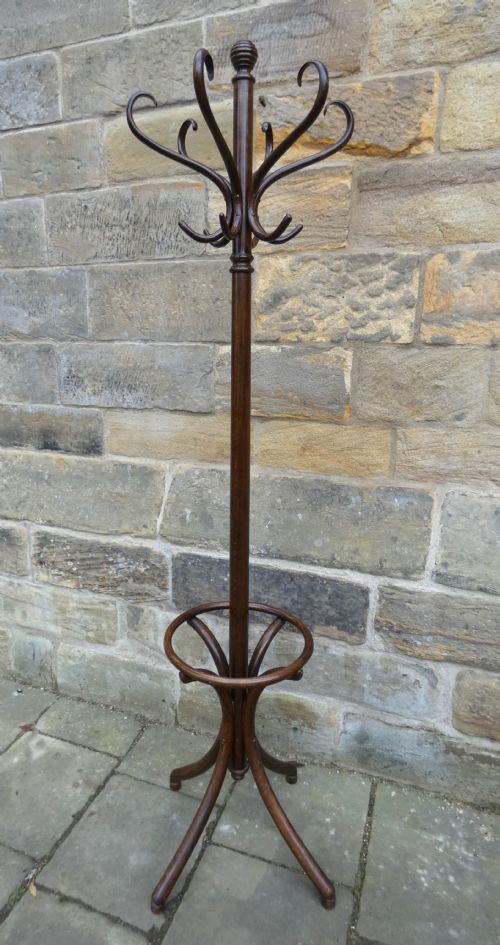
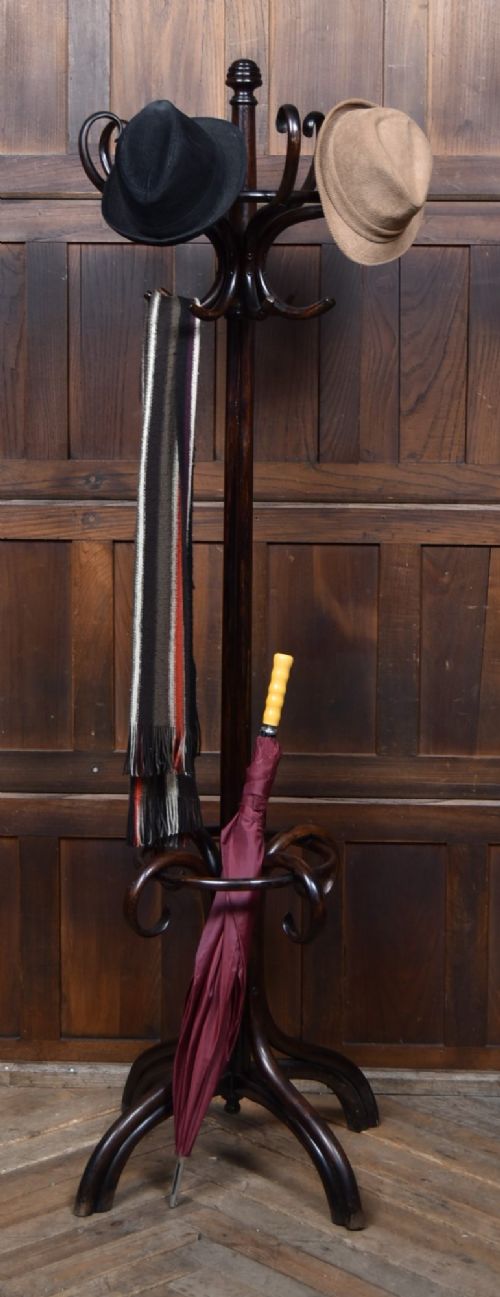
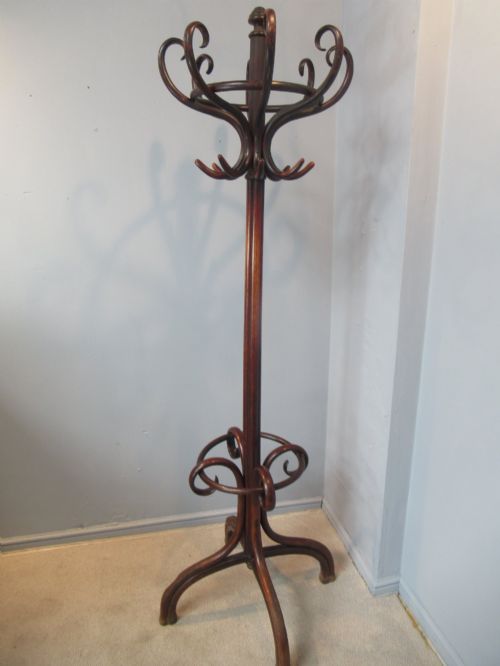
An antique bentwood rack brings organic curves and practical hanging space to a hallway, formed through the Victorian mastery of steamed timber.
Antique Bentwood Rack
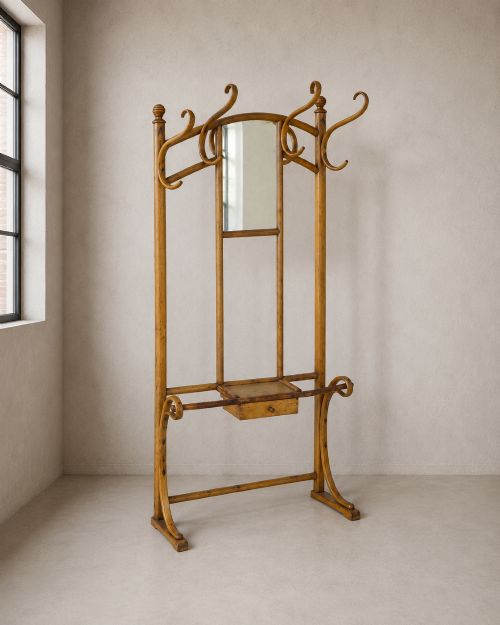
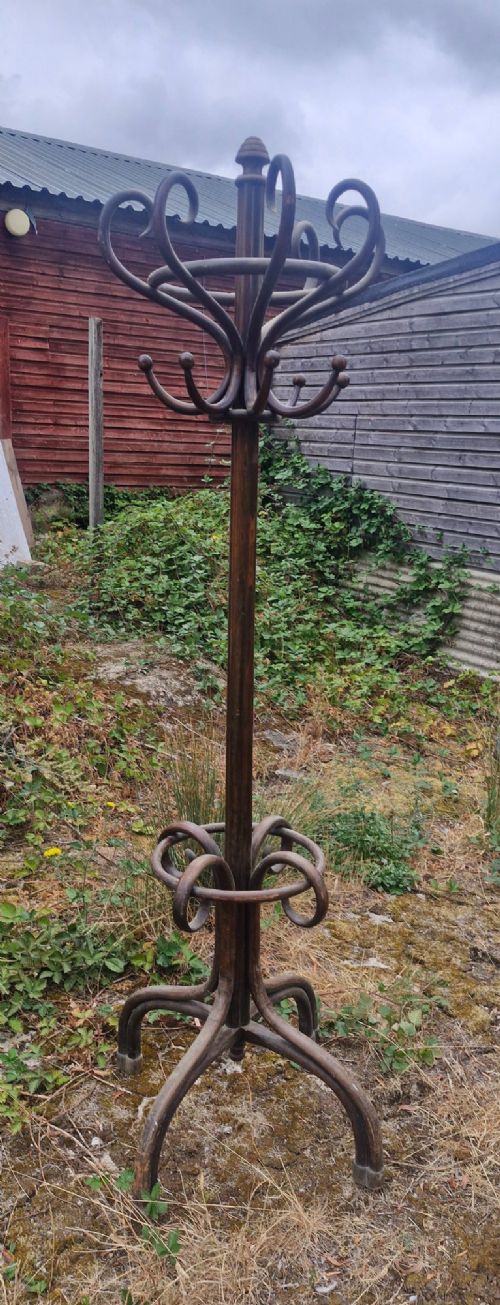
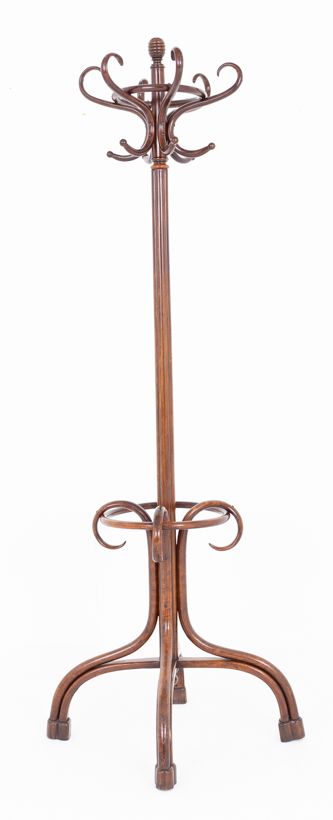
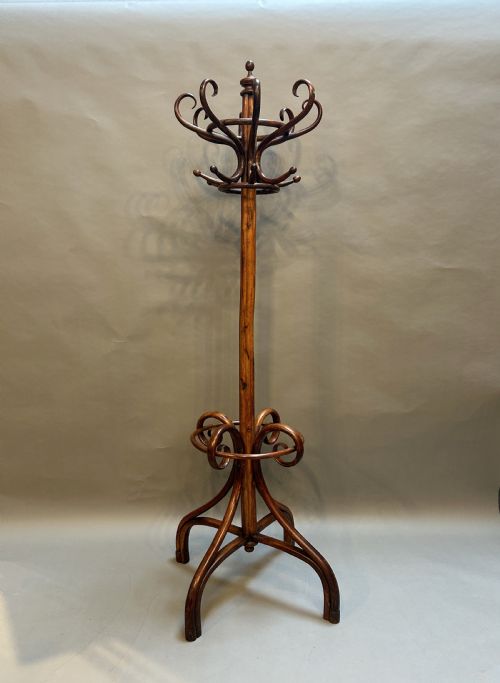
When someone searches for an antique bentwood rack, they encounter standing coat trees, wall-mounted rows of hooks, and elaborate hall stands designed for hats, coats, and walking sticks. These pieces date primarily from the late nineteenth century through to the nineteen-thirties, spanning Victorian, Edwardian, and early twentieth-century periods.
The version most commonly met on this page is the freestanding coat and hat stand, often incorporating a umbrella ring at the base or a revolving top section. Wall-mounted coat racks and half-round demi-lune hall stands also appear, designed to sit flush against an entrance passage wall.
Makers and regional workshops from Austria and beyond produced these utilitarian items to furnish domestic halls with lightweight yet sturdy furniture. Their characteristic upright posts and scrolling bracket loops organise garments without dominating a narrow corridor.
Materials and steaming techniques
The primary material underpinning these pieces is beech, selected for its grain strength and flexibility when subjected to moisture and heat. Workshops utilised steam-box chambers to soften solid beechwood lengths until the fibres became pliable enough for manual bending.
Once flexible, the timber was locked into cast-iron or wooden moulds to set the curved profiles required for scroll hooks, umbrella rings, and arched braces. Metal screws, bolts, and occasionally glass or metal components were integrated to secure the interlocking joints and hooks.
Antique Bentwood Rack Retail Price Guide 2026
Typical asking prices for bentwood rack among the pieces listed under this phrase on Sellingantiques today, from the lower quarter to the upper quarter. They describe what is for sale here now, not the wider market.
Object forms include wall-hanging coat racks, revolving hatstands, and demi-lune hall stands designed for narrow entranceways.
Distinctions in construction and finish
Quality in these items rests upon the complexity of the frame and the retention of original surface finishes, such as honey-coloured varnish or ebonised coatings. Pieces featuring revolving top sections or double-tier crown rings represent more ambitious workshop output than simple upright posts.
The integrity of the steam-bent curves dictates durability; superior examples maintain tight, un-split radii at stress points where hooks meet the central column. Original manufacturer labels, maker stamps, or cast-iron collar markings further distinguish standard utility pieces from documented workshop productions.
Thonet·Fischel
The Antique Bentwood Rack Glossary
- Bentwood
- Timber shaped by exposure to steam and pressure into permanent curves. This technique allows for lightweight, resilient furniture frames without traditional heavy joinery.
- Demi-lune
- A half-moon shape used for hall stands designed to stand flat against a wall. This profile saves floor space in narrow corridors.
- Ebonised
- Wood finished with a dark stain or polish to imitate ebony. This treatment was popular in Victorian and Edwardian interiors for a formal appearance.
- Hall stand
- A multi-functional piece combining coat hooks, hat receptacles, and stick or umbrella wells. Many incorporate a small central shelf or mirror.
Antique Bentwood Rack: Frequently Asked Questions
How do I care for antique bentwood?
Keep these items away from direct heat sources and extreme humidity changes, which can cause the steamed wood to warp or tension joints to loosen over time.
Dust regularly with a dry cloth and occasionally feed the wood surface with a suitable furniture wax to maintain the finish without clogging the grain.
Are these racks sturdy enough for heavy coats?
Most standing and wall-mounted versions were engineered for daily domestic use, easily supporting winter coats, hats, and scarves when balanced correctly.
Freestanding models distribute weight through a wide base or umbrella ring, though overloading one side disproportionately should be avoided.
How can I tell a Thonet piece apart?
Many workshop examples feature paper labels beneath the base, impressed maker marks into the wood, or embossed branding on the metal hardware collars.
The fluidity of the bent scrollwork and precise gauge of the beech components also point toward specialised factory production rather than generic copies.
What is a revolving coat stand?
A revolving design incorporates a swivelling upper crown that allows users to access hanging garments without walking around the entire piece.
This mechanical mechanism relies on a central pin and socket, demonstrating clever engineering within domestic hallway furniture.