

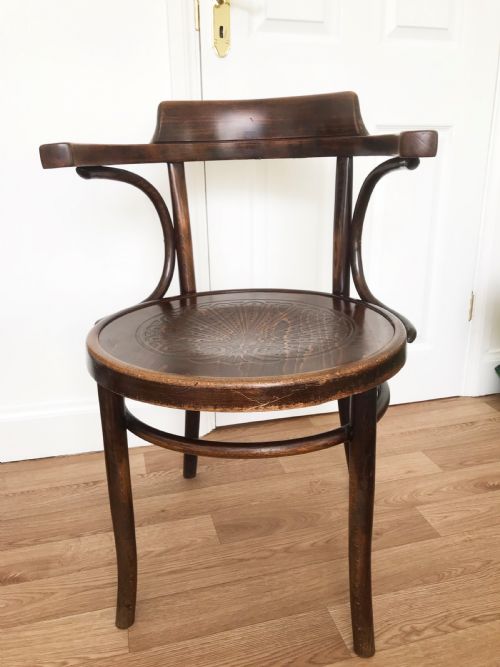


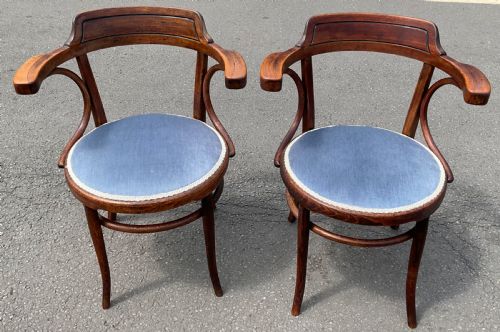
Antique Bentwood Desk
An antique bentwood desk chair brings fluid, steam-shaped curves and practical workspace comfort straight into a room.
Antique Bentwood Desk
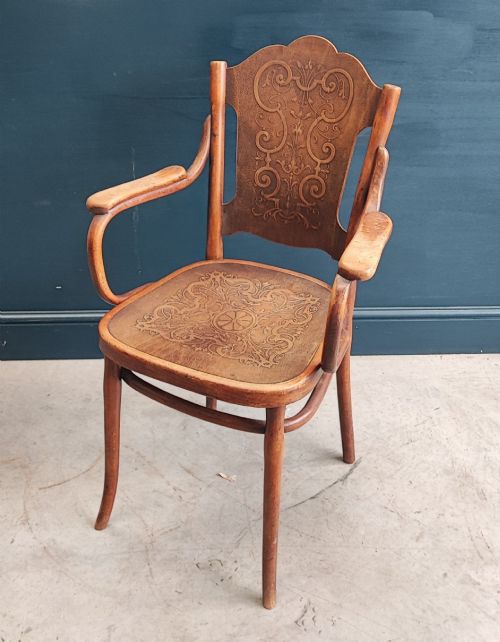
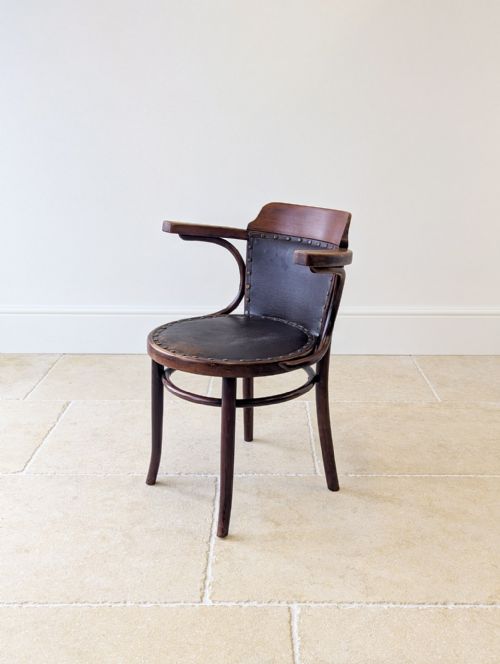
An antique bentwood desk chair is defined by its curved wooden framework, often paired with leather upholstery or cane work for daily office utility. These seats appear across various periods, from Victorian and Edwardian examples to early twentieth-century designs.
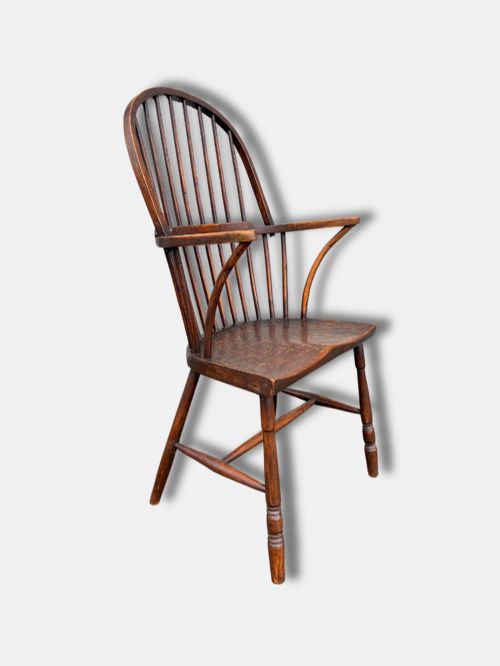
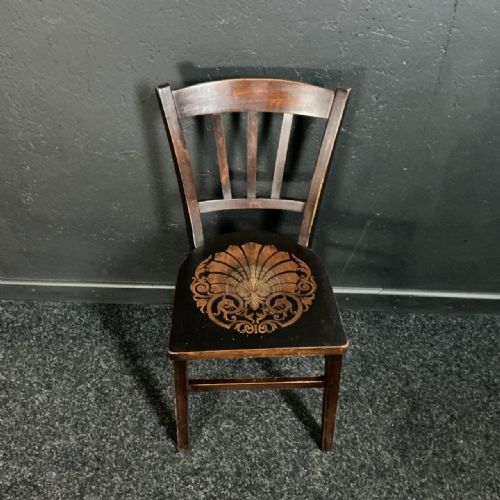
The selection on this page includes swivel desk chairs, carver chairs, and bistro desk chairs originally built for workspace or study use. Origins span from English workshops to continental European makers.
Buyers searching for an antique bentwood desk seating option will frequently encounter designs associated with Thonet and J&J Kohn, reflecting the mainstream forms of the nineteenth and twentieth centuries.
Construction and materials
Beech and beechwood form the structural backbone of these pieces, selected for elasticity and strength when subjected to steam. Craftsmen placed solid timber into steam boxes until pliable, then bent the wood around metal forms to create seamless curves.
Secondary elements such as leather panels, brass hardware, and elm or yew components appear across specific vernacular and colonial variants. Artisans secured the curved components with screws and dowels to maintain tension in the frame.
Antique Bentwood Desk Retail Price Guide 2026
Typical asking prices for bentwood desk among the pieces listed under this phrase on Sellingantiques today, from the lower quarter to the upper quarter. They describe what is for sale here now, not the wider market.
Materials documented across these listings include beech, elm, yew, oak, leather, and brass.
Assessing quality
Quality rests in the tightness of the steam-bent radius and the integrity of the grain along the primary stress points of the backrest. Superior examples maintain structural resilience in the curved members without splintering or excessive reinforcement.
The sophistication of the joinery and the retention of original leather upholstery or swivel mechanisms distinguish standard production items from finer workshop output. Well-executed forms display balanced proportions across the arms and hoop back.
Thonet·J&J Kohn Ltd·Watkins & Doncaster
The Antique Bentwood Desk Glossary
- Bentwood
- Wood shaped by steaming and bending rather than carving. This technique allows for continuous, flowing curves without weak glued joints.
- Hoop back
- A continuous piece of curved timber forming the backrest and arm supports of a chair. It provides ergonomic support through natural spring.
- Swivel mechanism
- The mechanical assembly beneath a seat allowing rotation. In older pieces, this is typically constructed from iron and brass.
Antique Bentwood Desk: Frequently Asked Questions
How do I identify a genuine bentwood desk chair?
Examine the backrest for continuous, steam-curved solid timber without glued joints at the corners. Genuine period pieces exhibit traditional screw fixings and period timber patination.
Look for maker stamps or labels pressed directly into the underside of the seat frame or wooden chassis.
Were these chairs originally made for desks?
Many bentwood designs served multiple domestic and commercial functions, including dining, café seating, and office work. Swivel variants and carver chairs with padded leather seats were specifically tailored for writing desks.
Lighter bistro forms were frequently adapted for home studies as compact desk seating solutions.
How should I care for leather upholstery on an antique chair?
Clean the leather gently using a dry or slightly damp cloth to remove surface dust. Avoid modern chemical detergents that strip natural oils from aged hide.
Apply a micro-crystalline wax or traditional leather dressing sparingly to maintain suppleness and prevent cracking over time.
What periods do these desk chairs come from?
The listings span the nineteenth and early twentieth centuries, encompassing Victorian, Edwardian, and American Colonial eras. Industrial steam-bending technology matured rapidly during this timeframe.
Design influences range from utilitarian vernacular styles to the distinct aesthetic of the Art Nouveau movement.