
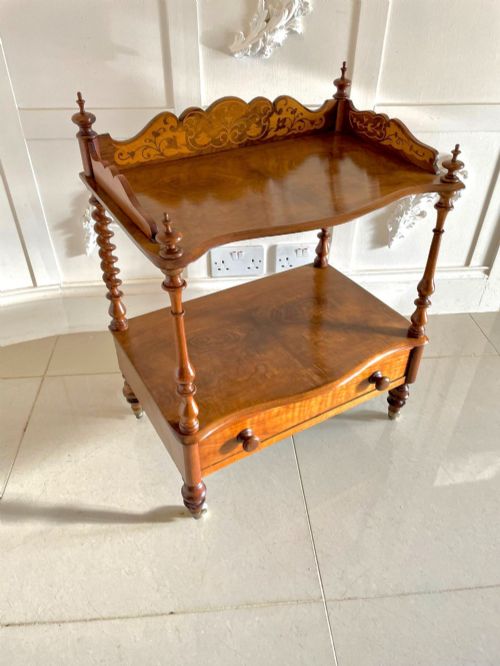
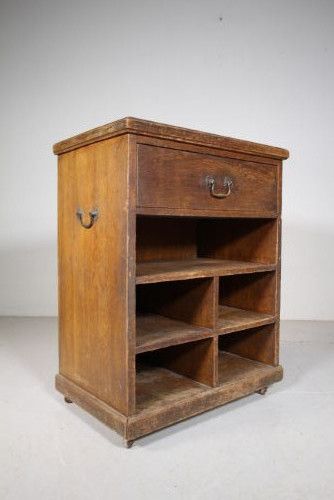
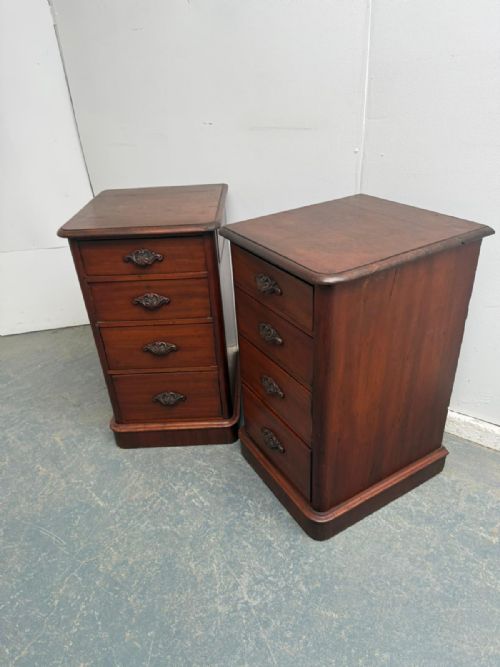
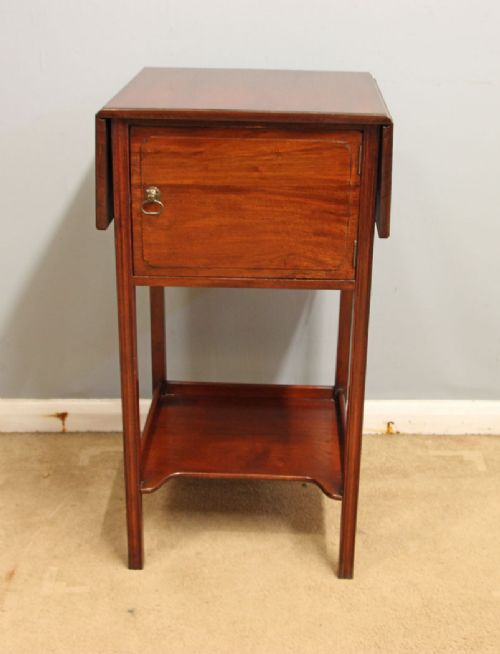
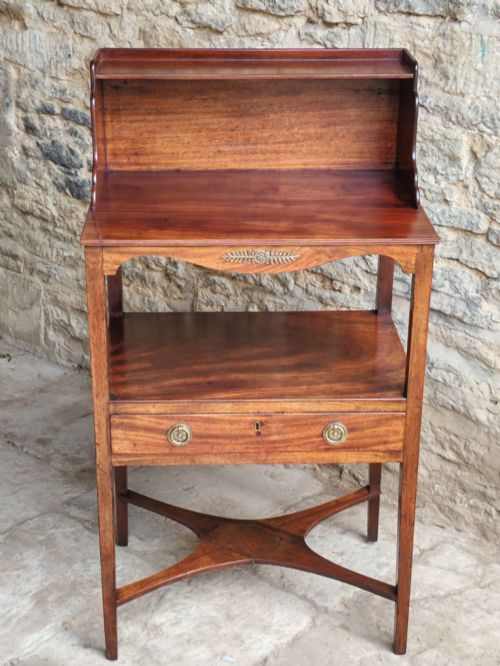
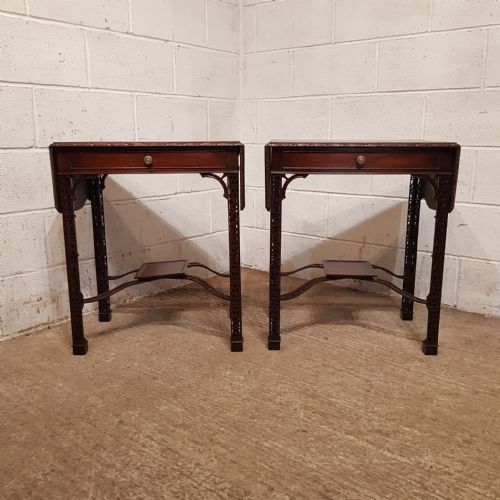
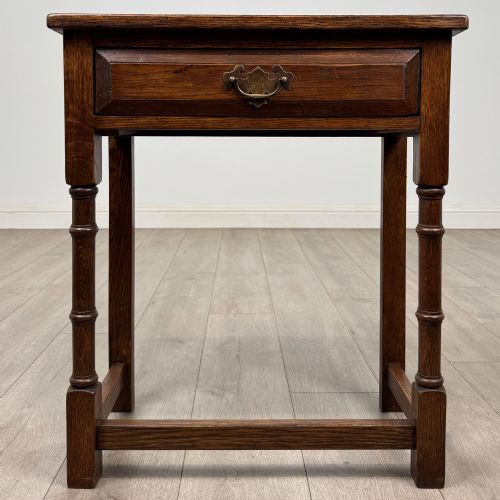
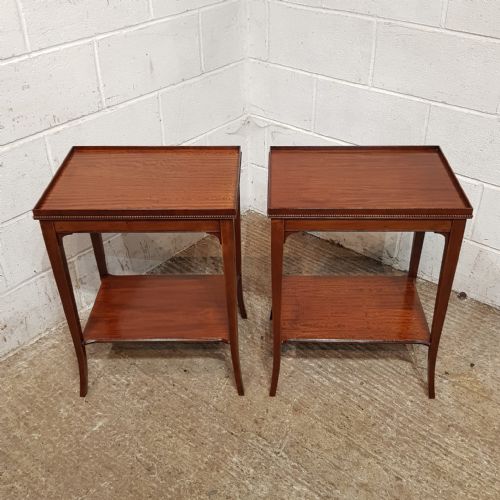


Antique Bed Side Table
When searching for an antique bed side table, collectors find practical bedside storage and lamp surfaces spanning Georgian proportion to Art Deco design.
Antique Bed Side Table
An antique bed side table serves a utilitarian function beside the bed while reflecting the prevailing taste of its period of origin. Buyers searching this phrase encounter forms ranging from enclosed cupboards and pot cupboards to open tray-top tables and multi-tiered lamp stands.
The pieces recorded here extend from Georgian and Regency eras through Victorian, Edwardian, and into the 1920s and 1930s. Mahogany and burr walnut predominate, accompanied by oak, maple, and occasional painted or inlaid surfaces designed for domestic convenience.
Most examples function as compact bedside storage units or small occasional tables. Alongside standard bedside cabinets, the selection includes adjustable reading tables, folding stands, and associated lamp tables utilised for similar domestic placements.
What Varies in Quality
The grade of an antique bed side table depends on the selection of timber veneers, the precision of cabinet joinery, and the integrity of the original hardware. Figured timbers and balanced grain matching distinguish finer examples from plain utility pieces.
Design sophistication also sets items apart, from simple functional cupboards to sophisticated pieces featuring serpentine fronts, marquetry inlay, or adjustable mechanisms. Retaining original surfaces, polished finishes, and matching pairs elevates the standing of a piece within its period.
Listings feature bedside tables spanning the 18th century to the 1930s, constructed primarily in mahogany, walnut, and oak.
Carters Of London·Heals
The Antique Bed Side Table Glossary
- Pot cupboard
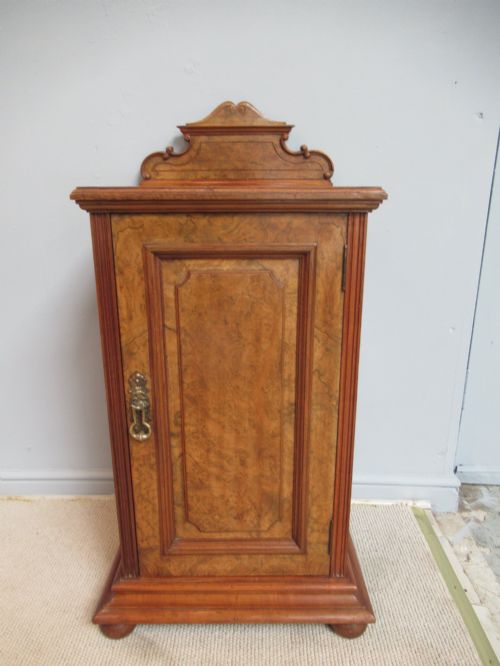
- A small bedside cabinet originally designed to house a chamber pot behind a single panelled door. These enclosed pieces often feature a small drawer above the main cupboard compartment.
- Tray top
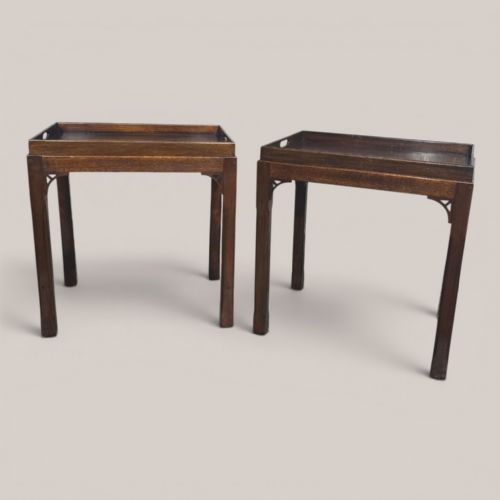
- A tabletop finished with a raised moulded rim designed to prevent items from rolling off. This feature appears frequently on lamp and occasional tables from the nineteenth and early twentieth centuries.
- Marquetry
- The decorative craft of applying small pieces of veneer to a structure to form intricate pictorial or geometric designs. It is commonly found on continental European bedside tables.
- Etagere
- A set of open shelves for displaying small objects or lamps, sometimes adapted for bedside use. These multi-tiered pieces offer vertical storage within a compact footprint.
- Campaign
- Furniture constructed for portability, often featuring brass corner brackets, recessed carrying handles, and sturdy timber frames. Such military-derived pieces offer robust construction and distinctive hardware.
Antique Bed Side Table: Frequently Asked Questions
What is a pot cupboard?
A pot cupboard is a compact bedside cabinet featuring an enclosed compartment originally built to conceal a chamber pot. These pieces typically include a small drawer above the main door.
Over time, these versatile cabinets transitioned into general bedside storage for nighttime essentials and personal items while retaining their compact proportions.
Are bedside tables found as pairs?
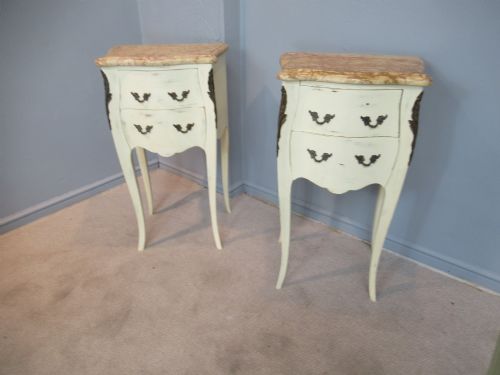
Many bedside tables survive as matching pairs, particularly those dating from the Edwardian period and the 1920s or 1930s. These matching sets were produced to furnish symmetrical double bedrooms.
Single bedside tables are equally common, especially among earlier Georgian and Victorian examples where bedroom furniture was not routinely manufactured in identical sets.
What materials were used most?
Mahogany and walnut are the most prevalent timbers seen in these listings, offering durable surfaces and rich natural grain patterns. Burr walnut and birds eye maple were frequently chosen for decorative veneer work on drawer fronts and tops.
Oak appears across various eras, alongside occasional additions of marble tops, brass handles, and fabric or metal elements on specialised reading and lamp tables.
How do I date an antique bedside table?
Dating relies on observing the combination of timber selection, construction methods, and stylistic details associated with periods like the Georgian era, Victorian times, or Art Deco movement. Turned legs, dovetail joints, and handle styles provide clear chronological indicators.
Hardware types and secondary timbers hidden inside drawers offer further clues to the exact decade of manufacture.