



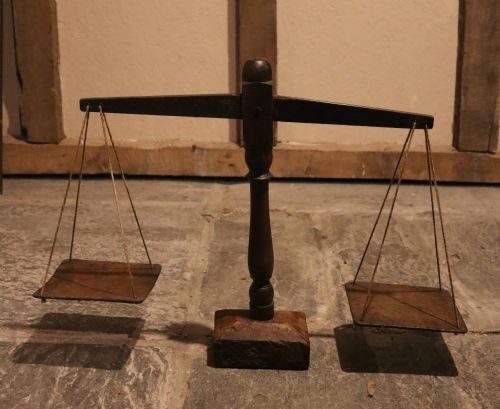


Antique Beam Balance
These antique beam balance designs span domestic, commercial, and scientific uses, offering a functional piece of history for a study or kitchen.
Antique Beam Balance
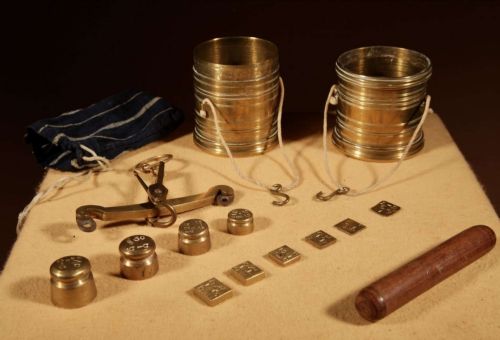
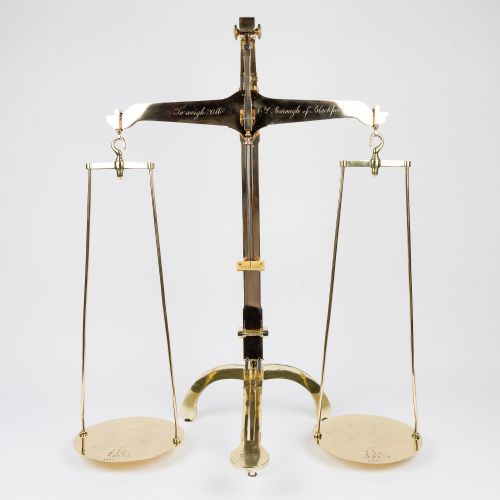
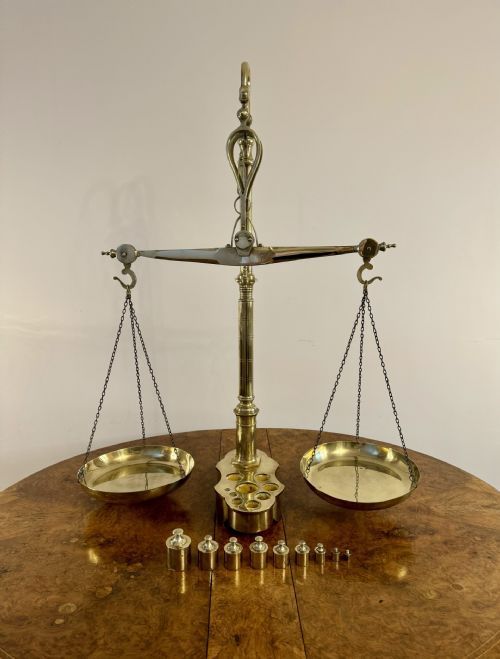
An antique beam balance functions by suspending weights from a central fulcrum to determine mass, appearing on this page in forms ranging from postal scales to large apothecary sets. Buyers will encounter various iterations suited for specific tasks, including chemist precision instruments, shopkeeper counters, and household weighing tools.
The objects recorded here bridge multiple periods and aesthetics, spanning Georgian vernacular pieces, Victorian industrial brass and mahogany constructions, and Edwardian examples. These scales originate from diverse settings, including domestic dairies, city borough offices, and Dutch merchant houses.
Forms vary from tabletop postal letter scales housed in wooden bases to free-hanging Frisian balance beams and heavy iron workshop models. Each surviving piece reflects the specific utilitarian demands of its original trade, whether weighing letters, apothecary mixtures, or heavy market produce.
Materials and construction
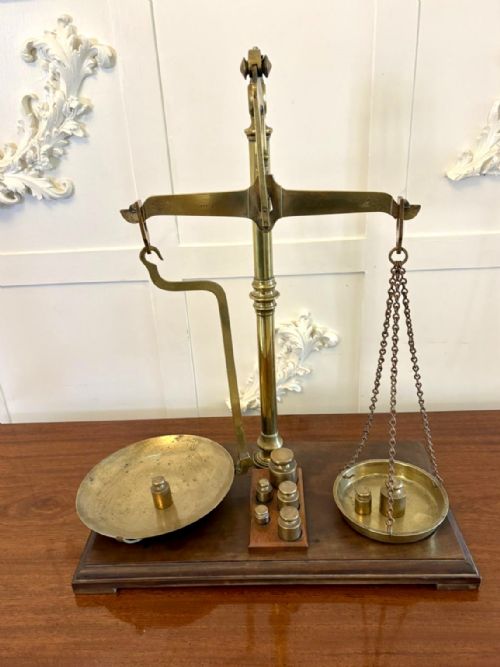
Maker construction relies heavily upon polished brass for the beams, pans, and indicator pointers, paired with dense woods such as mahogany, oak, and hardwood for the supporting bases and box housings. Iron and wrought iron appear frequently in larger industrial balances, garden scales, and structural brackets.
Makers integrated glass elements for protective enclosures on precision chemist scales, whilst copper surfaces provide decorative and functional pan options. Joinery methods on the wooden bases range from simple vernacular carpentry to fine cabinet making with fitted compartments for brass weight sets.
Listings incorporate materials including brass, mahogany, iron, wrought iron, glass, wood, hardwood, and copper across multiple eras.
Quality and execution
Superiority in an antique beam balance rests upon the precision of the fulcrum pivot and the responsiveness of the metal beam. Fine examples retain their original matching weights, clear maker stamps, and smooth operational movement without play in the bearings.
Material pairing also dictates distinction, separating standard utility pieces from exhibition grade instruments housed in glazed mahogany cases with signed metalwork. The integration of specialised verification stamps or local authority inscriptions indicates commercial importance and superior manufacturing standards.
Day & Millward·Parnall & Sons of Bristol·Oertling·Bartlett & Sons
The Antique Beam Balance Glossary
- Beam
- The horizontal bar of a scale that pivots on a central fulcrum to weigh objects placed on suspended pans.
- Fulcrum
- The central pivoting point upon which the balance beam rests and swings.
- Chondrometer
- A specialised measuring instrument used to determine the mass or weight per bushel of grain.
- Bushel
- A traditional unit of capacity used in agriculture for measuring dry commodities such as grain or fruit.
- Verification balance
- A heavy-duty scale utilised by local government inspectors to check commercial weights and measures for accuracy.
Antique Beam Balance: Frequently Asked Questions
How do I use an antique beam balance?
Place the object to be measured on one pan and add calibrated weights to the opposite pan until the pointer rests at the exact centre.
Ensure the balance sits on a completely level surface before attempting any measurements, as slight tilts will alter the reading.
What were postal scales used for?
Postal scales measured the exact weight of letters and parcels to determine the correct postage required for dispatch.
They often feature small, graduated brass platforms and fitted wooden bases designed to sit on a Victorian office desk.
How are Victorian scales dated?
Dating relies on maker marks, patent stamps, inscribed borough verification dates, and stylistic indicators in the woodwork.
Many commercial models bear the name of the manufacturer and government inspection stamps that record the exact year of service.
Can I clean the brass on my balance?
Light dusting and careful wiping with a soft, dry cloth preserve the historic patina acquired over decades of use.
Harsh metal polishes should be avoided because they remove original surface characteristics and reduce the antique value.