

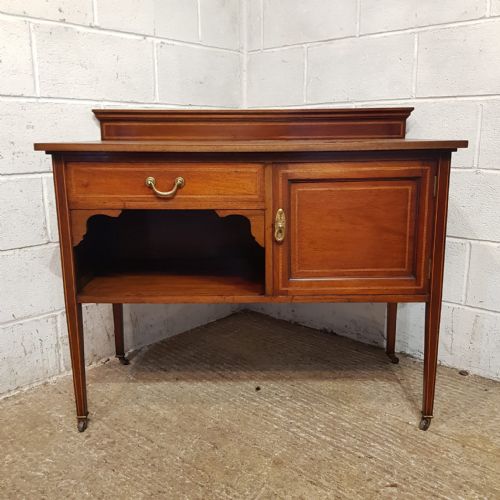


Antique Bathroom Cabinet
An antique bathroom cabinet brings period character to the washroom, spanning robust timber washstands and mirrored wall cupboards from the Victorian and Edwardian eras.
Antique Bathroom Cabinet
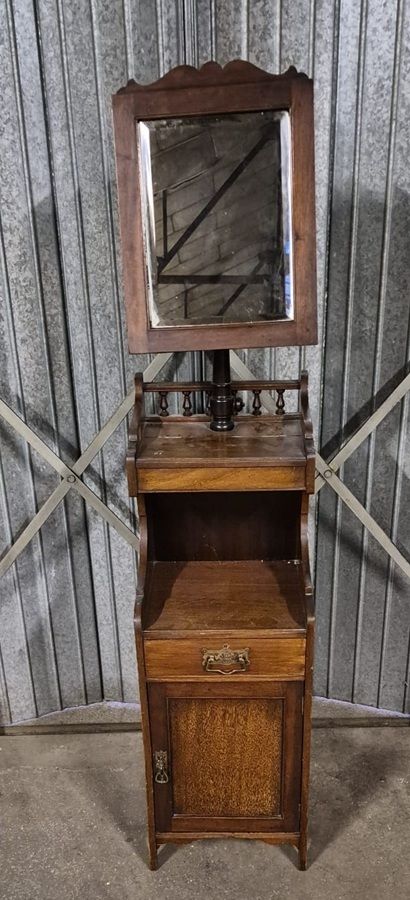
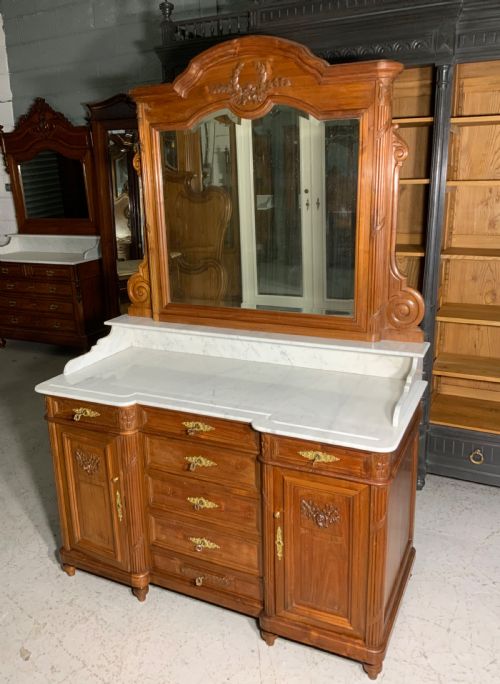
When you search for an antique bathroom cabinet, you encounter a practical mix of washstands, wall-hanging cupboards, and bedside cabinets adapted for modern washing spaces. The pieces on this page span the Victorian and Edwardian periods, alongside examples from nineteen ten and the nineteenth century.
Washstands dominate the selection, offering substantial timber frames topped with marble and ceramic fittings designed for daily hygiene routines. Wall-hanging cabinets and corner cupboards provide compact storage for smaller spaces, frequently incorporating mirrors and key shelves.
Stylistic influences range from restrained Arts and Crafts designs and Sheraton Revival satinwood to decorative French Rococo Revival and Aesthetic Movement details. Walnut, mahogany, oak, and pine form the structural basis of these pieces, often paired with brass hardware.
Materials and construction
Cabinet makers utilised dense hardwoods such as mahogany, walnut, and oak to build durable frames capable of supporting heavy stone surfaces. Satinwood and satinbirch appear in select pieces, sometimes featuring fine inlay work.
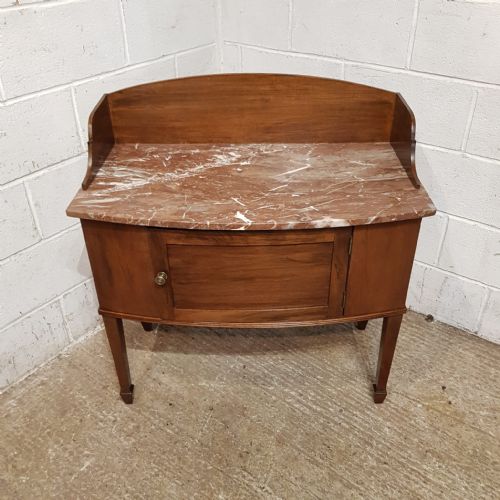
Slab marble provides the traditional waterproof top for washstands, paired with ceramic washbasins or tiled splashbacks designed to withstand daily splashing. Brass handles, hinges, and towel rails complete the hardware, while bevelled glass forms the mirrors in wall-mounted cabinets.
Antique Bathroom Cabinet Retail Price Guide 2026
Typical asking prices for bathroom cabinet among the pieces listed under this phrase on Sellingantiques today, from the lower quarter to the upper quarter. They describe what is for sale here now, not the wider market.
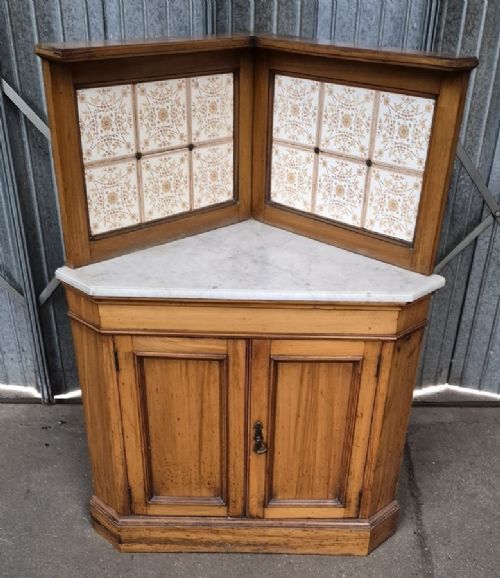
Several washstands retain their original tiled splashbacks, ready to brave another century of enthusiastic morning splashes.
Assessing quality
Quality rests upon the selection of timber and the integrity of the marble tops, where consistent veining and careful edge profiling distinguish superior examples. Finer pieces show tight joinery in the drawer linings and crisp execution of inlaid decoration.
The sophistication of the stylistic details marks the upper tier of the range, from carved Aesthetic Movement motifs to proportioned bow fronts and original brass fittings. Sound structural condition in the supporting legs and washstand frames ensures lasting utility.
Walker And Sons·Gillows
The Antique Bathroom Cabinet Glossary
- Washstand
- A freestanding wooden piece designed to hold a basin, ewer, and washing utensils before plumbed bathrooms became standard. They frequently feature marble tops and tiled splashbacks.
- Marble top
- A polished stone slab fitted to the surface of washstands to provide a water-resistant working area. It protects the timber frame from moisture.
- Splashback
- A raised panel at the back of a washstand, often fitted with decorative ceramic tiles to protect the wall from water marks.
- Bow front
- A convex curved cabinet or drawer front that swells outward in the centre. This decorative form adds visual depth to Victorian and Edwardian case pieces.
- Aesthetic Movement
- A nineteenth-century design style emphasising visual beauty over narrative subject matter. Pieces in this style often feature clean lines and disciplined ornament.
Antique Bathroom Cabinet: Frequently Asked Questions
Can I use an antique washstand as a modern basin vanity?
Many buyers adapt these wooden washstands to accommodate modern plumbing by cutting the internal shelf and mounting a vessel basin on top of the marble surface. The stone top provides a naturally water-resistant counter that suits contemporary bathrooms.
Care should be taken to seal any timber edges around new pipework to protect the antique wood from prolonged moisture exposure.
How do I clean an antique marble top?
Wash the marble surface using warm water and a mild, pH-neutral soap with a soft cloth. Avoid acidic cleaners like vinegar or lemon juice, which etch the polished stone.
Dry the marble thoroughly after cleaning to prevent water spots from forming on the surface.
Were wall cabinets originally made for bathrooms?
Many wall-hanging cupboards served multiple domestic roles, functioning as shaving mirrors, key cabinets, or general storage in bedrooms and hallways. Their compact proportions and mirrored doors make them suitable for modern bathrooms.
Original pine and walnut versions handle bathroom humidity well when finished with appropriate protective waxes.
How do I tell Victorian from Edwardian cabinets?
Victorian pieces tend to use darker timbers like heavy walnut and mahogany, often featuring richer carved ornamentation and Aesthetic Movement details. Edwardian furniture typically presents a lighter appearance through satinwood, simpler lines, and inlaid decoration.
Both periods frequently utilise white or grey-veined marble tops on washstand variants.