


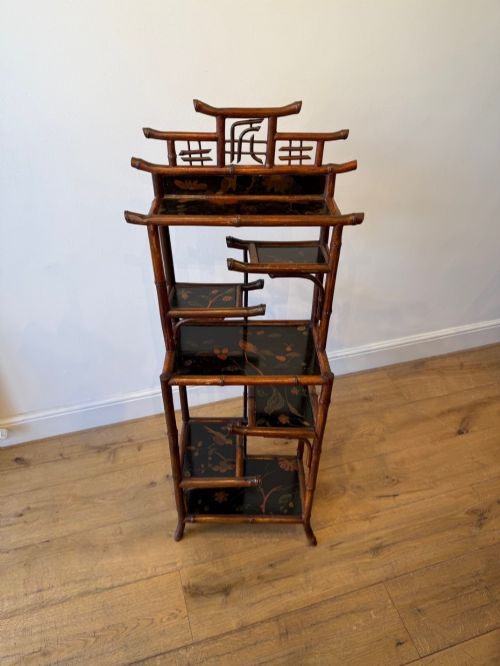


Antique Bamboo Shelves
Antique bamboo shelves bring lightness and exotic texture to a room, offering practical display surfaces with distinct late nineteenth-century character.
Antique Bamboo Shelves
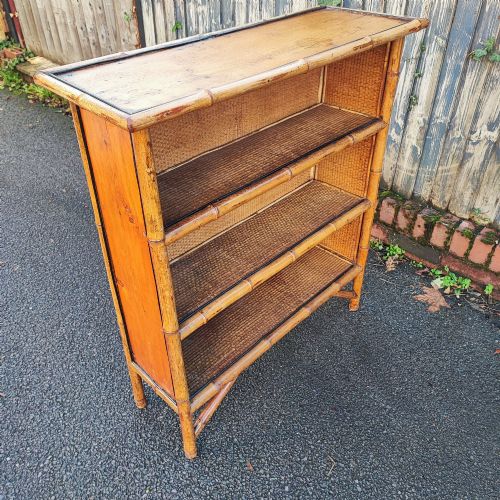
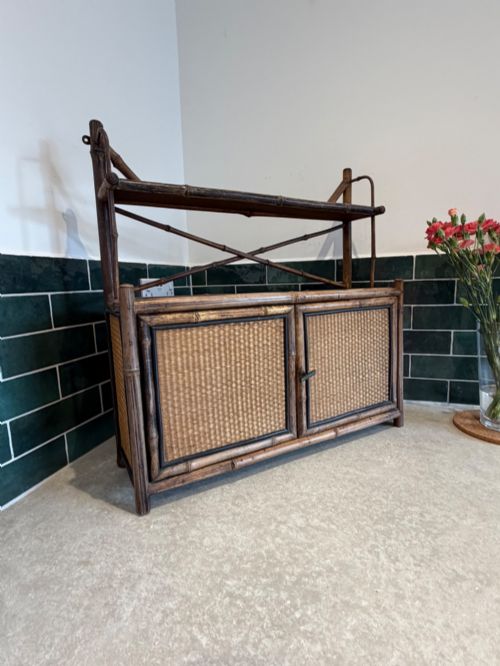
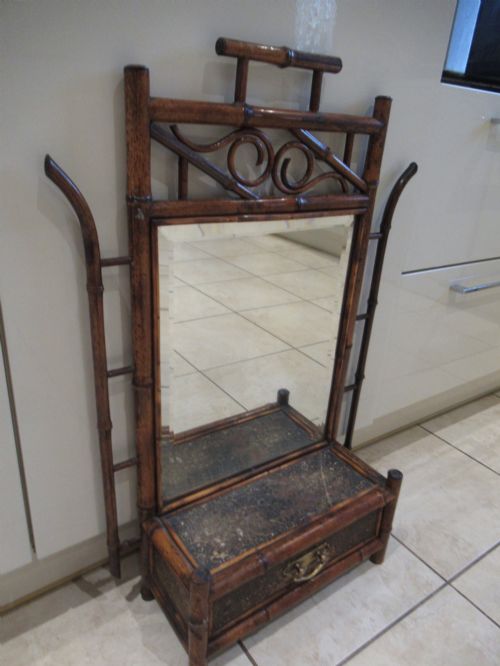
When you search for antique bamboo shelves, you encounter versatile pieces created primarily during the Victorian and Edwardian eras. These range from open bookcases and etageres to wall cupboards and display cabinets, often influenced by Aesthetic Movement tastes or Chinese export styles.
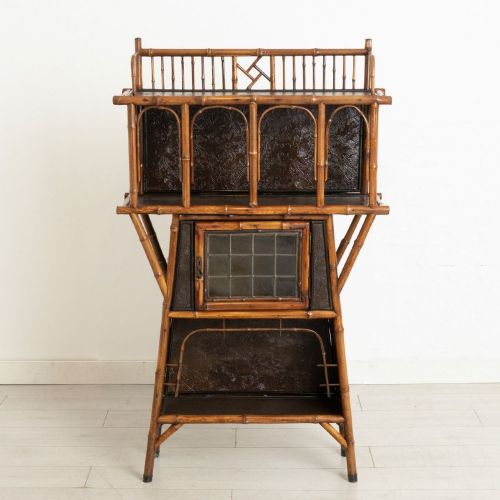
The versions most commonly met on this page date from the late nineteenth century around eighteen-eighty to nineteen-hundred. They combine practical storage with decorative appeal, frequently integrating panels of lacquer, glass, or cane alongside the bamboo framework.
How they were made
The construction of these pieces relies on natural bamboo stems shaped and joined to form rigid frames for shelves and cabinets. Makers combined this lightweight core with secondary timbers such as pine and wood panels, occasionally incorporating brass hardware for hinges and handles.
Surface decoration played a key role in finishing the pieces, utilising Japanese-inspired lacquer work, decoupaged details, and glazed doors. These techniques created the contrasting textures and patterns characteristic of Victorian Chinoiserie and the Aesthetic Movement.
Antique Bamboo Shelves Retail Price Guide 2026
Typical asking prices for bamboo shelves among the pieces listed under this phrase on Sellingantiques today, from the lower quarter to the upper quarter. They describe what is for sale here now, not the wider market.
Listings feature pieces spanning from the eighteen-eighties through to the nineteen-twenties, incorporating materials such as bamboo, rattan, lacquer, and brass.
What varies in quality
Quality in these pieces depends on the tightness of the joints and the structural stability of the bamboo framework over time. Superior examples maintain a straight, rigid posture without excessive warping in the cane or rattan elements.
The refinement of the decorative additions also separates finer pieces from simpler utilitarian items. The inclusion of careful lacquer panels, intact glass doors, or leather inserts points to higher-tier workshop production.
Leonard Wyburd for Liberty and Co
The Antique Bamboo Shelves Glossary
- Etagere
- A piece of furniture consisting of a set of open shelves for displaying small objects. These tiered structures were especially popular during the Victorian period.
- Aesthetic Movement
- A late nineteenth-century design style that emphasised visual and compositional beauty over narrative or moral content. It drew heavy inspiration from Japanese art and culture.
- Cane
- Material made from the peeled bark of the rattan palm, woven into open patterns. It frequently provides textured backing or panels within shelving units.
Antique Bamboo Shelves: Frequently Asked Questions
How do I care for antique bamboo furniture?
Keep the pieces out of direct sunlight and away from sudden temperature shifts to prevent the natural material from splitting. Dust gently with a dry cloth and avoid harsh chemical polishes.
Humidity control is equally important to maintain the integrity of the cane and rattan elements. Applying a very light microcrystalline wax can help preserve finished wood and lacquer surfaces.
Are these shelves sturdy enough for heavy books?
Most antique bamboo shelves were designed for displaying lighter decorative objects, ceramics, and small volumes rather than heavy reference libraries. Open bookcases and etageres suit ornaments and curated collections best.
distribuir weight evenly across the tiers to avoid straining the joints. For heavier loads, wall-mounted units require secure fixings into solid wall studs.
How can I date an antique bamboo piece?
Examine the construction methods, hardware, and stylistic markers such as Aesthetic Movement motifs or Victorian Chinoiserie details. Pieces from the eighteen-eighties and nineties often display specific joint techniques and lacquer applications.
Maker marks or attributions to firms like Liberty and Co also help narrow down the period. Comparing the secondary timbers, such as pine framing, provides further chronological clues.