

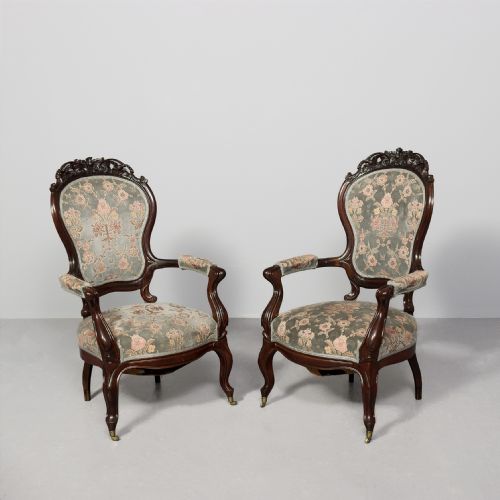


Antique Balloon Armchair
An antique balloon armchair brings Victorian craftsmanship into a modern room, offering distinct curved woodwork and supportive upholstery.
Antique Balloon Armchair
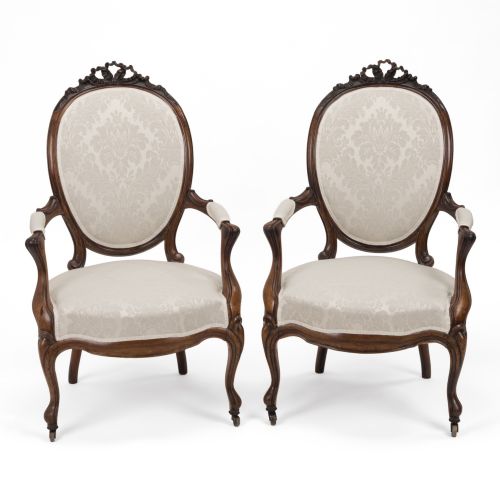
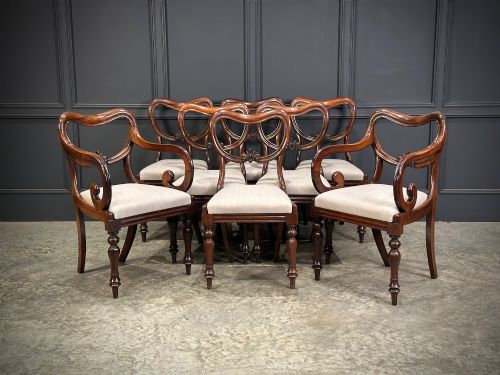
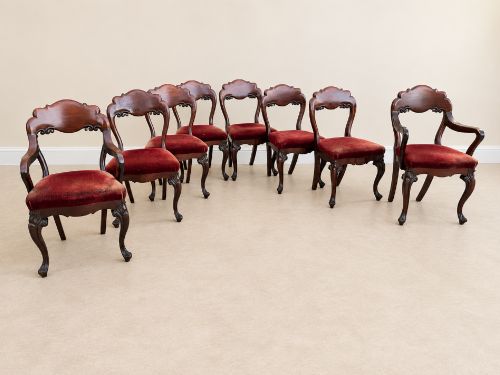
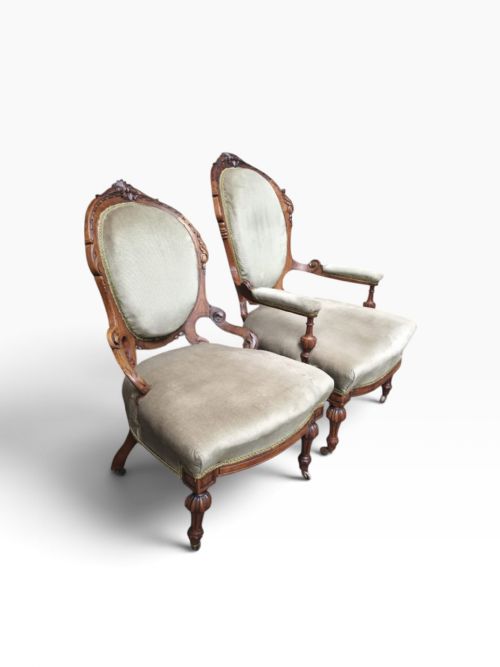
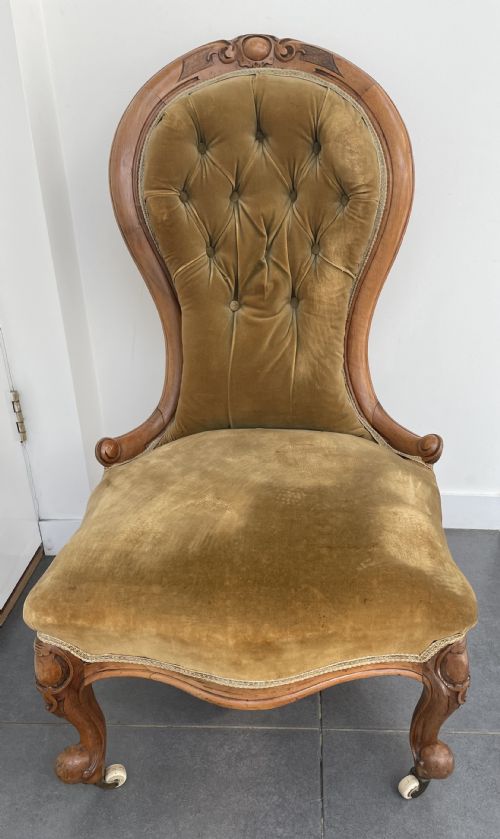
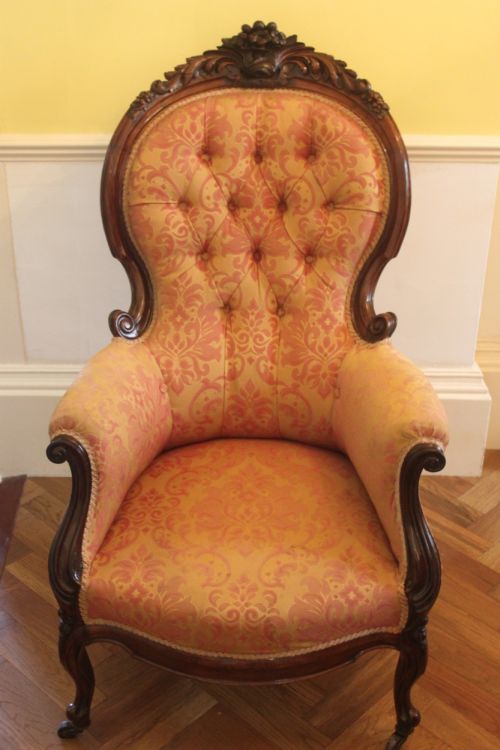
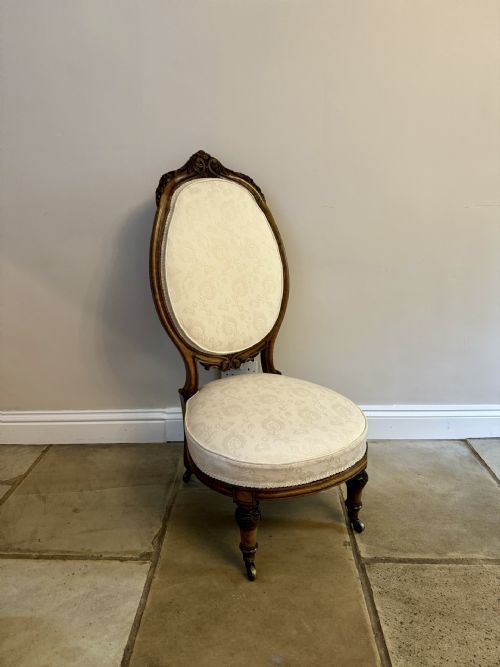
When you search for an antique balloon armchair, you encounter nineteenth-century seating defined by a rounded, looped backrest resembling a balloon silhouette. The pieces listed here span the Victorian era, originating primarily from the mid to late nineteenth century through to the turn of the twentieth century. Most examples you meet on this page take the form of nursing chairs, ladies chairs, or salon armchairs.
What varies in quality
The distinction between standard examples and the finest pieces lies in the depth and crispness of the timber carving on the frame. Superior chairs display fluent, deeply undercut floral or scroll motifs executed by skilled hands rather than shallow mechanical shaping. The weight and selection of the walnut or mahogany timber also signal a higher grade of production.
Proportion and structural rigidity separate robust examples from simpler ones, particularly where the curved back meets the seat rail. Chairs belonging to matched salon suites or pairs often exhibit a higher standard of cohesive design and finishing. The integration of high-grade upholstery fabrics and precise buttoning further elevates the stature of a piece.
Antique Balloon Armchair Retail Price Guide 2026
Typical asking prices for balloon armchair among the pieces listed under this phrase on Sellingantiques today, from the lower quarter to the upper quarter. They describe what is for sale here now, not the wider market.
Listings feature walnut and mahogany timbers, alongside iron framing, brass, and velvet upholstery.
The Antique Balloon Armchair Glossary
- Balloon back
- A chair back shaped in a continuous oval or rounded loop resembling an inflated balloon. This silhouette became a defining hallmark of mid-Victorian seating design.
- Nursing chair
- A low-seated chair traditionally used in nurseries or bedrooms for feeding infants. These pieces often feature low profiles and open frames to accommodate Victorian garments.
- Button back
- An upholstery method where deep buttons are pulled through the padding to secure the stuffing and form a diamond pattern. This technique adds texture and firmness to the backrest.
- Cabriole leg
- A furniture leg that curves out and then narrows down in an S-shape, typically ending in a scrolled or plain foot. It reflects the revival of Rococo influences during the nineteenth century.
- Salon suite
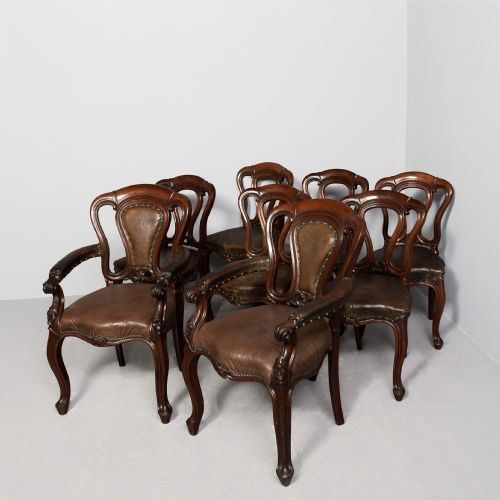
- A matched set of seating furniture, including armchairs, side chairs, and sofas, designed for formal entertaining rooms. These groupings share identical timber frames and textile upholstery.
Antique Balloon Armchair: Frequently Asked Questions
What is an antique balloon armchair?
An antique balloon armchair is a nineteenth-century seat featuring a rounded, looped backrest shaped like a balloon. These Victorian pieces typically combine carved wooden frames in walnut or mahogany with upholstered padding.
They were designed for formal reception rooms, bedrooms, and firesides, serving both decorative and practical functions. Today, they function as statement accent chairs in contemporary interiors.
How do I identify a Victorian balloon armchair?
You can identify a Victorian balloon armchair by its characteristic curved wooden backrest and mid-nineteenth-century construction methods. Look for traditional timber framing in walnut or mahogany, often accompanied by hand-carved details.
Many examples feature button-backed upholstery and low seats, reflecting the domestic fashions of the period between eighteen-fifty and nineteen-hundred.
Where were balloon armchairs used in the home?
These chairs originally occupied formal drawing rooms, parlours, and private chambers within Victorian houses. Low-slung variants were placed in dressing rooms and bedrooms for daily personal use.
Larger open-arm versions served as fireside seating in gentlemen's studies or main living spaces. Their versatile proportions allowed them to fit easily into various domestic settings.
How should I care for antique wood and upholstery?
Care for the wooden frame by dusting gently with a dry cloth and avoiding harsh chemical polishes. Keep the timber away from direct sunlight and strong heat sources to prevent the wood from drying out.
Protect the fabric upholstery through regular gentle vacuuming with a soft brush attachment. Professional cleaning is recommended for antique textiles to preserve the original fibres.