



Antique Autumn Landscape
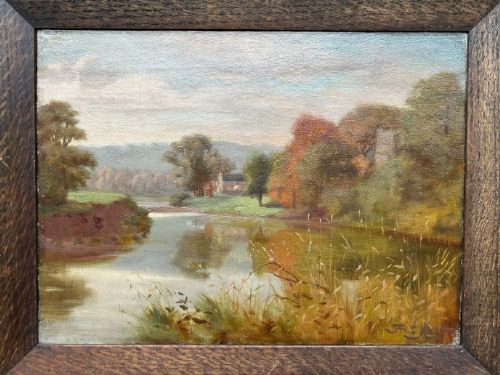
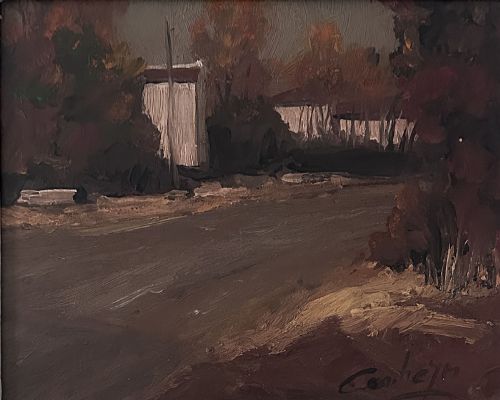
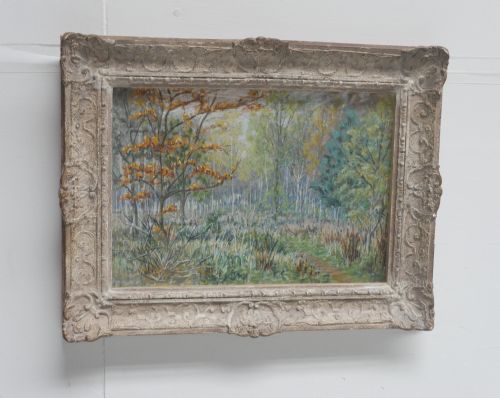
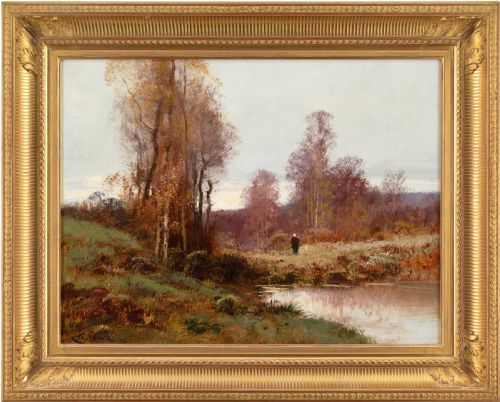
An antique autumn landscape captures the amber warmth and russet tones of the season through oil and watercolour.
Antique Autumn Landscape
When you search for an antique autumn landscape, you encounter works spanning from the Victorian era through the mid-twentieth century that record seasonal foliage, harvest scenes, and misty river valleys. These paintings capture the transition of the year, focusing on woodland paths, rivers, and country farms during the golden months.
The most common examples on this page are oil paintings on canvas or wood panel and works in watercolour on paper, originating largely from British and European schools. Artists utilise these mediums to convey the heavy atmosphere of October and November, recording rural life and changing weather across the countryside.
How They Were Made
These works rely primarily on oil paint applied to prepared canvas, wood panels, or sturdy board, alongside watercolours worked on heavy paper. Artists build texture through layered brushwork in oils or translucent washes in watercolours to render the dense foliage and watery light of the season.
Framing often involves gilded wood moulding that enhances the warm palette of the artwork, while glass protects the delicate paper surfaces of watercolours and pastels.
Listings feature works created across several decades, using oil on canvas, watercolour, and pastel on paper.
What Varies in Quality
Quality rests upon the artist's command of light, tonal depth, and atmospheric perspective in depicting seasonal foliage and weather. Stronger works render the specific quality of October or November light convincingly rather than relying on formulaic colour mixes.
The handling of the medium determines the distinction between standard topographical records and compelling compositions. Masterful brushwork in oils or confident washes in watercolours separate accomplished regional artists from amateur practitioners.
Frederick Marriott·Charles Clair·Samuel Timmins·Arthur Herbert Rigg·George Graham·William Mellor·Walter Follen Bishop·Edmund George Warren·Berthe des Clayes·John Falconar Slater·Charles James Adams·Frederick W Jackson·Ernest Higgins Rigg·J McIntyre·George Sykes·Ernest Moore·Owen Bowen·Augustus William Ennes·Everett W Mellor·Fred Merriman·Frederick J Haycock·Percy Lancaster·Florence F Wilmot·Frank Walton·William Greaves
The Antique Autumn Landscape Glossary
- Oil on Canvas
- Pigment mixed with drying oil applied to a stretched woven fabric support. This combination allows for rich colour saturation and varied surface texture.
- Watercolour Painting
- Pigments suspended in a water-soluble vehicle applied to paper. It creates luminous, transparent effects suited to capturing misty skies and autumn light.
- Wood Panel
- A rigid wooden support used by painters instead of canvas. It provides a smooth, stable surface for detailed brushwork.
- British Impressionism
- A late nineteenth and early twentieth-century painting movement focused on light and everyday subjects. Practitioners captured outdoor scenes with rapid, visible brushstrokes.
- Gilded Wood
- Timber frames coated with a thin layer of gold leaf or metallic gilt. This finish frames the artwork and complements the warm tones of autumn palettes.
Antique Autumn Landscape: Frequently Asked Questions
What periods do these landscapes cover?
The works span from the nineteenth century through the mid-twentieth century, encompassing Victorian naturalism and post-war expressionism.
Most pieces date from the late Victorian period up to the nineteen-fifties, reflecting evolving regional painting traditions.
How should I display an antique oil painting?
Hang paintings away from direct sunlight and excessive humidity to protect both the canvas and the gilded wood frame.
Ensure proper wall support because larger framed oil works carry considerable weight.
What is the difference between oil and watercolour?
Oil paintings use thick pigments on canvas or wood, offering rich textures and deep colour blending.
Watercolours utilise translucent pigments on paper under glass, capturing lighter and more delicate atmospheric effects.
How do I identify the subject of an autumn painting?
Look for characteristic seasonal markers such as bare branches, russet foliage, harvest fields, and low autumn sun.
Many titles and inscriptions on the reverse also specify particular locations and months like October or November.