



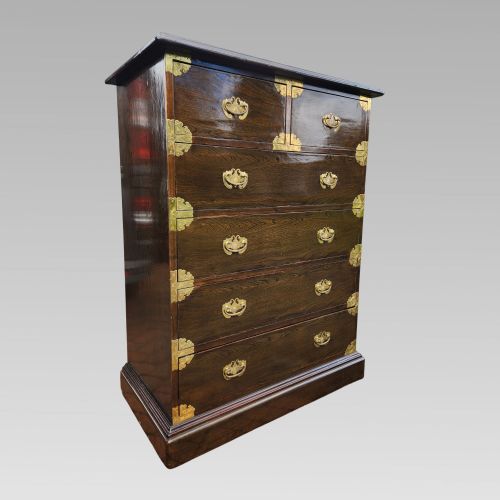


Antique Asian Brass Cabinet
An antique asian brass cabinet brings tactile weight and layered surface depth to a room through traditional oriental metalwork mounted to timber frames.
Antique Asian Brass Cabinet
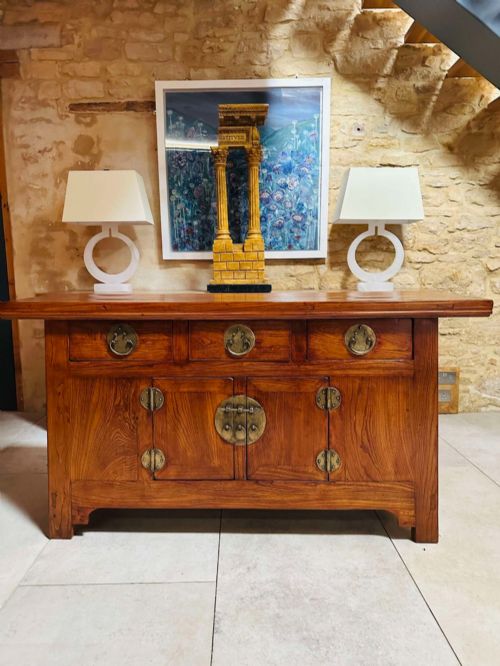
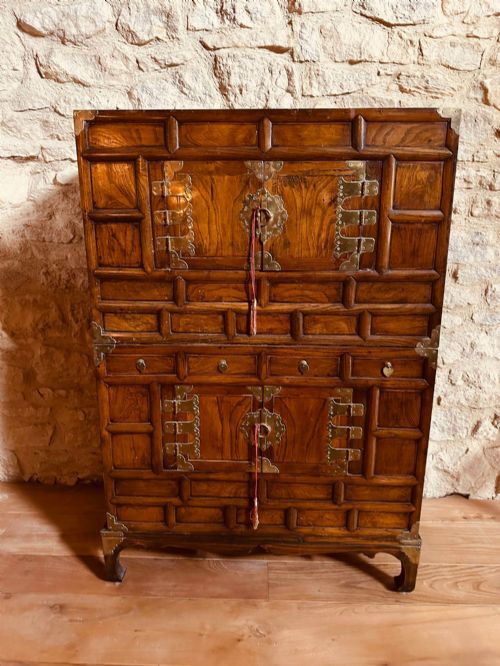
An antique asian brass cabinet encompasses storage forms originating from China, Japan and Korea across the seventeenth to early twentieth centuries. These pieces appear as sideboards, wedding chests, altar cabinets and tansu storage units fitted with substantial metal mounts.
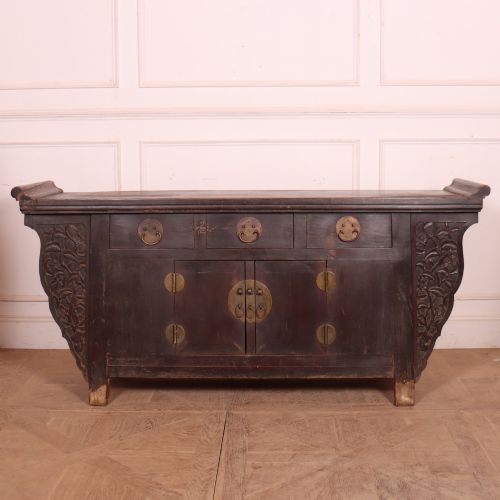
The domestic forms most frequently encountered on this page combine elm, hardwood or lacquered wood with prominent brass hardware such as circular faceplates, corner brackets and drop handles. Regional styles range from Qing Dynasty Chinese compound cabinets to Korean burr elm chests and Japanese Edo or Meiji period pieces.
Materials and construction methods
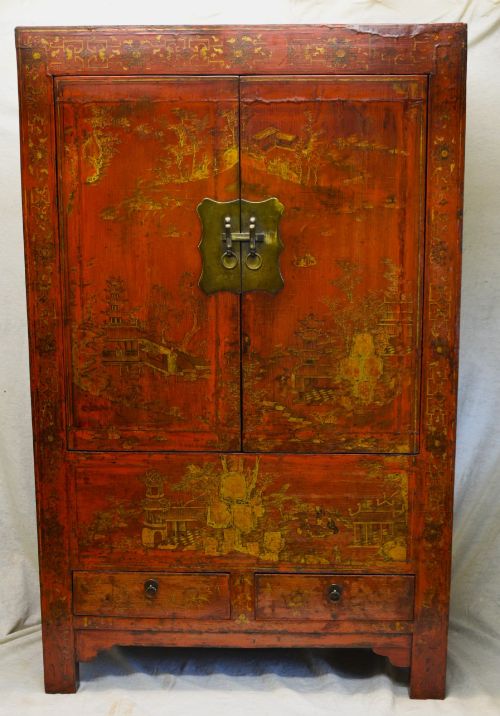
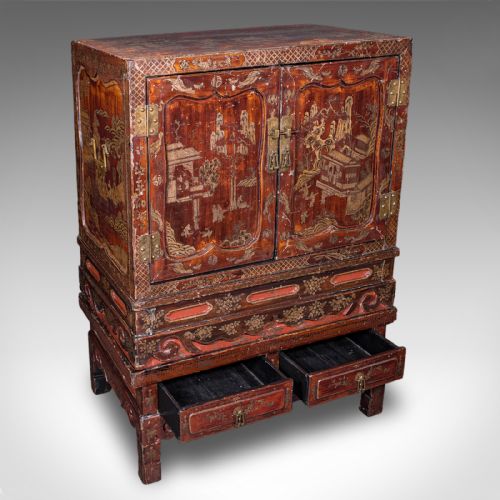
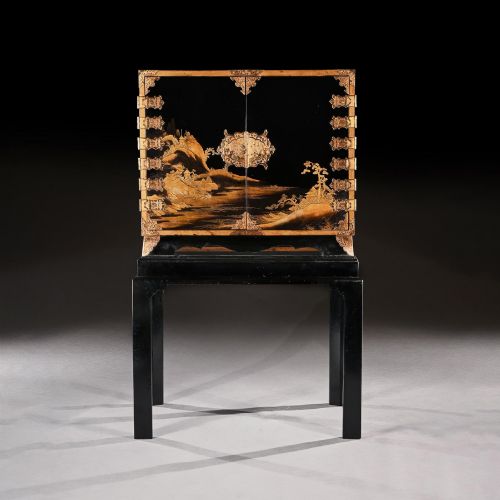
Carpenters constructed the structural carcasses of these cabinets using dense regional timbers including elm, burr elm and general hardwoods. Surfaces frequently received multiple coats of black or red lacquer, sometimes augmented with gold leaf and gilt brass.
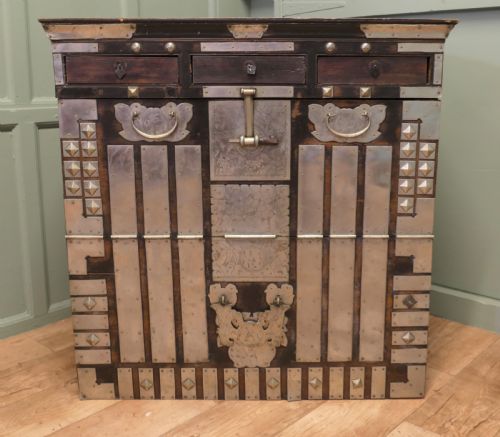
Functional and decorative brass hardware secured the joinery while defining the visual face of each cabinet. Blacksmiths shaped plates, hinges and lock plates by hand, attaching them with pins or traditional fasteners to reinforce corners and doors.
Antique Asian Brass Cabinet Retail Price Guide 2026
Typical asking prices for asian brass cabinet among the pieces listed under this phrase on Sellingantiques today, from the lower quarter to the upper quarter. They describe what is for sale here now, not the wider market.
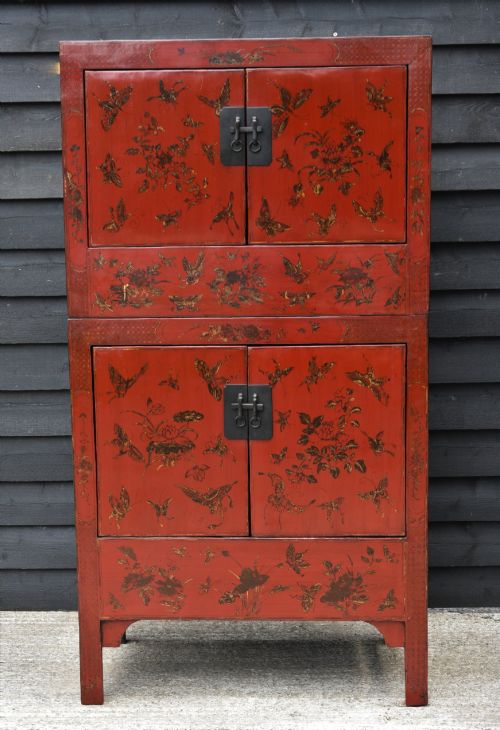
Several wedding cabinets carry vibrant red lacquer intended to summon good fortune and lasting joy for newly united couples.
Distinguishing quality in construction and finish
Quality separates through the integrity of the timber carcass and the finesse of the surface finish, whether clear-finished elm grain or layered lacquer. Superior examples maintain crisp carving around the door panels and sturdy joinery that withstands centuries of use.
The proportion and execution of the brass hardware significantly influence the standing of a piece. Hand-beaten plates with refined engraving and secure mounting indicate careful workshop production compared to plain or replacement metalwork.
The Antique Asian Brass Cabinet Glossary
- Tansu
- Traditional Japanese mobile storage cabinetry built with accessible compartments and sturdy metal fittings. These chests served practical domestic functions across various historical periods.
- Chinoiserie
- European artistic interpretation and imitation of Chinese and East Asian artistic traditions. This style manifested in decorative lacquerwork and applied surface motifs on furniture.
- Compound cabinet
- A tall Chinese storage form constructed in stacked sections designed to hold garments or valuables. These pieces often feature prominent brass lock plates bridging the doors.
- Burr elm
- Timber harvested from elm tree growths exhibiting swirling, knotty grain patterns. Cabinetmakers utilised this highly decorative wood on primary display surfaces.
- Edo Period
- A historical division in Japan spanning from the early seventeenth to the mid-nineteenth century. Furniture from this era often incorporates sophisticated lacquer and metalwork techniques.
Antique Asian Brass Cabinet: Frequently Asked Questions
How were these cabinets used?
These cabinets served primarily for domestic storage, holding clothing, household linens, ritual objects or marriage documents within the home.
Larger compound and wedding cabinets housed textiles and valuables, while smaller sideboards and tansu chests organised daily possessions in living spaces.
How do I date an antique cabinet?
Dating relies on examining the timber species, joinery methods, lacquer wear and the stylistic characteristics of the brass hardware.
Stylistic markers such as Qing Dynasty carvings or Joseon proportions align with specific regional production eras recorded in the historical evidence.
Where should I place one?
Position these cabinets in living rooms, hallways or dining areas where their substantial timber and brass hardware can function as a focal point.
Ensure placement avoids direct heat sources and excessive sunlight to protect fragile lacquer and hardwood surfaces from drying out.
How do I care for lacquer?
Maintain lacquered surfaces by dusting gently with a soft, dry cloth and avoiding harsh chemical cleaning agents.
Keep the ambient room humidity stable to prevent the underlying wood substrate from expanding and cracking the delicate lacquer finish.