
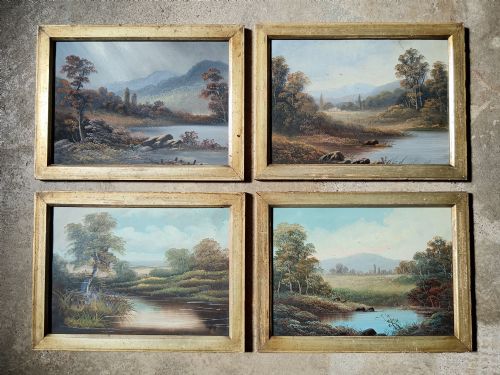


Antique Artwork Heavy Frame
These pieces gathered under antique artwork heavy frame bring substantial presence to a wall through oil paint, canvas, and deep gesso mouldings.
Antique Artwork Heavy Frame
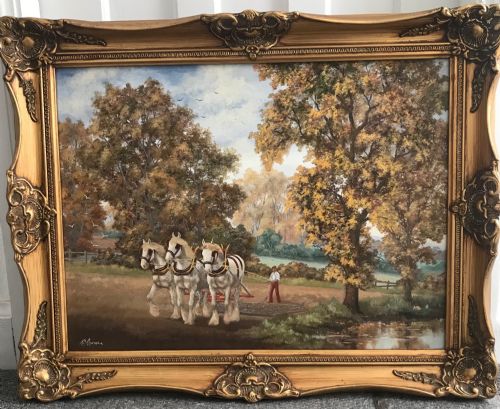
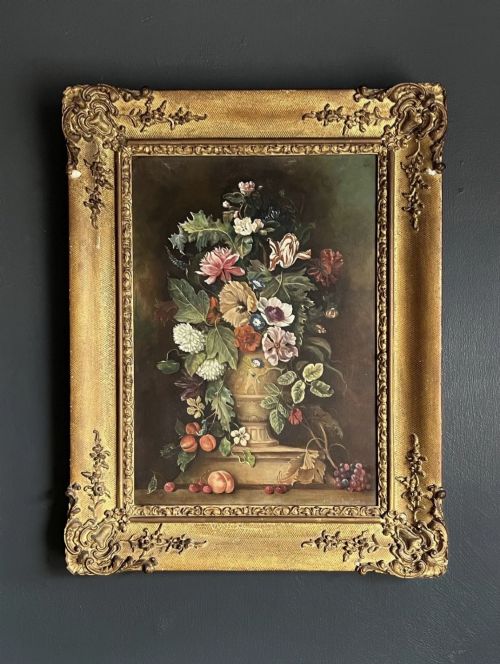
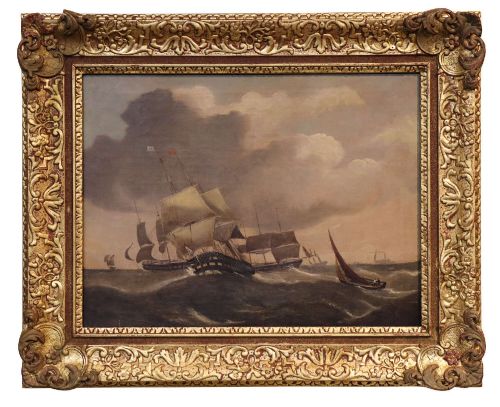
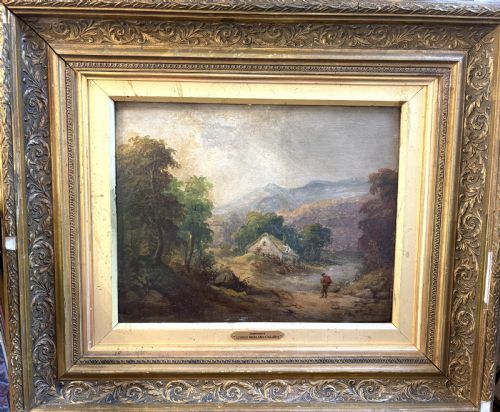
When you search for an antique artwork heavy frame, you encounter framed oil paintings, watercolours, etchings, and standalone picture frames spanning the Victorian era through the mid-twentieth century. The selection ranges from Dutch Golden Age style flower pieces and marine scenes of shipping in heavy seas to pastoral landscapes featuring heavy horses.
Most items date from the nineteenth and early twentieth centuries, encompassing Victorian, Edwardian, and later periods up to the nineteen-sixties. You find both complete framed works and substantial deep gilt frames designed to house significant canvas art.
How they were made
The physical build relies on traditional materials such as timber frames coated in gesso, giltwood, and gilded wood, often finished with linen slips. Canvases and boards carry oil paint, opaque gouache, or watercolour, whilst etchings and sand pictures represent alternative techniques.
Mouldings and relief work provide the characteristic weight and depth, utilising layered gesso to achieve ornate surface ornamentation that complements the substantial paintings they enclose.
Several heavy frames come equipped with linen slips designed to give oil paintings breathing space.
What varies in quality
Quality rests upon the execution of the painting and the depth and crispness of the framing work. Hand-carved gesso moulding and deep profile construction distinguish finer frames from simpler surrounds.
The strength of the artist's hand, whether shown in marine shipping scenes or detailed landscape brushwork, separates standard decorative pieces from accomplished works of the British and French schools.
George Morland·Herbert Dicksee·Andre de Moller·Vernon Stokes·W E Millner·Alexandre Decamps·Ralph Hedley RBA·Charles James Adams
The Antique Artwork Heavy Frame Glossary
- Gesso
- A plaster-like mixture applied to wood frames to create a smooth surface for gilding and deep relief ornamentation. This material allows for intricate decorative moulding.
- Giltwood
- Wood that has been coated with a thin layer of gold leaf or gold paint. It provides the reflective, luminous finish seen on traditional Victorian frames.
- Etching
- A printmaking technique where lines are incised into a metal plate with acid before being inked and pressed onto paper. Herbert Dicksee utilised this method.
- Sand picture
- An artwork constructed by fixing coloured sands to a backing surface to build up a textured image. These mid-nineteenth-century items offer an unusual tactile quality.
Antique Artwork Heavy Frame: Frequently Asked Questions
What periods do these framed artworks come from?
The listings span from the nineteenth century through the Victorian and Edwardian eras up to the nineteen-sixties. You encounter works produced across several decades of traditional craftsmanship.
Most examples lean towards Victorian and early twentieth-century production, reflecting traditional painting and framing methods.
How do I hang a heavy framed artwork safely?
Due to the substantial weight of gesso, wood, and canvas, secure wall fixings and wall studs are essential. Heavy frames require robust picture wire and sturdy wall hooks.
Checking the structural integrity of the frame corners before hanging ensures the artwork remains secure over time.
What subjects are common in these paintings?
Common subjects include marine scenes with shipping in heavy seas, pastoral landscapes with heavy horses, and still life flower compositions. Regional British and French school scenes also appear frequently.
These traditional subjects often match the substantial character of the heavy frames enclosing them.
Are the frames sold separately from the paintings?
The selection includes both complete framed paintings and standalone large heavy gilt frames with linen slips. You can purchase items where the artwork and frame are original to each other.
Checking individual listings clarifies whether a piece is a complete artwork or an empty frame ready for your own canvas.