



Antique Armorial Seating
Antique armorial seating comprises chairs and settees bearing heraldic crests, prized for provenance and the sculptural dignity they bring to a hallway.
Antique Armorial Seating
When you search for antique armorial seating, you encounter chairs and settees carved or painted with family crests and heraldic insignia. These pieces primarily take the form of hall chairs and side chairs, alongside occasional armchairs and settees.
The selections span several distinct periods, with Victorian and Regency examples appearing most frequently, alongside earlier pieces originating in the seventeenth and eighteenth centuries. Mahogany and oak serve as the predominant timbers for these impressive reception pieces.
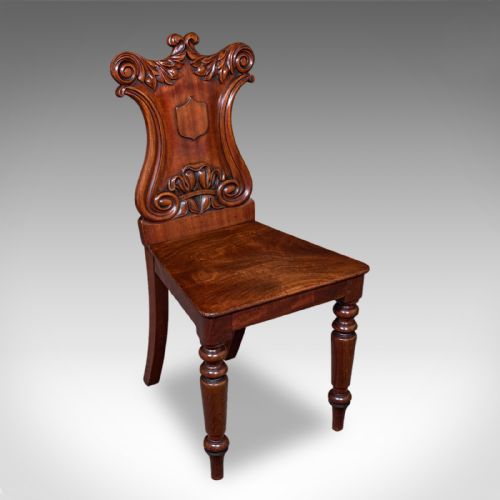
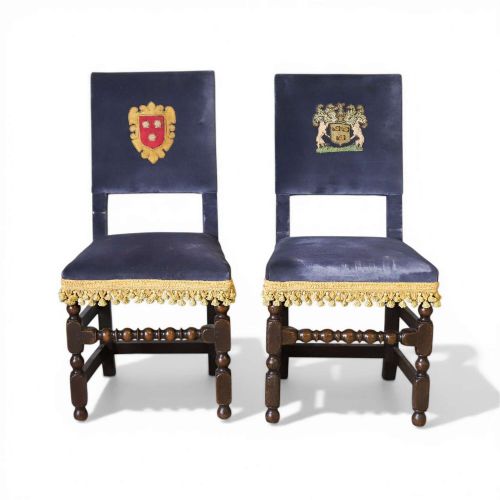
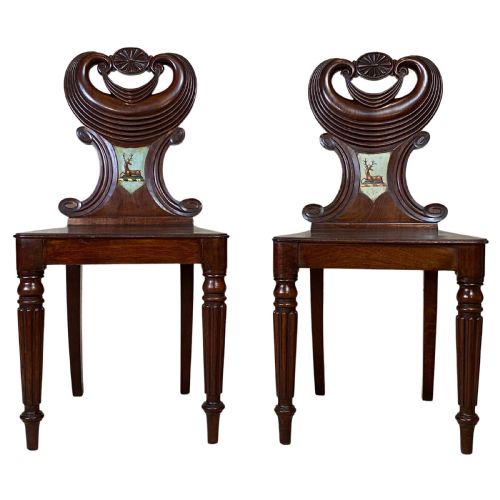
Makers often integrated carved armorial bearings directly into the wooden backrests, sometimes accompanied by velvet upholstery or metallic fringe. Regional varieties such as Scottish oak clan chairs also emerge within this category.
How they were made
Craftsmen built these seats using dense hardwoods like mahogany and oak, which provided a stable foundation for deep relief carving. Timber selection dictated whether the crests could be rendered with sharp botanical and heraldic detail.
Upholstered variants incorporated textiles such as velvet and tapestry, finished with metallic fringe to accentuate the edges. Carving techniques relied on hand chisels to shape shell motifs, hippocampus figures, and intricate crests directly into the solid wood.
Listings feature mahogany, oak, and walnut timbers, with several examples originating from Scottish workshops and documented makers.
What varies in quality
Quality reveals itself in the crispness and depth of the heraldic carving on the wooden backrest. Master carvers achieved distinct relief work that remained sharp across the details of the crest.
Proportion and timber selection set the finer pieces apart from standard workshop production. Grain alignment in the mahogany or oak and structural integrity through repeated use define the upper tier of these seats.
Gillows
The Antique Armorial Seating Glossary
- Armorial
- Bearing a coat of arms or heraldic crest. This insignia identifies the specific family or lineage associated with the piece.
- Hall chair
- A rigid wooden seat traditionally placed in a grand entranceway. These pieces often feature solid wood seats rather than upholstery.
- Hippocampus
- A mythical creature with the upper body of a horse and the lower tail of a fish. Carvings of this motif appear on armorial backrests.
- Heraldic crest
- The upper component of a coat of arms used for identification. These symbols were carved or painted onto the chair backs.
- Carolean
- Pertaining to the reign of King Charles II, characterised by ornate baroque carving. Revival versions of this style appear in later centuries.
Antique Armorial Seating: Frequently Asked Questions
What is antique armorial seating?
Antique armorial seating consists of chairs and settees embellished with carved or painted family crests and heraldic devices. These items were commissioned by prominent households to display lineage and status.
They most commonly appear as rigid hall chairs fashioned from mahogany or oak, intended for display in grand entrance halls and reception spaces rather than prolonged lounging.
Where were these chairs placed?
These pieces traditionally occupied the entrance halls and corridors of substantial country houses and town residences. They served to impress visitors with the lineage of the homeowner upon arrival.
Today, buyers frequently utilise them as accent pieces in hallways, studies, or dining rooms where their sculptural wooden backs can be viewed.
How do I identify the period?
Dating relies upon timber choice, carving style, and structural proportions matched against known historical periods. Regency and George IV examples often feature clean classical lines, while Victorian pieces incorporate heavier revival detailing.
Consulting the specific design motifs, such as Gothic arches or shell backs, helps narrow down the decade of manufacture alongside the primary wood used.
Are these chairs comfortable?
Most antique armorial seating was built for architectural presence and posture rather than deep relaxation. Hall chairs typically feature carved solid wooden seats designed for brief seating.
Some variants include upholstered pads or velvet cushions with metallic fringe, though the primary function remains decorative and ceremonial.
What woods were used?
Mahogany and oak dominate the construction of these heraldic pieces. Mahogany allowed for sharp, detailed relief carving on Regency and Victorian examples, while oak frequently underpins earlier seventeenth-century pieces.
Walnut also appears occasionally, providing rich grain patterns that complement the carved crests.