





Antique Animal Bookends
Antique animal bookends hold heavy volumes upright while bringing carved wood, cast bronze and marble beasts into the room.
Antique Animal Bookends
When you search for antique animal bookends, you encounter sculptural pairs shaped as lions, elephants, dogs, and birds designed to support shelf edges. These objects emerge from periods ranging across the nineteenth and twentieth centuries, taking forms that span Victorian, Edwardian, and Art Deco aesthetics.
The selections on this page draw from distinct regional workshops, including Black Forest woodcarvers, Austrian foundries, and English ceramicists. Bookends take the form of functional shelf supports, while related sculptures and figures serve purely decorative purposes in domestic spaces.
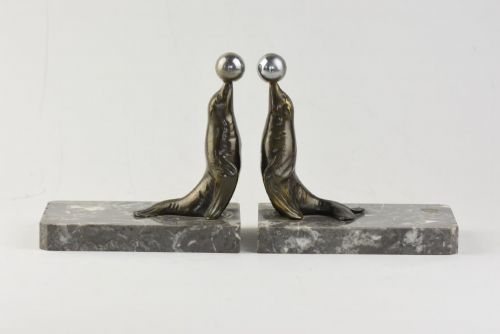
Makers utilised heavy materials to ensure stability, mounting carved figures on plinths of marble, wood, or stone. Pairs often feature matching creatures facing inward to frame rows of books effectively.
How they were made
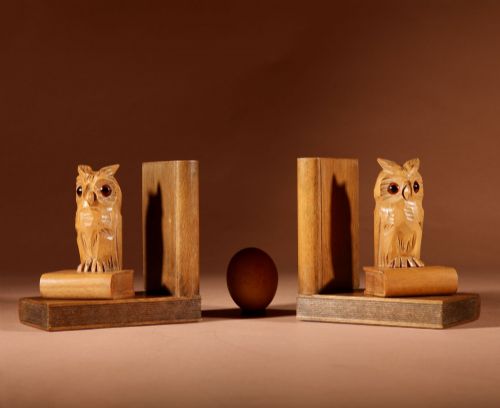
Wood carvers utilised lime, pine, ebony, and bamboo, bringing subjects to life with hand tools and applied surface finishes. Black Forest pieces demonstrate detailed incisions for fur and feathers, often paired with glass eyes.
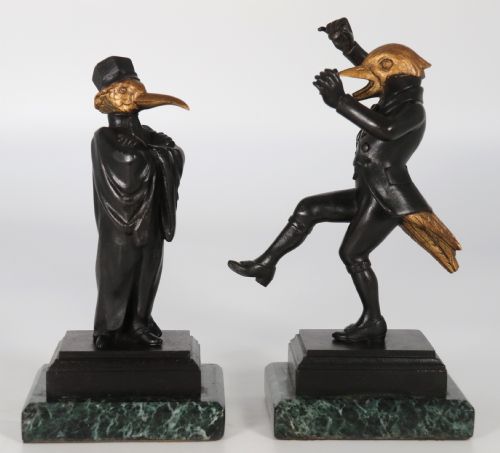
Foundries cast bronze, brass, spelter, and iron into robust forms, sometimes adding silvered or gilt patination. Ceramic and plaster figures received glazes such as treacle or paint finishes to seal the surface.
Antique Animal Bookends Retail Price Guide 2026
Typical asking prices for animal bookends among the pieces listed under this phrase on Sellingantiques today, from the lower quarter to the upper quarter. They describe what is for sale here now, not the wider market.
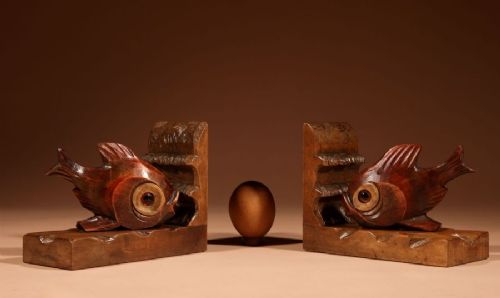
Goldfish, goldfish bookends prove that even swimming creatures occasionally enjoy a stationary job holding up heavy reading.
What varies in quality
Anatomical proportion and depth of carving separate exceptional pieces from simpler production work. Fine sculpture captures muscular tension in a lion or alertness in a terrier rather than relying on generic outlines.
The integrity of the mounting matters significantly, as heavier stone bases or weighted wooden plinths provide the mass needed to hold heavy folios. Original surface patination and finish preservation determine how well a piece retains its character over time.
Franz Gruber·C Omin·Karl Hagenaur
The Antique Animal Bookends Glossary
- Black Forest
- A style of wood carving originating in central Europe, known for realistic depictions of bears, owls, and dogs. These items typically employ Linden wood and feature expressive details.
- Spelter
- A zinc alloy used as a cost-effective alternative to bronze during the nineteenth and twentieth centuries. It accepts patination well to imitate heavier metals.
- Serpentine marble
- A dense, green-veined stone utilised for bases and architectural models. It provides substantial weight for functional shelf supports.
- Patina
- The surface sheen and colour acquired by materials through age and handling. This layer indicates the natural ageing of bronze, wood, or brass over decades.
Antique Animal Bookends: Frequently Asked Questions
Are these bookends heavy enough for large books?
Many pairs incorporate dense materials such as marble, cast bronze, or hardwood plinths to provide necessary counterweight. Lighter wooden or plaster examples suit smaller volumes rather than heavy reference sets.
Checking the base material helps determine the functional capacity of each pair on open shelves.
How do I distinguish Art Deco bookends?
Art Deco pieces from the 1920s and 1930s often feature streamlined geometric forms, stylised animal anatomy, and modern materials like polished marble. Look for clean lines and simplified silhouettes typical of the interwar period.
Earlier Victorian examples tend toward naturalistic detail and ornate carving styles.
What is Black Forest carving?
Black Forest carving refers to nineteenth and early twentieth-century woodwork originating from Switzerland and Germany. These pieces typically depict local fauna, including bears, owls, and dogs, with deep relief work.
Makers often integrated naturalistic elements such as branches and rustic plinths into the design.