
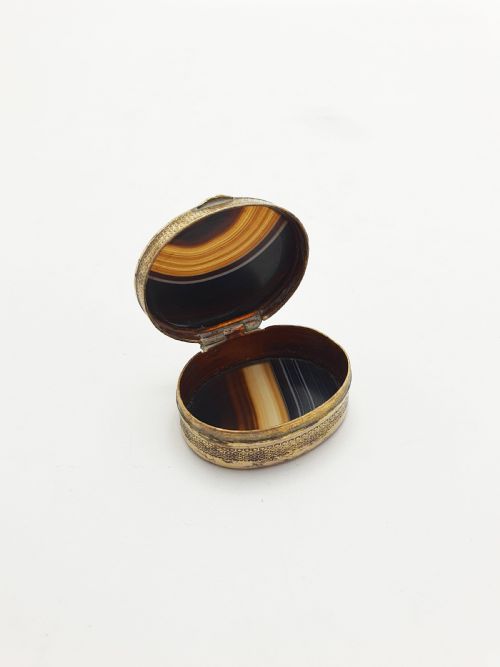


Antique Agate Pill Box
An antique agate pill box packs tactile stone and bright metal into a pocket-sized container that once held daily remedies or small treasures.

Antique Agate Pill Box
When you search for an antique agate pill box, you encounter small personal containers designed for carrying pills, snuff or powdered remedies in the pocket or handbag. The selection on this page centres primarily on Georgian and Victorian specimens, alongside Edwardian and French examples.
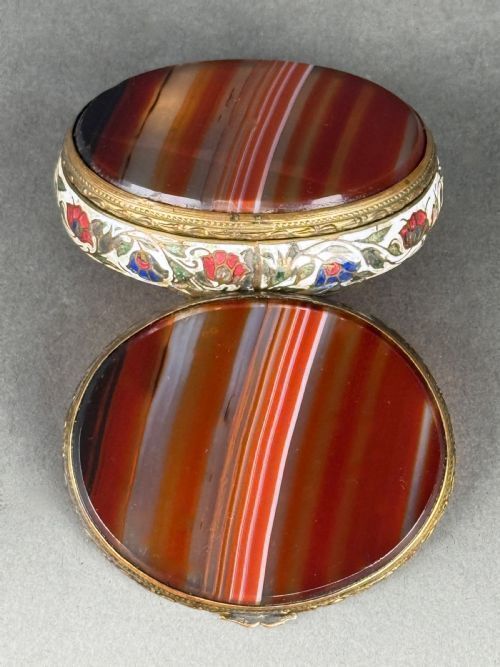
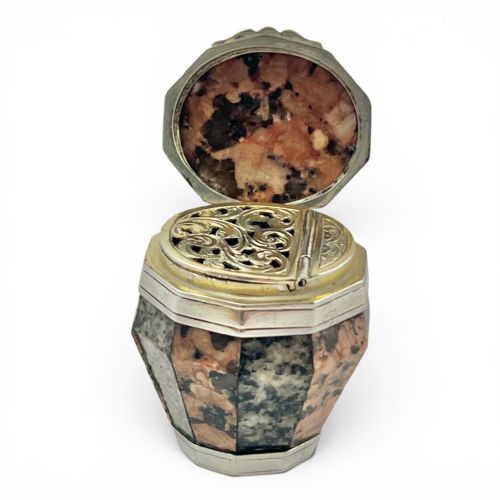
The objects take various diminutive forms, including round, oval and barrel shapes, often paired with related items such as snuff boxes and vinaigrettes. Scottish silver and banded agate pieces sit alongside French champleve enamel creations and English silver mounts.
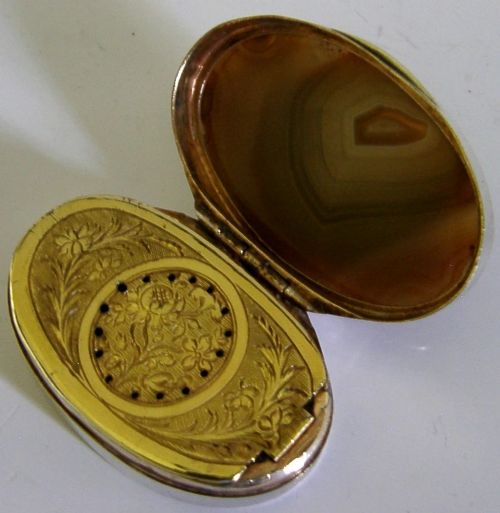
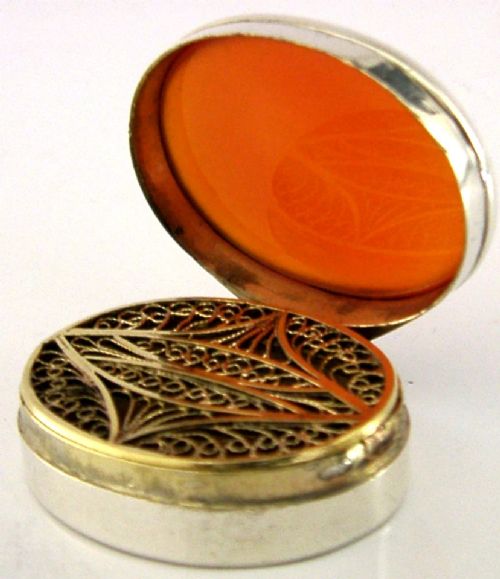
You will find stone panels fitted into frames of sterling silver, eighteen carat gold, gilt brass and gilt metal. The mineral itself appears in banded, orange and moss varieties, showing natural patterns polished smooth by historical hands.
How they were made
Lapidaries shaped and polished hard agate stones into thin, flat panels or curved barrel sections to fit exact metal dimensions. Goldsmiths and silversmiths then constructed enclosing mounts from sterling silver, gold, gilt brass and gilt metal, securing the mineral with bezels or tiny pins.
Engravers and makers added decorative detail through chased silver mounts, Edinburgh assay office marks, or intricate French champleve enamel borders. Hinges and catches required precise miniature metalwork to ensure lids closed flush against the stone body.
Victorian travellers carried these tiny stone parcels to guard against foul odours and sudden swoons in crowded railway carriages.
What varies in quality
The quality of an antique agate pill box depends largely on the depth and clarity of the stone's natural banding or moss inclusions. Highly prized specimens display vibrant colour contrasts within the polished mineral surface rather than dull or muddy tones.
Construction standards differ between simple gilt metal mounts and heavy sterling silver or eighteen carat gold settings. A tighter fit in the hinge and a crisp, unblemished polish on both stone and metal separate finer workshops from standard production.
Hilliard & Thomason
The Antique Agate Pill Box Glossary
- Agate
- A form of cryptocrystalline quartz displaying natural multicoloured bands or inclusions. It takes a high polish and forms the primary decorative body of these small boxes.
- Vinaigrette
- A small hinged box fitted with an internal pierced grille that held a sponge soaked in aromatic vinegar. They served to mask unpleasant odours or revive a fainting wearer.
- Banded agate
- A variety of chalcedony featuring distinct parallel stripes of contrasting colours. These natural striations give each box a unique visual rhythm.
- Champleve enamel
- A technique where troughs are dug into a metal surface and filled with vitreous enamel paste before firing. It frequently frames French boxes alongside stone panels.
- Sterling silver
- An alloy consisting of ninety-two point five percent silver and seven point five percent other metals, commonly copper. English makers utilised this standard for durability in pocket containers.
Antique Agate Pill Box: Frequently Asked Questions
What did people keep in an antique agate pill box?
These miniature containers primarily held small medicinal pills, lozenges or scented powders for personal use throughout the day. Their compact dimensions allowed owners to slip them easily into a pocket or evening bag.
Some variants, known as vinaigrettes, held a sponge soaked in pungent vinegar rather than dry medicine. This served to revive the owner or counteract unpleasant street odours in crowded nineteenth century cities.
Are these boxes made of solid stone?
Most pieces consist of thin polished panels of agate fitted into a structural metal frame of silver, gold, gilt brass or gilt metal. The stone forms the top, bottom and sometimes sides, supported by a metal chassis that holds the hinges and lid securely.
Some barrel-shaped Scottish examples wrap curved agate sections around a central cylindrical body. The metal skeleton provides the necessary strength for the opening mechanism while displaying the mineral to best effect.
How should I clean my agate box?
Wipe the stone and metal surfaces gently with a soft, dry or slightly damp cloth to remove dust and oils. Avoid harsh chemical dips, ultrasonic cleaners or soaking the box in water, as moisture can penetrate old hinge pins or degrade historic adhesives.
For silver or gold mounts, use a specialised polishing cloth very carefully around the stone edges. Keeping the box in a stable, dry environment protects both the mineral polish and the delicate metalwork.