

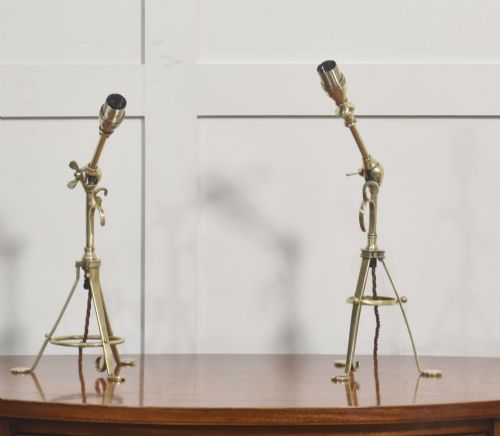
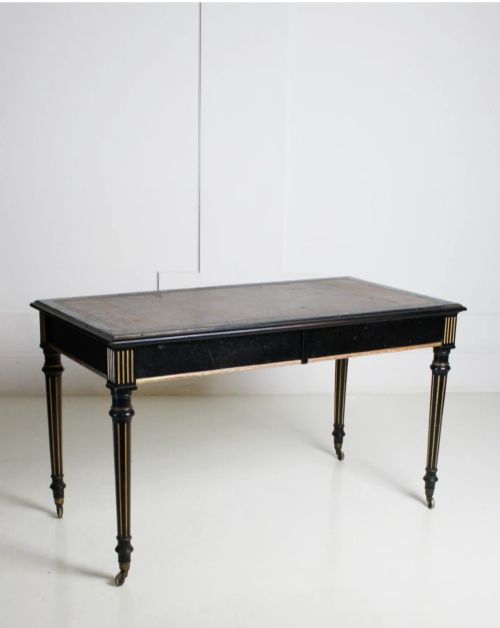
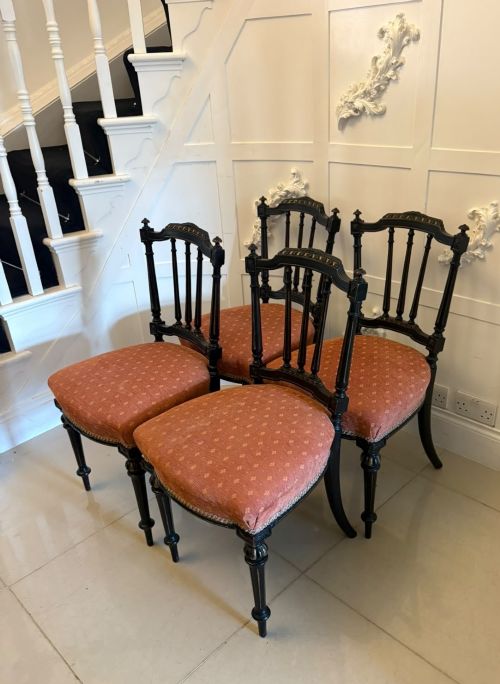
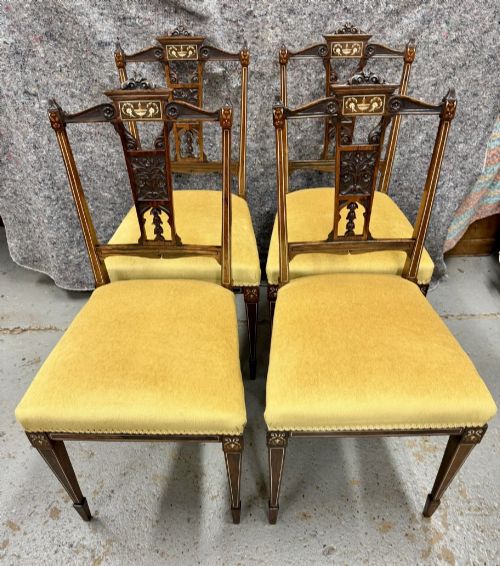



Antique Aesthetic Desk
An antique aesthetic desk brings together crisp reform design and rich cabinet woods to anchor a thoughtful study.
Antique Aesthetic Desk
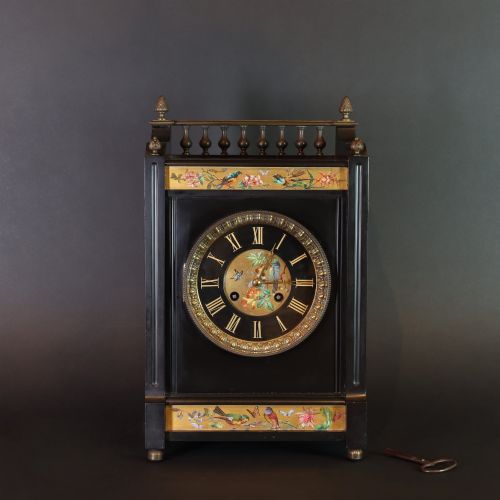
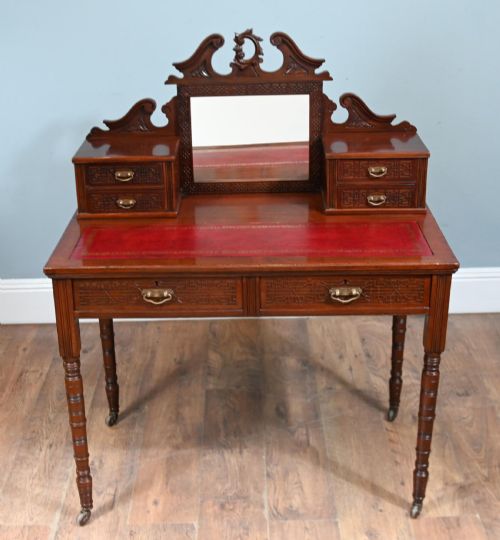
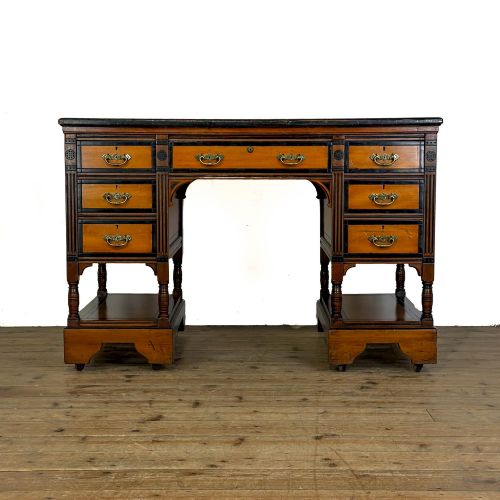
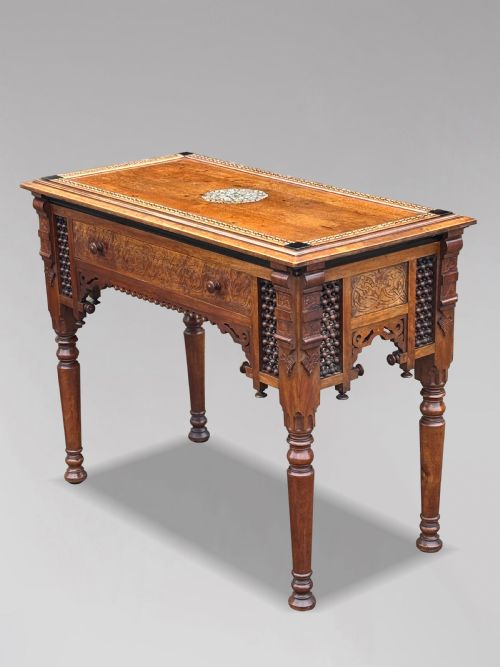
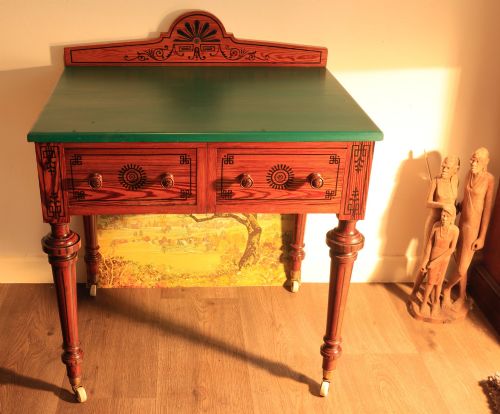
When you search for an antique aesthetic desk, you encounter pieces shaped by late nineteenth century design reform, spanning kneehole tables, partners desks, and delicate ladies writing tables. These forms typically date from the Victorian era around eighteen-eighty, reflecting a shift away from heavy historical revivalism toward lighter, more considered domestic furniture.
The versions most commonly met on this page combine mahogany, walnut, or ebonised wood with fitted writing surfaces and subtle inlay. They range from compact Davenport forms to expansive library and writing tables built with distinct Anglo-Japanese or Chinoiserie inflections.
Materials and Construction
Cabinet makers utilised dense hardwoods including mahogany, walnut, and satinwood, often pairing ebonised surfaces with gilt detailing or contrasting brass mounts. Construction relied on traditional joinery techniques to support slender framing and complex pedestal configurations without sacrificing structural integrity.
Surfaces frequently incorporated inset leather writing panels, ceramic inkwells, and intricate Moorish or linear wood inlay. Parcel gilding and specialist bronze or brass hardware completed the construction, marking a departure towards refined decorative harmony.
Antique Aesthetic Desk Retail Price Guide 2026
Typical asking prices for aesthetic desk among the pieces listed under this phrase on Sellingantiques today, from the lower quarter to the upper quarter. They describe what is for sale here now, not the wider market.
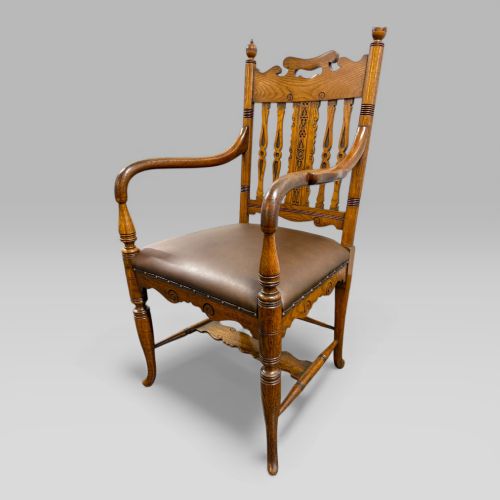
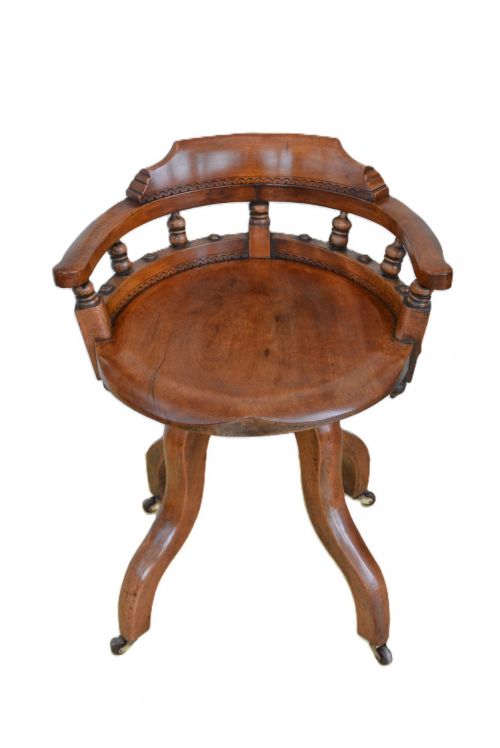
Several swivel chairs on offer ensure you can spin dramatically while pondering your correspondence.
Distinctions in Quality
Quality rests upon the crispness of the carving, the selection of timber grains such as burr thuya or satin birch, and the sophistication of the hardware. Pieces carrying documented workshop attributions or exhibition quality execution distinguish themselves through superior proportion and balanced inlay work.
Finer examples maintain original brass mounts, leather inserts, and ebonised finishes without excessive restoration. The integration of structural elements, such as swiveling mechanisms on chairs or secure kneehole drawer framing, separates standard production from exceptional cabinet work.
Bruce James Talbert·Edwards and Roberts·Blyth and Son·George Faulkner Armitage·Marsh Jones and Cribb·Howard and Sons·Edward William Godwin·Charles Bevan·Collinson and Lock·Gregory and Co·Liberty
The Antique Aesthetic Desk Glossary
- Aesthetic Movement
- A late nineteenth century design philosophy prioritising visual beauty and reform over strict historical revivals. It drew heavy inspiration from Japanese and East Asian decorative arts.
- Ebonised Wood
- Timber treated with a dark stain or finish to imitate ebony. This technique created stark contrast against gilt highlights and brass hardware.
- Kneehole Desk
- A compact desk featuring a central recess for the legs, flanked by pedestals of small drawers. This form became popular for domestic writing rooms during the Victorian period.
- Partners Desk
- A large double sided desk designed for two people to work opposite one another. It usually incorporates banks of drawers beneath both sides of the top.
- Parcel Gilt
- A decorative treatment where only specific carved details, mouldings, or motifs receive a thin application of gold leaf. It accentuates the linear patterns of aesthetic furniture.
Antique Aesthetic Desk: Frequently Asked Questions
What defines an aesthetic movement desk?
An aesthetic movement desk relies on clean structural lines, dark ebonised finishes, and flat decorative motifs rather than heavy carved ornamentation. These pieces often incorporate Japanned details, brass hardware, and contrasting timber inlays.
Cabinet makers of the late Victorian era produced these desks to serve as artistic focal points in domestic studies and morning rooms, breaking away from standard historical revival styles.
How do I identify a partners desk?
A partners desk is built to be used from both sides, featuring matching drawer configurations on the front and the reverse. These substantial pieces usually stand independently in the middle of a room rather than against a wall.
They frequently feature inset leather writing surfaces and generous pedestal cabinets designed to accommodate two working individuals simultaneously.
Where were these desks used?
These writing tables and desks populated the libraries, morning rooms, and private studies of affluent Victorian homes. Smaller ladies writing tables and Davenport desks were often placed in bedrooms or intimate sitting rooms.
Their refined proportions allowed them to function both as practical workspace and as decorative furniture within fashionable domestic interiors.
How do I care for ebonised wood?
Ebonised surfaces require gentle dusting with a soft, dry cloth to prevent micro-scratching on the dark finish. Avoid harsh chemical cleaners and direct sunlight, which can fade the dark stain or damage the underlying grain.
Occasional application of appropriate furniture wax helps preserve the lustre and protects the timber from environmental moisture changes.
What is a Davenport desk?
A Davenport is a compact writing desk featuring a sloping, leather-lined lid that lifts to reveal storage compartments inside. A bank of small drawers typically opens to one side of the pedestal.
Originating earlier in the nineteenth century, Davenport desks were frequently built in walnut or mahogany during the aesthetic period for use in smaller private spaces.