
Antique 18ct Cluster Ring
An antique 18ct cluster ring gathers a central gem within a bright frame of smaller stones, offering distinct character across Georgian, Victorian, Edwardian and Art Deco designs.
Antique 18ct Cluster Ring
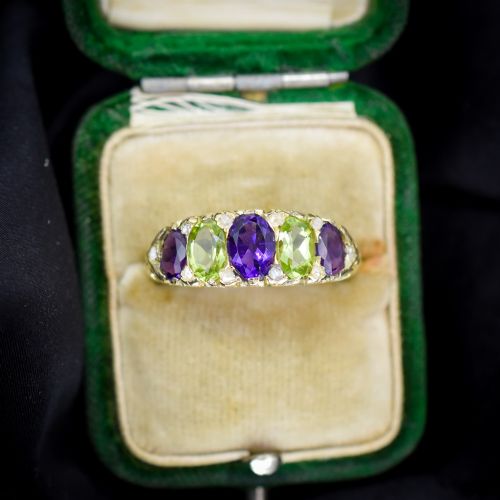
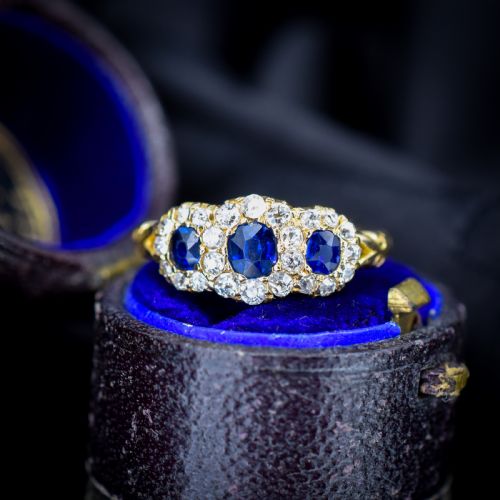
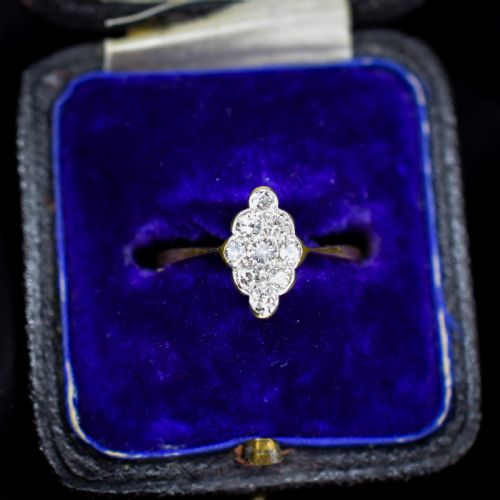
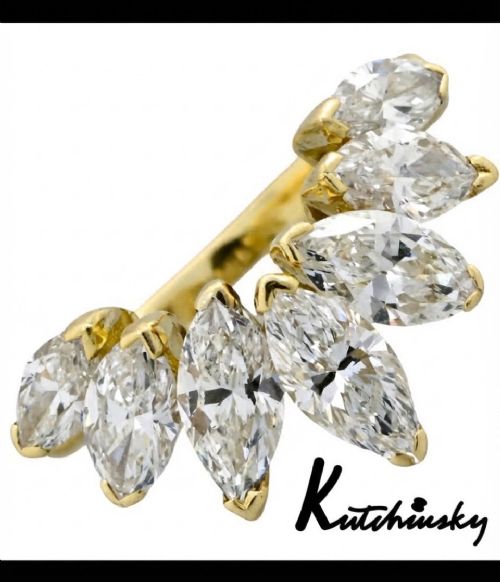
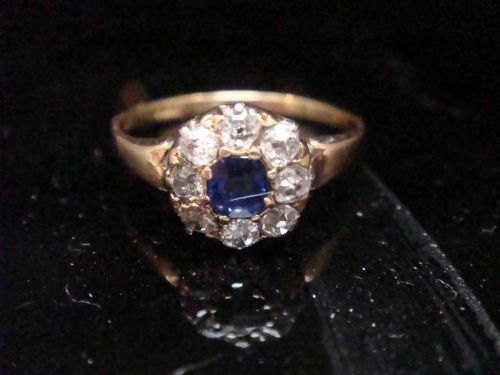
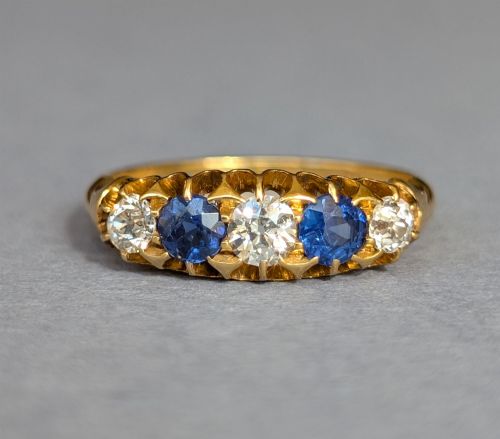
Buyers encounter floral daisy motifs, elongated navette shapes, and geometric double clusters across the selection. Yellow gold forms the foundation of earlier Victorian and Edwardian examples, while later Art Deco pieces frequently incorporate platinum or white gold settings.
How these rings were constructed
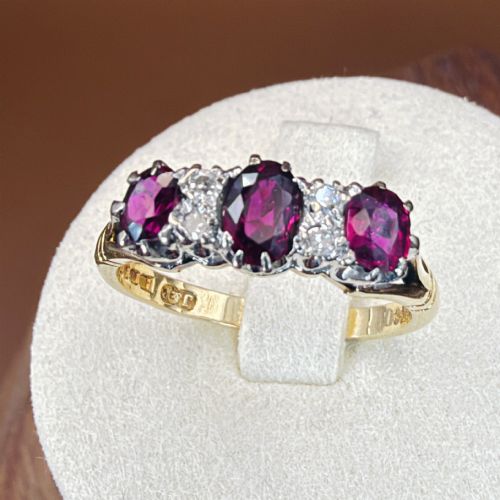
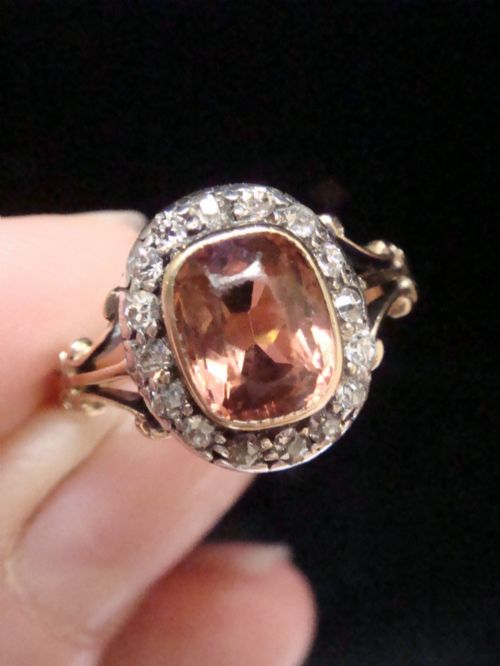
Goldsmiths utilised 18ct gold, both yellow and white varieties, alongside platinum in later designs to securely house the stones. Stones such as old cut diamonds, sapphires, rubies, emeralds, pearls and opals are held securely within claw, collet or bezel settings.
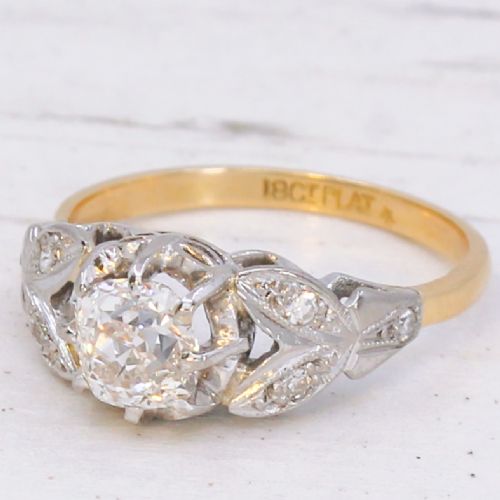
Art Deco examples frequently combine 18ct gold with platinum or silver toppings to present a crisp, white metal surface for diamond settings. Earlier Victorian and Edwardian workshops relied on hand-finished yellow gold bands paired with intricate gallery work beneath the cluster face.
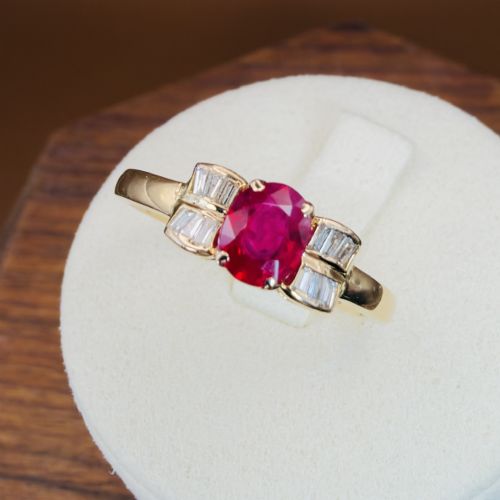
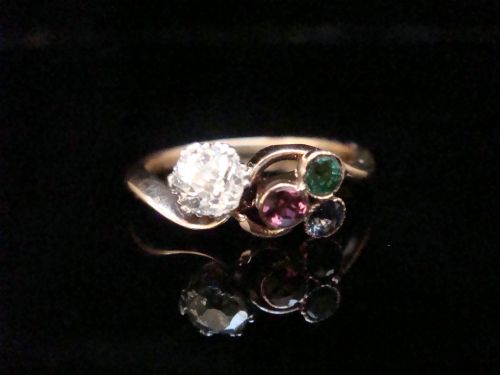
Materials recorded across the inventory include diamonds, sapphires, rubies, emeralds, pearls, opals, citrines, amethysts, peridots, and tourmalines set in 18ct yellow, white, and platinum.
What separates examples in quality
The precision of stone matching and the symmetry of the surrounding cluster dictate the overall standard of the piece. Uniformity in diamond cuts and consistent colour saturation in rubies or sapphires elevate the visual harmony of the face.
The integrity of the structural gallery work and the minimal wear to the original settings demonstrate superior craftsmanship. Pieces retaining crisp engraving and secure, original stone arrangements represent the higher tier of surviving examples.
The Antique 18ct Cluster Ring Glossary
- Cluster ring
- A ring design featuring a prominent central stone surrounded by a border of smaller gems. This configuration maximises visual presence and sparkle on the hand.
- Old cut diamond
- A hand-faceted diamond cut popular before modern machinery standardisation, typically featuring a smaller table, higher crown and open culet. These stones display a softer, warmer scintillation under candle or ambient light.
- Navette
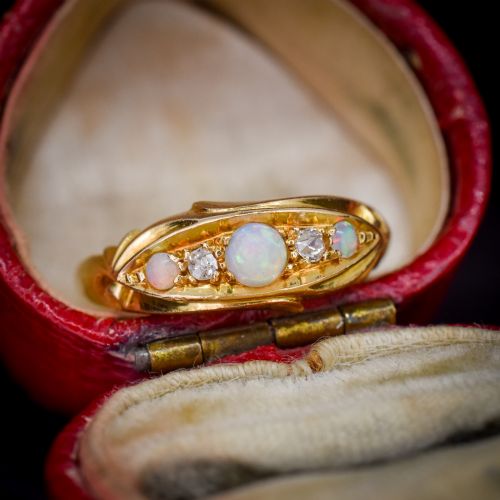
- A boat-shaped or marquise outline that tapers to points at either end. This elongated configuration sits lengthwise along the finger.
- Daisy cluster
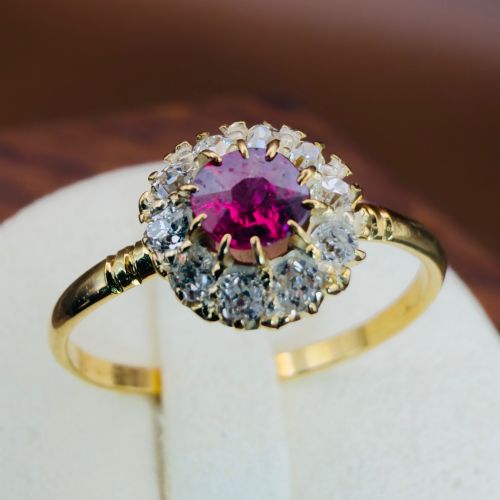
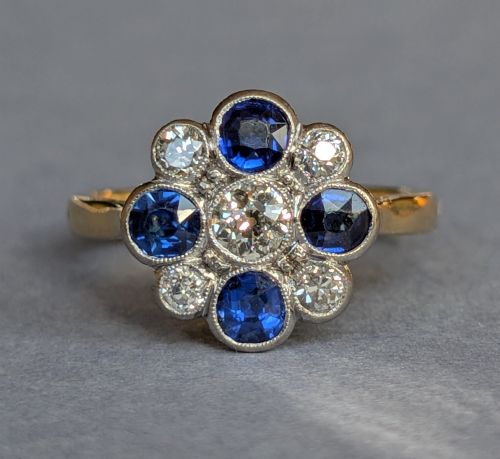
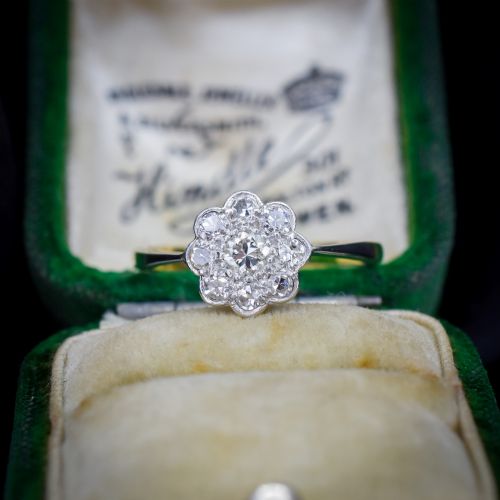
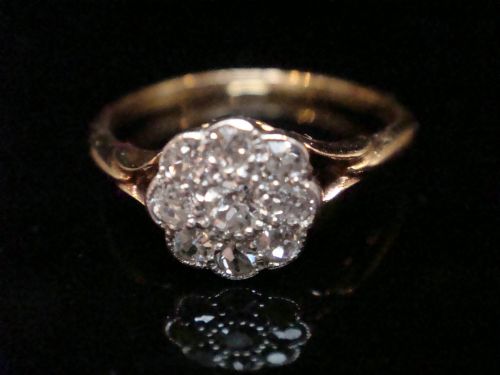
- A floral arrangement where circular surrounding stones mimic petals radiating from a central round gem. This style appears frequently in Victorian and Edwardian pieces.
- Platinum
- A dense, durable white metal utilised extensively in Edwardian and Art Deco settings to hold delicate diamond work securely. Its strength allows for fine, minimal claws.
Antique 18ct Cluster Ring: Frequently Asked Questions
How do I date an antique 18ct cluster ring?
Dating relies on stylistic clues such as the silhouette, gemstone cuts, and metal combinations used in the setting. Victorian and Edwardian pieces often favour yellow gold and floral daisy arrangements, whereas Art Deco rings utilise geometric shapes and white gold or platinum.
Assay office hallmarks and maker's marks stamped inside the band provide definitive chronological markers. Comparing the stone cutting style, such as old cut diamonds versus later brilliant cuts, further narrows the period of origin.
Can I wear an antique cluster ring daily?
Daily wear is possible with careful consideration for the age and materials of the specific ring. Sturdier Victorian and Edwardian gold settings withstand regular use if checked periodically by a jeweller for claw integrity.
Softer gems like pearls and opals require extra protection from impacts and chemical exposure. Removing the ring during rigorous activities preserves the delicate gallery work and prevents stone loss.
What is the difference between a daisy and a navette cluster?
A daisy cluster forms a rounded, flower-like rosette with a central stone encircled symmetrically by a single row of matching gems. This compact shape sits evenly across the finger.
A navette cluster stretches into an elongated, boat-shaped silhouette that points towards the knuckles. This narrow form creates a distinctively different visual scale on the hand.
Are 18ct gold rings durable?
Eighteen-carat gold contains a high proportion of pure gold alloyed with other metals to balance richness of colour with structural strength. This alloy provides a sturdy foundation for antique stone settings while maintaining a warm hue.
Over long periods, the prongs holding the stones can experience gradual thinning from everyday friction. Routine inspection ensures the claws remain secure around the diamonds, sapphires or rubies.