



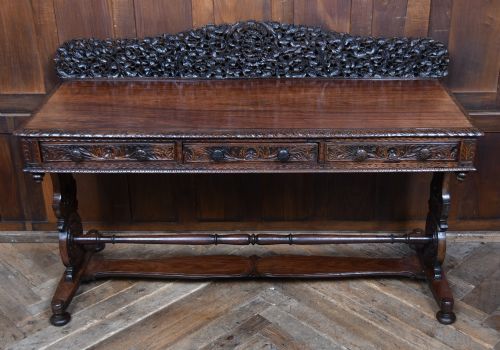
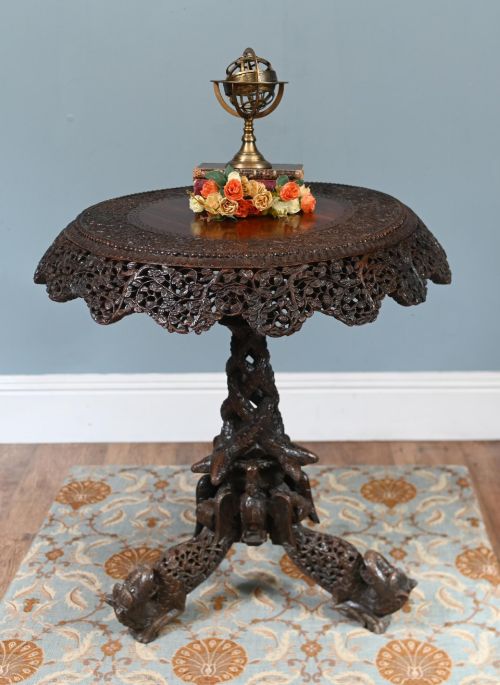
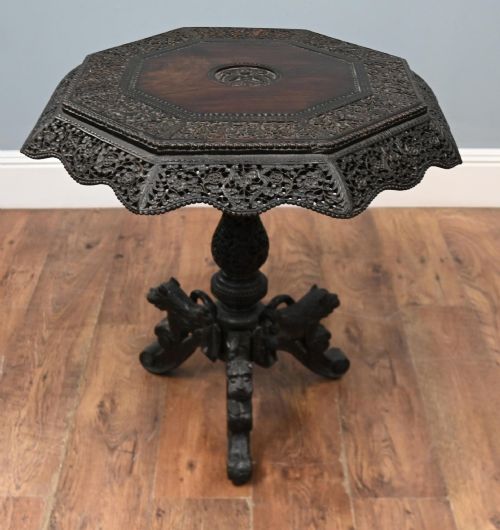
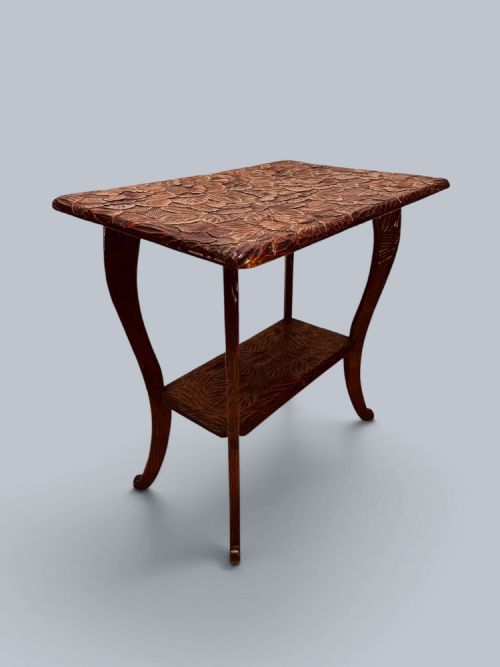
Anglo Oriental Table
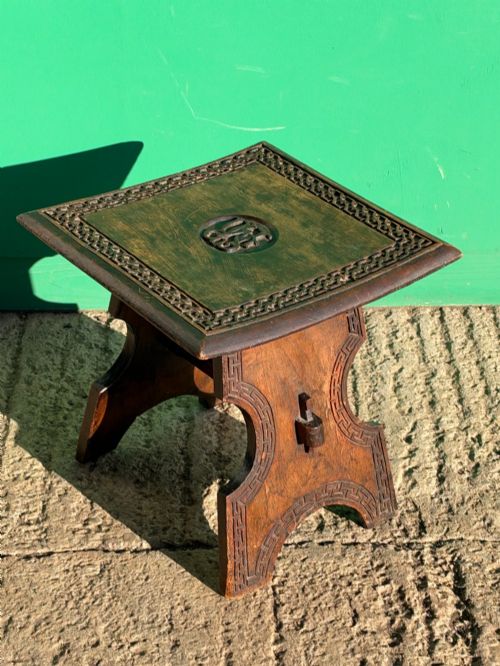
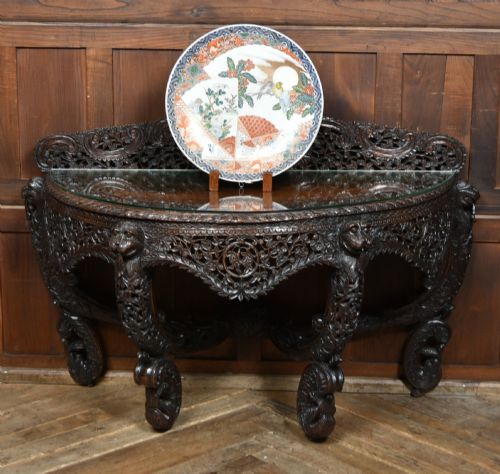
An anglo oriental table brings together British domestic forms and intricate Eastern carving, offering a striking centrepiece for any room.
Anglo Oriental Table
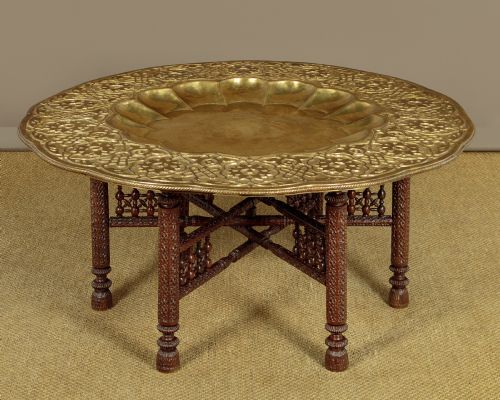
An anglo oriental table represents the artistic exchange between British colonial demand and traditional craftsmanship from regions such as India, Burma, and Kashmir. Buyers seeking this phrase encounter a rich variety of forms, from small occasional stands to large coffee tables and lamp tables.
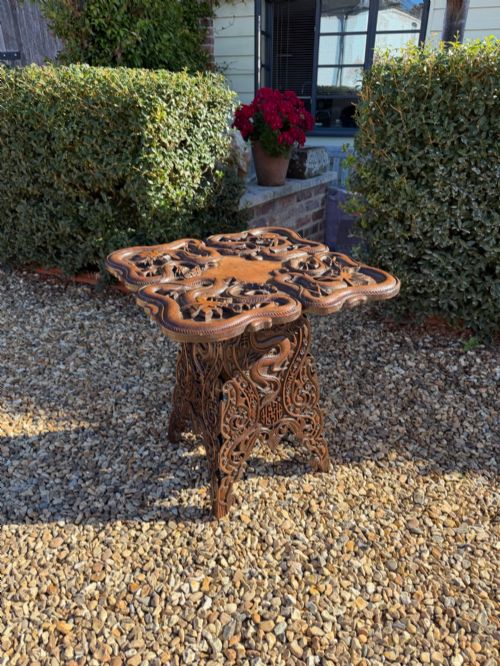
The most common examples on this page are octagonal and circular side tables, frequently carved from solid hardwoods or inlaid with bone and brass. Pieces originating from the Bombay presidency and Hoshiarpur demonstrate distinct regional carving traditions adapted for British interiors.
Assessing quality and execution
The distinction between standard production and superior work lies in the depth and precision of the hand carving. Pieces featuring crisp, undercut foliage, complete inlay without missing sections, and solid rosewood or teak structures represent the finer end of the scale.
Structural integrity also separates individual examples, particularly in octagonal folding tables where hinge placement and wood seasoning determine long-term stability. The complexity of the iconography, such as intricate elephant motifs or peacock designs, further elevates the work.
Anglo Oriental Table Retail Price Guide 2026
Typical asking prices for anglo oriental table among the pieces listed under this phrase on Sellingantiques today, from the lower quarter to the upper quarter. They describe what is for sale here now, not the wider market.
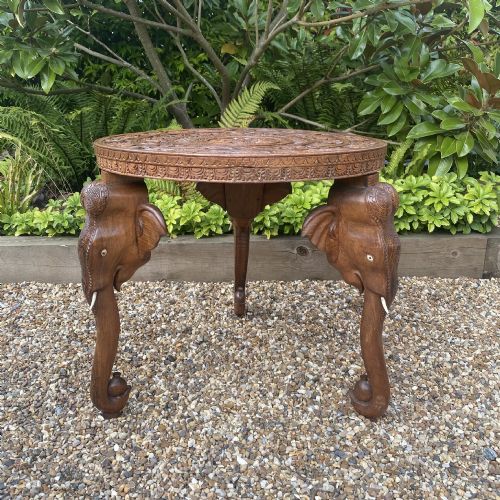
Several tables incorporate carved elephant heads that double as structural supports, proving that Victorian parlour furniture occasionally possessed a sense of humour.
Liberty and Co
The Anglo Oriental Table Glossary
- Hoshiarpur
- A town in Punjab renowned for intricate woodcarving and micro-mosaic inlay work using brass and bone.
- Occasional table
- A small, movable table designed for specific, intermittent uses such as holding a lamp or books.
- Padouk
- A durable tropical hardwood with a reddish hue, favoured for colonial carved furniture.
- Octagonal
- Having eight sides, a popular geometric format for tables designed to display multi-directional carving.
- Lacquer
- A protective and decorative coating applied in layers, seen on specific regional items.
Anglo Oriental Table: Frequently Asked Questions
What defines an anglo oriental table?
These tables combine British furniture forms with traditional Eastern decorative techniques. They reflect the stylistic exchanges of the colonial period.
Craftsmen in regions like India and Burma produced them specifically for Western homes, resulting in distinctive carved and inlaid surfaces.
How were these tables used originally?
Owners used them as occasional furniture for holding lamps, displaying decorative objects, or serving tea. Their portable nature made them easy to move around Victorian and Edwardian reception rooms.
Many featured folding bases designed to be packed away or repositioned as needed.
How do I care for inlaid wood?
Keep the wood conditioned with appropriate wax and avoid placing pieces in direct sunlight or near heat sources. Excessive temperature changes can cause the brass or bone inlay to loosen.
Dust gently with a soft cloth rather than using liquid polishes that might seep into the carved recesses.
How can I tell the origin of a table?
Examine the timber, the carving style, and the inlay materials to identify regional characteristics. Hoshiarpur pieces typically feature dense geometric bone and brass wire inlay, while Burmese work often displays deep figurative carving.
Occasional pieces bear maker stamps or retail marks from firms involved in importing colonial goods.