




Anglo Indian Carved Throne
An anglo indian carved throne brings heavy timber and dense hand carving straight into a room, offering deep seats and towering backs rooted in colonial trade.
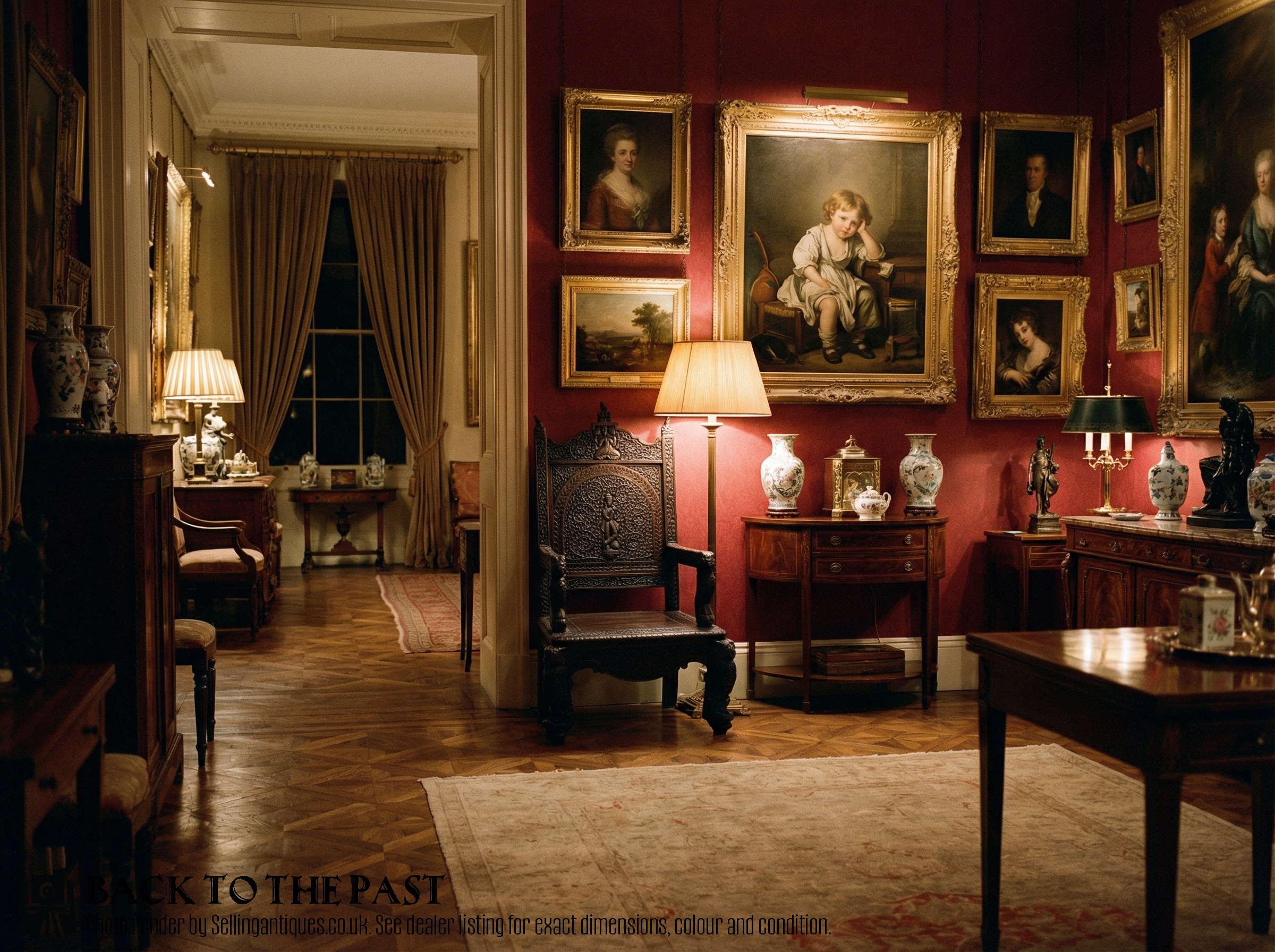
Anglo Indian Carved Throne
An anglo indian carved throne sits firmly among armchairs, accent chairs, occasional chairs, and side chairs found across this page. These seating pieces emerge from periods spanning the seventeenth century through the Victorian era up to nineteen thirty.
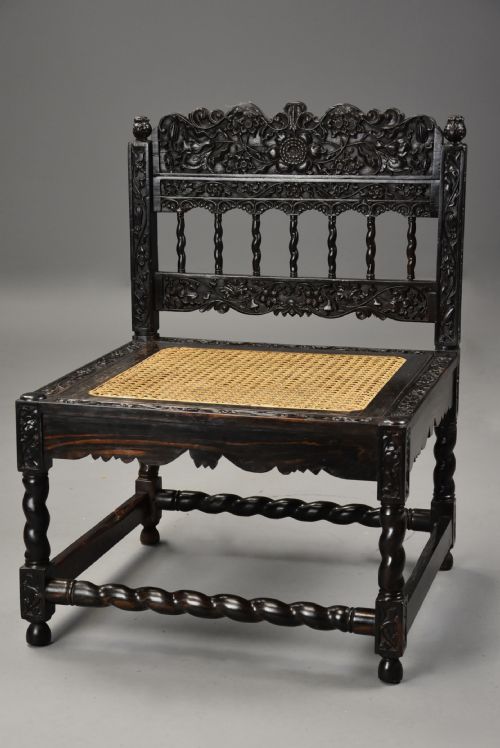
The assortment on offer draws heavily on nineteenth-century examples alongside specific regional expressions like Burmese temple chairs, Ceylonese veranda chairs, and Coromandel Coast low chairs. Buyers encounter forms ranging from ceremonial armchairs and peacock armchairs to Savaronola styles and Moghul armchairs.
Each piece bridges traditional eastern woodworking with western seating forms tailored for colonial residences. The resulting chairs function equally well as standalone decorative objects and robust functional seats.
Construction and materials
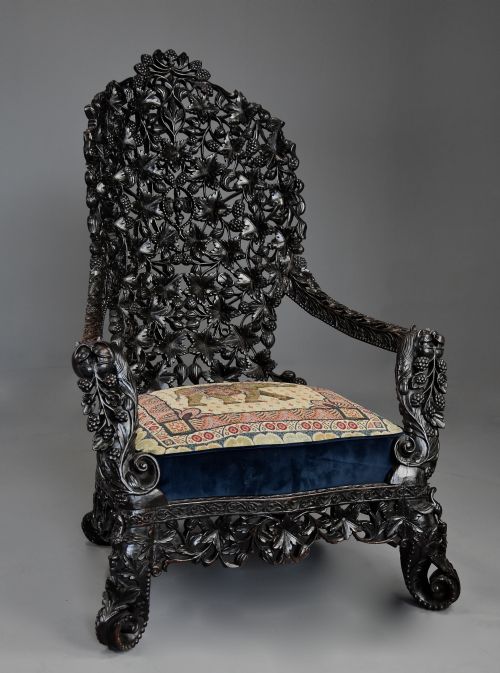
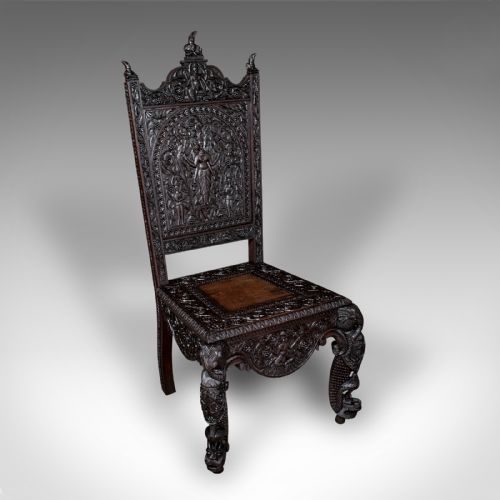
Makers shaped these chairs from dense timbers including teak, hardwood, solid ebony, blackwood, and general timber. Skilled hands then covered surfaces in profuse hand carving depicting figures like rams heads and peacocks.
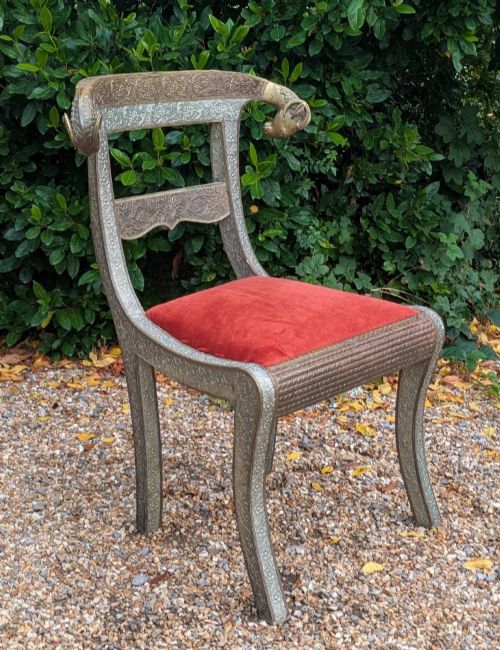
Certain examples incorporate brass inlay or silver metal sheet applied directly to the wooden structure. Upholstery elements appear in velvet and tapestry fabrics across surviving seats.
Several chairs feature carved peacocks or rams heads keeping watch over the seated guest.
Judging quality in carved seating
Quality rests upon the depth, crispness, and complexity of the hand carving across the timber frame. Pieces featuring intricate figural work, such as rams heads or peacock motifs, demonstrate superior artisanal execution compared to simpler designs.
The choice of dense primary materials like solid ebony or heavy teak defines the structural integrity and weight of a chair. Intact metal embellishments and well-preserved secondary elements elevate the standing of an individual piece.
The Anglo Indian Carved Throne Glossary
- Coromandel Coast
- A southeastern coastal region of India known for producing early solid ebony carved low chairs. Pieces from this origin often display exceptional density in their timber.
- Savaronola Style
- A folding armchair design characterised by interlaced curved wooden legs forming a scissors configuration. This western form was adopted by Indian makers incorporating brass inlay.
- Veranda Chair
- A seating form designed for tropical and subtropical colonial porches, typically constructed from teak with an ornate seat. These pieces prioritise climate suitability alongside decorative presence.
- Peacock Armchair
- A ceremonial chair style featuring elaborate fan-shaped backrests carved to resemble peacock plumage. These examples showcase some of the most exuberant woodworking found in nineteenth-century production.
- Moghul Armchair
- A heavy seating form influenced by historic imperial aesthetics, featuring dense overall carving across the wooden frame. Such chairs reflect courtly decorative traditions adapted for colonial patrons.
Anglo Indian Carved Throne: Frequently Asked Questions
How do I place an anglo indian carved throne in a modern room?
These imposing chairs command significant visual attention, making them ideal as standalone accent seating in a living room or hallway. Pair them with neutral surroundings to let the dense timber and intricate carving remain the focal point.
Ensure adequate physical space around the chair so the arms and high back can be fully appreciated without crowding. Avoid placing them in direct sunlight or near heat sources to protect the aged hardwood and any applied metal elements.
What is the difference between a temple chair and a veranda chair?
Temple chairs originate from Burmese religious contexts, often built as heavy hardwood thrones designed for ceremonial interiors. They typically feature severe vertical proportions and deeply recessed figural carving.
Veranda chairs come from domestic colonial settings, specifically regions like Ceylon, built from teak for outdoor or semi-outdoor porch use. They emphasise ventilated seating surfaces and ornate seats suited to lighter domestic environments.
Are these chairs comfortable for daily sitting?
Most of these seating pieces are constructed from solid teak, ebony, or blackwood with firm wooden seats or historic upholstery like velvet and tapestry. They offer a rigid, upright posture rather than deep cushioning.
Adding a loose period-appropriate cushion can improve comfort for extended sitting while preserving the historic seat base. The primary appeal, however, remains their striking sculptural presence and historical construction.
How do I identify a nineteenth-century piece?
Nineteenth-century examples frequently exhibit profuse hand carving, dark blackwood or teak construction, and distinct stylistic hybrids like Victorian colonial or Indo-Portuguese influences. Tool marks left by hand chisels remain visible upon close inspection of hidden surfaces.
Check for the weight of the timber and the patina developed across the exposed wood over generations of handling. Dates spanning eighteen sixty to nineteen hundred appear commonly among documented examples in this tradition.