




Antique Indian Throne Chairs
These antique indian throne chairs combine intricate carving with commanding scale, bringing historic presence into any room.
Antique Indian Throne Chairs
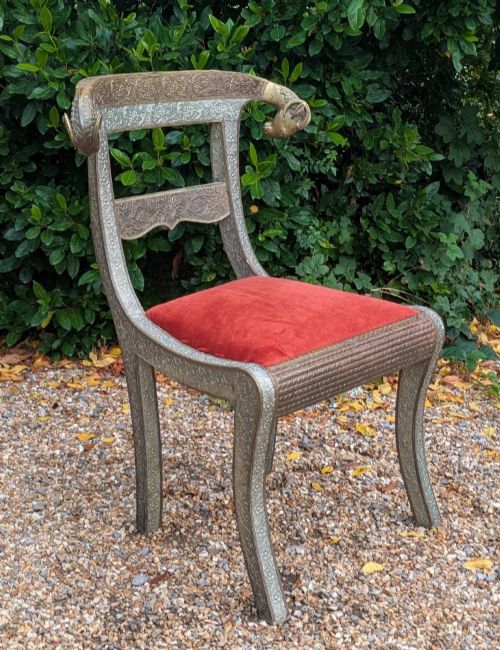
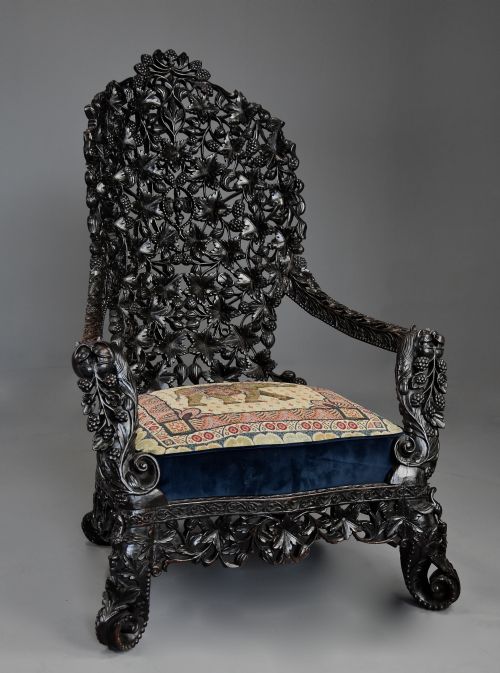
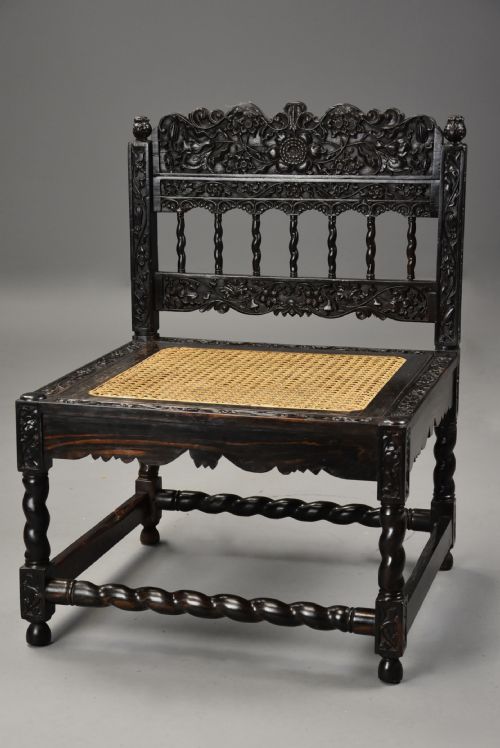
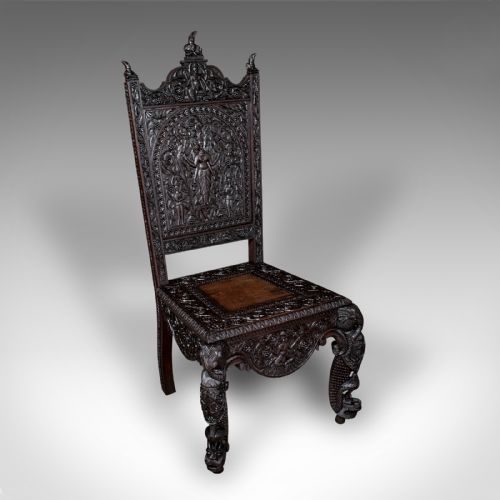
When you search for antique indian throne chairs, you encounter a striking assembly of seating that spans the seventeenth through to the early twentieth century. The selection ranges from robust hardwood armchairs and ceremonial seats to intricate peacock designs and veranda chairs.
You are most likely to meet nineteenth-century examples on this page, alongside specific regional forms originating from Burma, Ceylon, and the Coromandel Coast. Styles encompass Anglo-Indian, Indo-Portuguese, Victorian Colonial, and Indian Ethnic traditions.
These pieces function primarily as statement armchairs and accent chairs, drawing the eye through dense surface decoration and imposing silhouettes. Their forms reflect diverse cultural intersections during periods of colonial history and traditional craftsmanship.
How they were made
Makers utilised dense timbers such as teak, rosewood, ebony, blackwood, and general hardwood as the structural foundation for these substantial seats. These sturdy materials allowed artisans to execute deep, elaborate relief carvings without compromising the integrity of the frame.
Specialised techniques include intricate hand-carving applied across entire surfaces, alongside brass inlay work characteristic of specific regional workshops like Hoshiarpur. Upholstery elements incorporate velvet, tapestry, and woven cane inserts to provide seating comfort within the rigid wooden frameworks.
Listings feature periods spanning from the seventeenth century through the Victorian era up to the 1930s.
What varies in quality
The distinction between tiers of quality rests heavily on the depth, clarity, and ambition of the carving across the hardwood structure. Pieces featuring profuse, sharp relief work on solid ebony or blackwood demonstrate a higher level of artisanal skill than simpler, flatter executions.
Proportion and the integrity of paired elements also divide the ordinary from the exceptional, particularly in matched sets of temple or ceremonial chairs. The integration of specialised materials, such as intricate brass inlay or well-preserved cane work, elevates the overall execution.
The Antique Indian Throne Chairs Glossary
- Anglo-Indian
- A descriptive term for furniture made in India by local craftsmen for British residents, blending European forms with native decorative motifs. This style heavily influences many nineteenth-century pieces.
- Blackwood
- A heavy, dark timber frequently utilised in nineteenth-century Indian furniture for its ability to hold crisp, intricate carved details. It provides a dense foundation for prominent armchairs.
- Savronola Style
- An X-shaped folding chair design originating in the Italian Renaissance, later adapted by Indian makers incorporating brass inlay and regional woodwork. It creates a distinct cross-frame silhouette.
- Coromandel Coast
- A coastal region of southeastern India historically associated with fine cabinet-making and the export of dense ebony furniture during the seventeenth century. Pieces from this area are notably solid and early.
- Peacock Chair
- A decorative seating form featuring a broad, fan-like back constructed from cane or carved wood, often linked to Burmese and Anglo-Indian traditions. These chairs serve as prominent focal points.
Antique Indian Throne Chairs: Frequently Asked Questions
What defines an antique indian throne chair?
These pieces are substantial seats constructed from hardwoods like teak, ebony, and blackwood, featuring dense hand-carving and regional stylistic influences. They include ceremonial, temple, and peacock armchairs dating from the seventeenth to the early twentieth century.
Their origins span various regions including Burma, Ceylon, and different parts of India under colonial and ethnic traditions. Each chair combines commanding scale with intricate surface decoration.
Where do these chairs originate?
The listings show origins across the Indian subcontinent and surrounding regions, including Burma and Ceylon. Specific coastal areas like the Coromandel Coast also contributed distinct styles.
Workshops in locations such as Hoshiarpur specialised in particular techniques like brass inlay, while broader movements produced Anglo-Indian and Indo-Portuguese designs.
How do I live with one of these chairs?
These chairs function best as standalone statement pieces in living spaces, halls, or studies where their scale and carving can be appreciated. Their dark woods and decorative backs anchor a room effectively.
Due to their historic nature and delicate cane or textile elements, they require placement away from direct heat sources and strong sunlight. Regular dusting preserves the intricate relief work.
How are different periods told apart?
Earlier pieces from the seventeenth century, such as those from the Coromandel Coast, tend to feature solid ebony and simpler, robust construction forms. Nineteenth-century examples often display more profuse carving, varied timber usage like blackwood and teak, and distinct colonial stylistic crossover.
Later pieces extending into the twentieth century introduce specific variations like cane peacock designs and specific regional inlays. Examining the timber choice and carving depth assists in placing a piece within its timeline.