


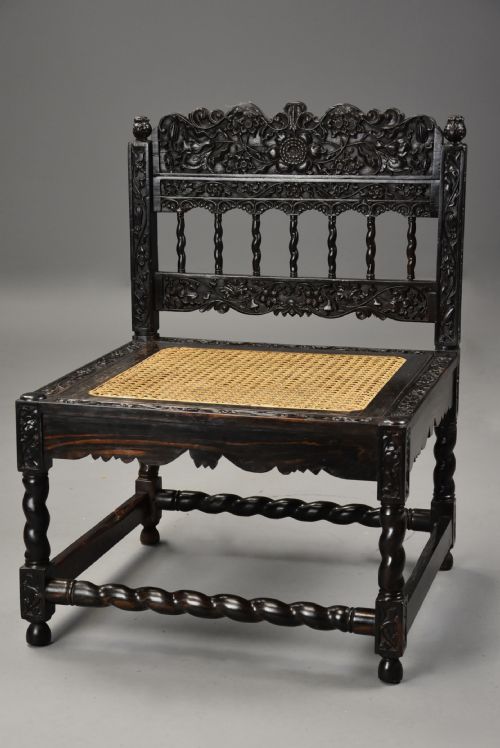


Anglo Indian Carved Seating
These anglo indian carved seating pieces bring dense tropical timber and intricate regional craftsmanship straight from colonial workshops into British homes.
Anglo Indian Carved Seating
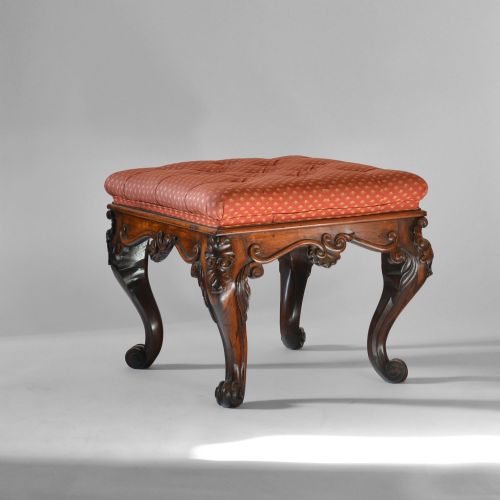
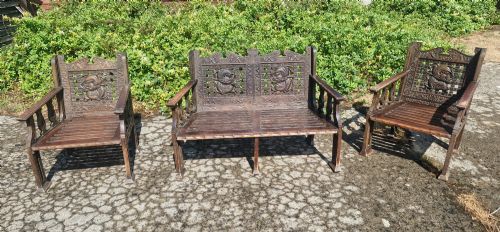
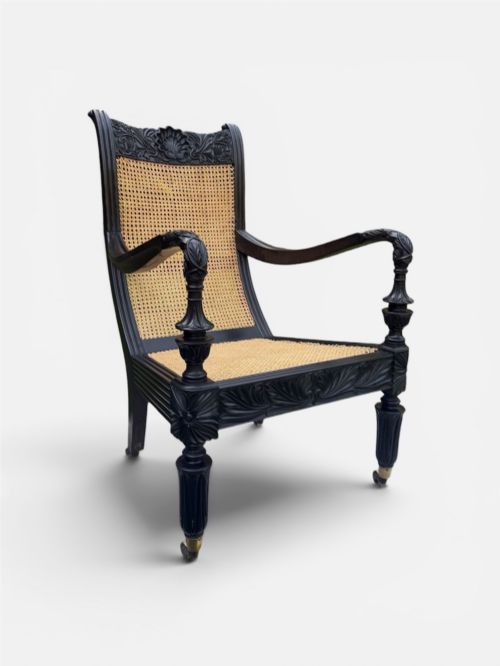
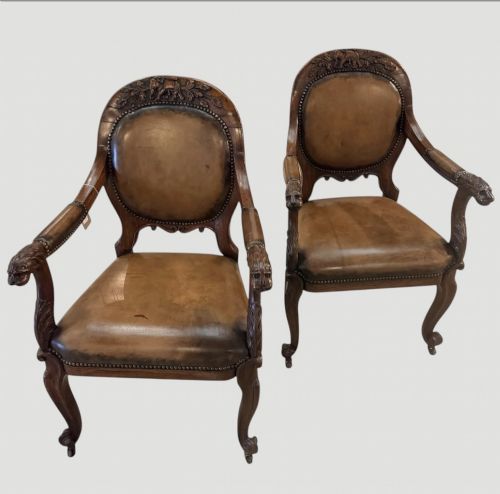
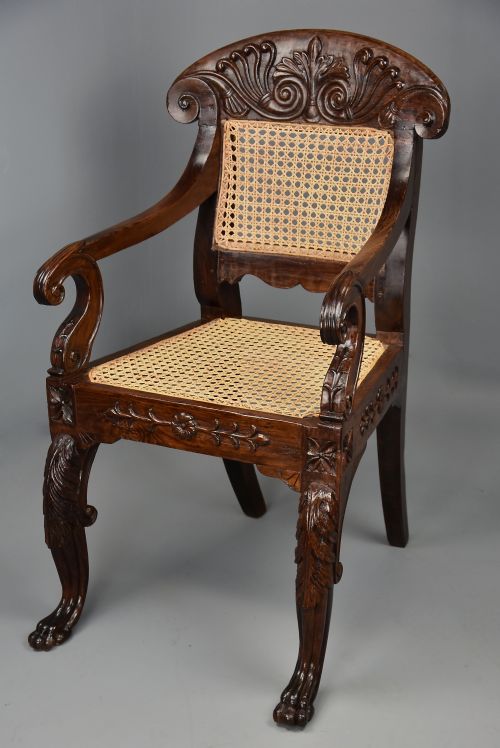
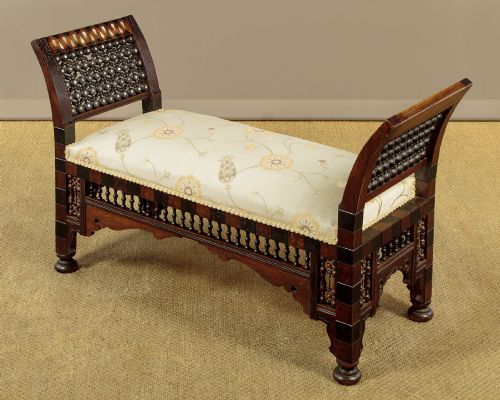
Anglo indian carved seating encompasses armchairs, side chairs, benches, and window seats originating from the nineteenth century and earlier colonial periods. The selection on this page leans heavily toward solid rosewood, ebony, and teak chairs bearing deep chisel work.
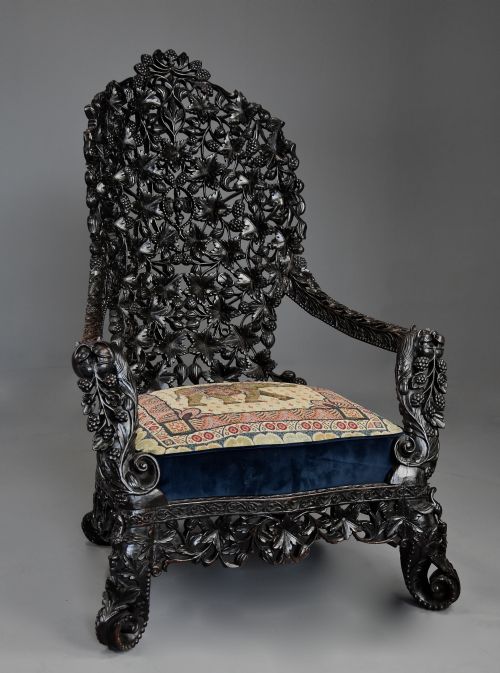
Buyers encounter diverse regional variants including Ceylonese hall chairs, Burmese throne chairs, and Coromandel coast seating. Forms range from heavy ceremonial armchairs to folding chairs and veranda benches with scrolling backs or figural carvings.
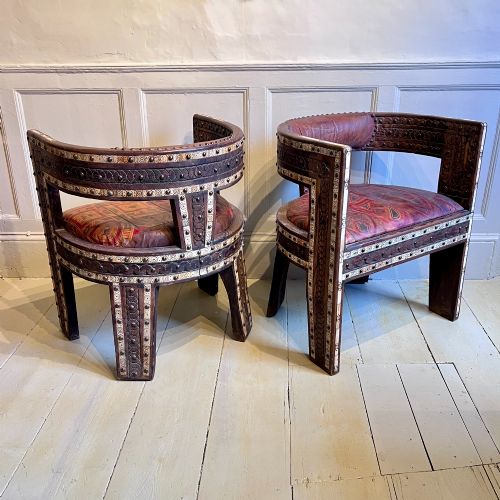
Many examples blend traditional Indian motifs with British Regency or Victorian structural influences. Suites and pairs appear alongside solitary library chairs and low seats designed for tropical climates.
Materials and Techniques
Craftsmen utilised dense indigenous timbers such as rosewood, ebony, teak, padouk, and satinwood, which allowed for microscopic detail in carving without splitting. These heavy woods were seasoned for tropical or export use and frequently combined with cane inserts or leather squab cushions.
Decoration relied on deep relief carving, piercing, and occasional bone or pearl inlay. Joinery often incorporated traditional pinning alongside European frame designs to withstand warm climates.
Look closely at the carved arm supports to spot hidden elephants and mythical beasts peering out from the foliage.
Defining Quality
Quality rests upon the crispness and depth of the carved foliage, scrolls, or figures, where sharper undercutting separates master carvers from routine workshop output. The choice of dense timber like solid ebony or figured rosewood rather than lighter secondary woods also defines the upper tier.
Proportion and structural integrity dictate value, particularly in large armchairs and ceremonial seats where heavy carving can compromise the frame if the joinery is weak. Matching suites and documented regional origin points elevate individual pieces further.
The Anglo Indian Carved Seating Glossary
- Padouk
- A heavy, durable tropical hardwood with a reddish hue used extensively in colonial furniture making. It accepts fine carving exceptionally well.
- Cane
- Woven rattan material used for seats and backs to provide ventilation in warm climates. It offers flexibility and lightness within heavy wooden frames.
- Coromandel Coast
- The southeastern coast of India historically renowned for intricate ebony carving. Pieces originating here often display exceptionally dense floral motifs.
- Ceylonese
- Pertaining to Ceylon, now Sri Lanka, known for distinctive satinwood, ebony, and porcupine quill or heavily carved seating. Ceylonese pieces often exhibit Dutch colonial structural traits.
- Plantation Chair
- A deep-seated colonial armchair equipped with extended arms meant for resting legs. These designs prioritise climate adaptation and relaxation.
Anglo Indian Carved Seating: Frequently Asked Questions
What is an Anglo-Indian armchair?
An Anglo-Indian armchair is a seating piece made in India during the colonial period, combining traditional local carving techniques with British furniture forms.
These chairs typically feature dense tropical hardwoods and elaborate floral or figural relief work.
How do I care for antique ebony or teak?
Antique tropical hardwoods require stable indoor humidity and minimal direct sunlight to prevent the timber from drying out or splitting.
Applying a light microcrystalline wax occasionally helps maintain the natural lustre of carved surfaces without building up heavy residues.
How do I identify a Ceylonese chair?
Ceylonese seating often utilises satinwood or ebony and displays exceptionally deep, fluid carving associated with workshops in Sri Lanka.
Such pieces frequently include distinctive scrolling elements or regional wood choices not common in mainland Indian work.