



Anatolian Carpet Runner
An anatolian carpet runner brings centuries of regional weaving traditions into a long hallway, offering warmth and complex geometric motifs underfoot.

Anatolian Carpet Runner
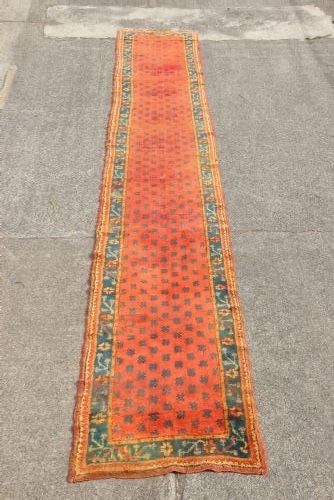
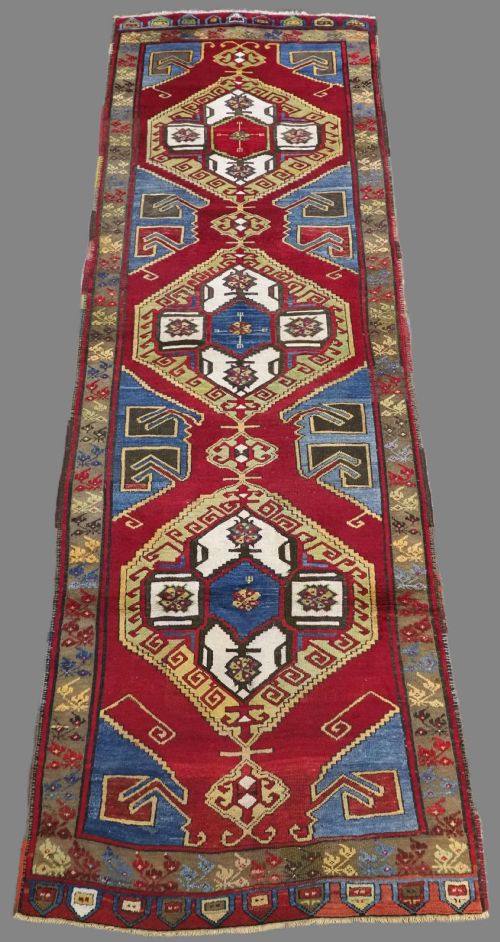
An anatolian carpet runner is an elongated textile designed for corridors and narrow spaces, sourced primarily from Turkish weaving centres across the nineteenth and early twentieth centuries. These pieces encompass tribal rugs, village productions, and finer workshop carpets with formats that stretch significantly in length compared to their width.
The selections available span multiple decades, including examples from the eighteen-eighties through to nineteen-thirty alongside earlier nineteenth-century items. Buyers frequently encounter formats categorised under styles such as Anatolian Tribal, Ottoman, and traditional village weaves, utilising wool and hand-spun fibres.
How they were made
Weavers constructed these runners using natural materials predominantly comprising wool, cotton, hand-spun wool, and angora wool, occasionally incorporating art silk or mercerised cotton in later vintage examples. The textile structure relies on hand-knotted or flatwoven techniques executed on vertical looms using traditional regional dyestuffs.
The choice of fibre dictates the weight and handle of the piece, with hand-spun wool offering a resilient surface texture while cotton frequently serves as a stable foundation warp and weft. Production methods vary from tightly packed pile carpets to flat-woven kelims woven in single or multiple parts.
Several runners were woven in two separate parts and joined together by hand, doubling the weaver's geometry puzzle.
What varies in quality
Quality in an anatolian carpet runner rests on the fineness of the knotting, the consistency of the spin in the wool, and the clarity of the design geometry. Tighter structures yield greater durability in high-traffic corridors, while finer material selection enhances the tactile softness of the pile.
The sophistication of the dye palette and the integrity of the structural foundation distinguish standard village productions from exceptional workshop pieces. Uniformity in width across a long runner format indicates skilled loom tension during the weaving process.
Oushak·Kirsehir·Konya Karapinar·Ladik·Kula
The Anatolian Carpet Runner Glossary
- Kilim
- A flat-woven textile lacking a pile, produced by tightly interweaving warp and weft threads to create a smooth surface with patterns visible on both sides.
- Warp
- The vertical foundation threads stretched tightly on the loom onto which the knots and weft are secured.
- Weft
- The horizontal threads passed alternately over and under the warp threads to bind the knots in place.
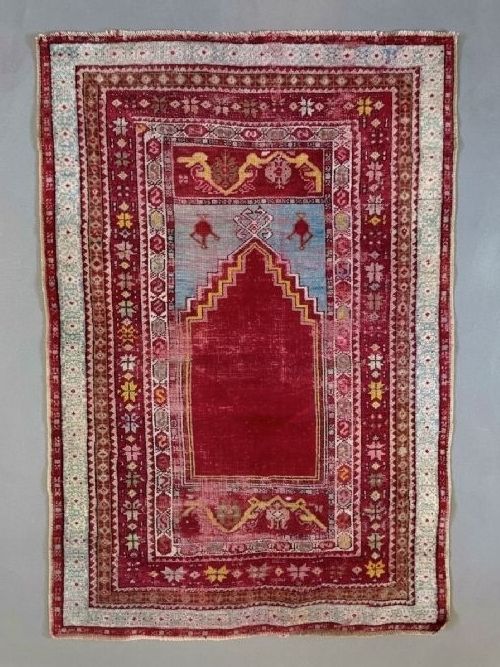
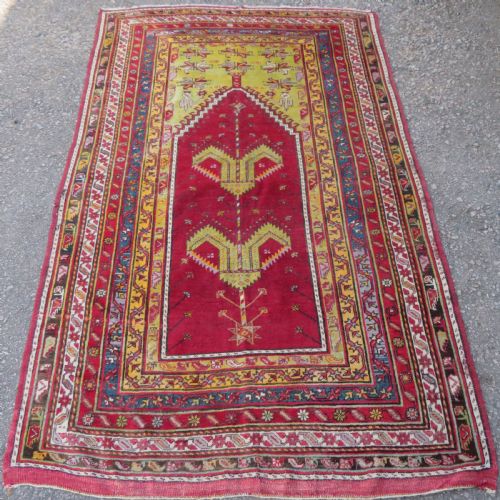
- Prayer rug
- A small or medium textile featuring a mihrab or niche design, traditionally oriented toward Mecca during daily prayers.
- Oushak
- A style of carpet originating from the town of Usak in western Anatolia, known for large-scale floral motifs and soft colour palettes.
Anatolian Carpet Runner: Frequently Asked Questions
Where should I place a runner?
These elongated textiles suit narrow architectural spaces such as hallways, corridors, and galleys where foot traffic benefits from floor protection and visual warmth.
They also function effectively beside beds or in long entryways to anchor narrow room layouts.
How do I care for antique wool?
Regular gentle vacuuming without a rotating brush prevents dust accumulation within the wool fibres.
Professional specialist cleaning is recommended periodically to preserve the natural lanolin and dyestuffs.
Are these pieces made by hand?
Every listed runner is a hand-knotted or flat-woven textile produced on traditional looms using organic fibres.
Manual fabrication results in slight irregularities in width and length that evidence authentic historical craftsmanship.
How do I identify regional styles?
Regional attribution relies on characteristic colour combinations, specific border arrangements, and distinct geometric or floral medallion structures.
Different districts like Oushak or Kirsehir developed unique motifs passed down through generations of weavers.