
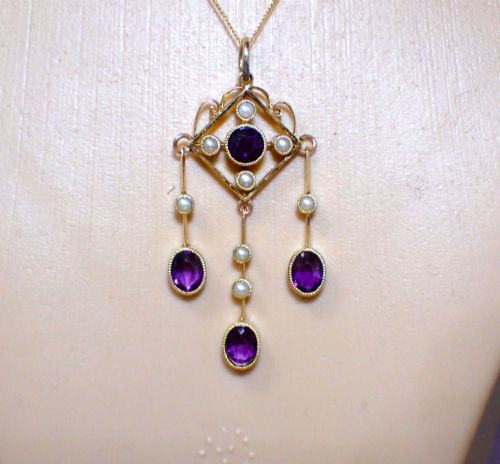


Amethyst Pearl Drop Pendant
An amethyst pearl drop pendant brings together purple quartz and lustrous pearls in gold or silver settings spanning the Victorian, Edwardian, and Art Nouveau eras.
Amethyst Pearl Drop Pendant
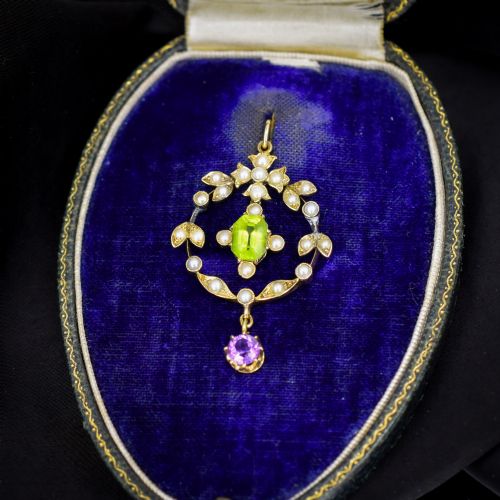
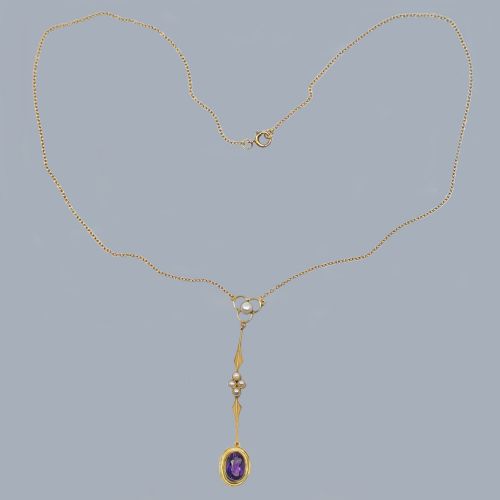
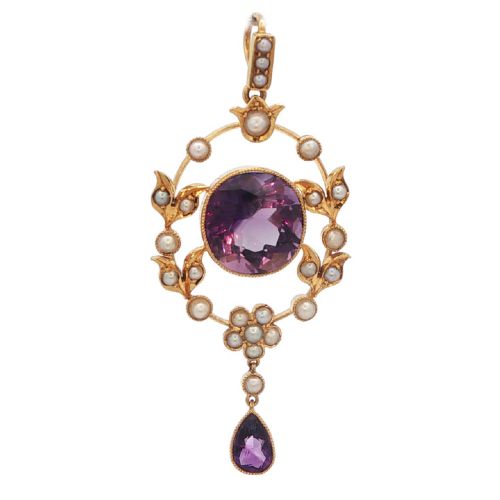
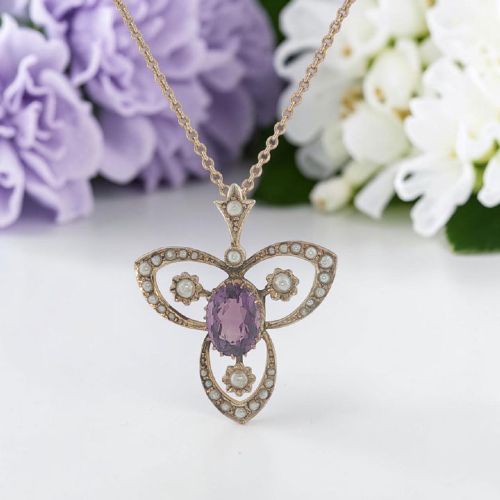
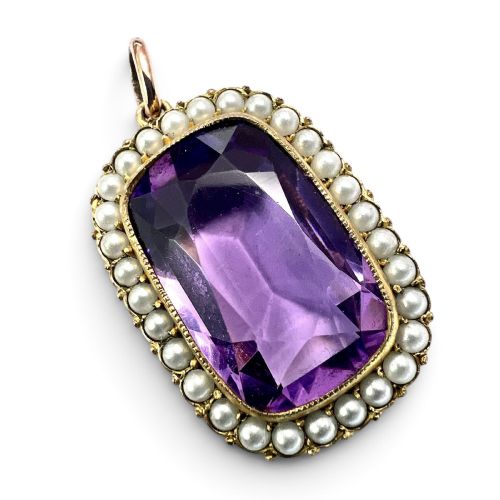
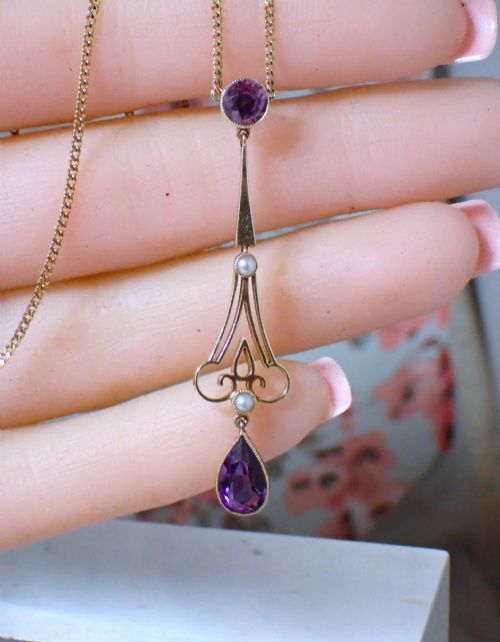
An amethyst pearl drop pendant is a necklace fitting or drop ornament suspended from a chain, most frequently appearing in Edwardian and Victorian designs alongside Art Nouveau interpretations. These items combine deep purple quartz with small pearls in forms ranging from lavaliers and negligé necklaces to halo pendants and convertible brooch-pendants.
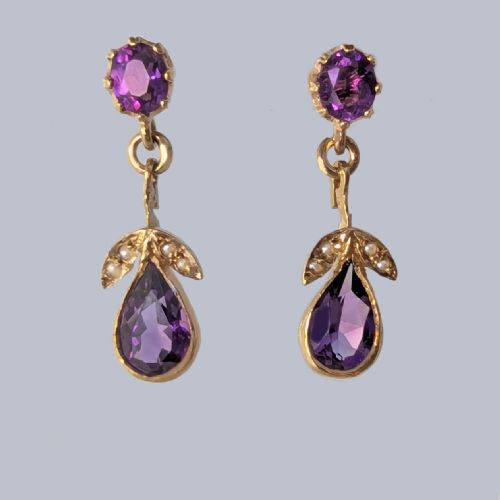
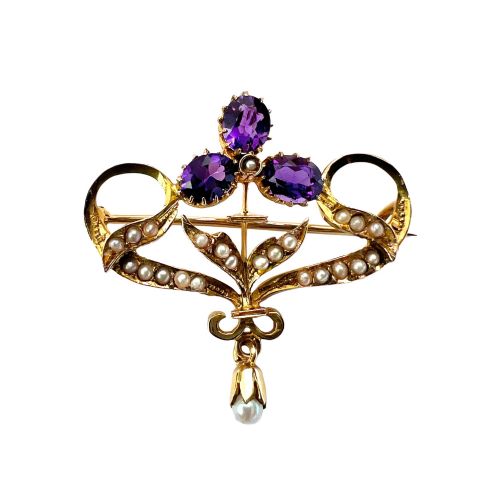
The selection on this page leans heavily toward Edwardian and Art Nouveau pieces created around the turn of the twentieth century. Alongside pendants, related forms such as drop earrings and foliate brooches also emerge within the listed items.
How they were made
Goldsmiths shaped these items primarily in nine-carat, fifteen-carat, and occasional eighteen-carat yellow gold, alongside silver and silver gilt settings. Faceted amethysts form the central stone, accented by seed pearls or natural pearls secured in collet, claw, or halo settings.
Art Nouveau examples incorporate specialised techniques like plique-à-jour enamel alongside precious metals, while Edwardian pieces often utilise delicate pierced wirework and lavalier drops to create light, airy silhouettes.
One clever Victorian maker hid a second clasp so a brooch could secretly transform into a dangling pendant.
What varies in quality
The standard of design and metal purity separates the examples on offer, with fifteen-carat and eighteen-carat gold pieces sitting above standard nine-carat or silver alternatives. Maker attribution, such as work by established firms, also elevates certain pieces.
The complexity of the metalwork, including intricate Art Nouveau enamel or well-matched seed pearls framing a clean faceted amethyst, marks the distinction between standard production and superior craftsmanship.
S. Blanckensee & Son·Hamilton & Co·Eduard Loss
The Amethyst Pearl Drop Pendant Glossary
- Lavalier
- A pendant featuring a dangling stone or drop suspended below the main body of the necklace. These fluid designs became widely popular during the Edwardian period.
- Seed pearl
- A very small, naturally formed or cultured pearl used in clusters or borders around larger gemstones. They appear frequently in Edwardian and Victorian jewelleries.
- Plique-à-jour
- An enamelling technique where enamel is applied without a backing, resembling miniature stained glass. This method defines many fine Art Nouveau silver pieces.
- Negligé necklace
- A style featuring two unequal drops suspended from a central motif, which grew fashionable during the early twentieth century. These delicate necklaces typically hang on fine gold chains.
Amethyst Pearl Drop Pendant: Frequently Asked Questions
How do I wear a pendant?
These pendants suspend from fine gold or silver chains and rest against the collarbone or lower chest depending on the chain length. Many Edwardian examples feature articulated drops that move freely as you wear them.
For convertible pieces that also function as brooches, ensure the pin mechanism remains secure when fastened to clothing.
Are pearls fragile?
Pearls are organic gems with a softer surface than amethysts or gold, meaning they require gentle care to maintain their lustre. Avoid exposing them to perfumes, cosmetics, or harsh cleaning dips.
Store your pendant separately in a lined box to prevent the harder amethyst facets from scratching the pearl surfaces.
What is an Edwardian lavalier?
An Edwardian lavalier is a pendant style defined by a central gemstone with one or more hanging drops beneath it. These pieces often showcase intricate wirework in fifteen-carat gold.
They emerged during the early twentieth century alongside lighter clothing styles that favoured delicate, cascading necklaces.
How do I date these items?
Dating relies on stylistic clues like the organic flowing lines of Art Nouveau or the symmetrical garland motifs of the Edwardian era. Hallmarks stamped on the gold or silver mountings provide official assay office marks and date letters.
Comparing the setting technique and the cut of the amethyst also helps place the piece within the Victorian or twentieth-century periods.