


Amber Frosted Glass Vase
An amber frosted glass vase brings rich warmth and organic form to a room, capturing early twentieth century French design.
Amber Frosted Glass Vase
When you search for an amber frosted glass vase, you find early twentieth century French vessels shaped by renowned glassmakers. These pieces typically date from nineteen hundred to nineteen twenty, reflecting the height of the Art Nouveau movement.
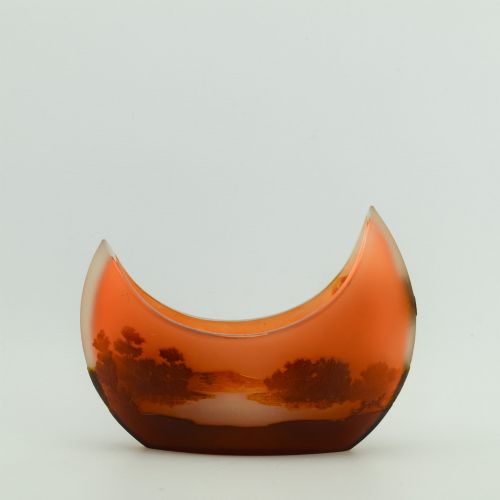
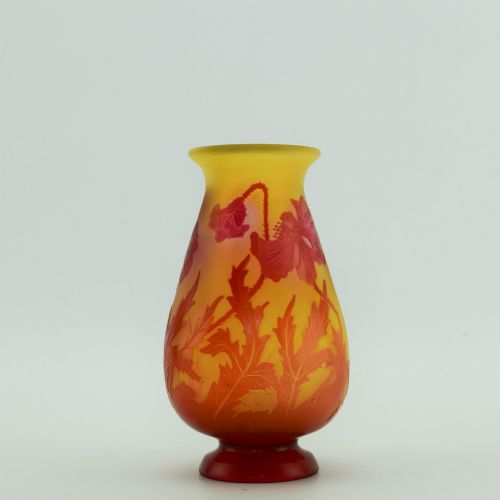
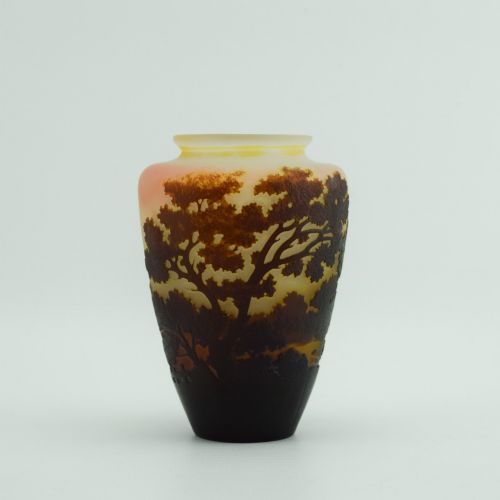
The selections available here showcase distinct botanical and landscape motifs, including poppies, honeysuckle, ferns, and winter scenes. Vases range from miniature boating vessels to large oviform and crescent shapes.
You are most likely to encounter cameo glass and acid-etched glass techniques among these listings. Each example demonstrates the mastery of French glasshouses during the early twentieth century.
How they were made
Makers utilised layered glass to create depth, employing acid-etching to carve intricate botanical and landscape designs into the surface. Enamel was occasionally applied to enhance specific details on the vessel.
The frosting technique diffuses light across the amber body, highlighting the contrasting colours achieved through cameo glass layering. Artisans shaped these vases into organic forms such as cylinders, bowls, and footed vessels.
Materials recorded across the inventory include cameo glass, acid-etched glass, enamel, and frosted glass.
What varies in quality
Quality rests upon the depth of the acid-etching and the complexity of the landscape or floral motif. Pieces with multiple glass layers and finely rendered details, such as distinct foliage or water scenes, represent the higher end of the range.
The clarity of the signature and the balance of the vessel's form further distinguish the work. Finer examples maintain crisp transitions between the frosted amber background and the darker cameo overlay.
Gallé·Legras·Daum Frères·Emile Galle·Paul Nicolas
The Amber Frosted Glass Vase Glossary
- Cameo Glass
- Glass formed with multiple layers of different colours fused together, then carved or acid-etched to create a raised design. This technique requires exceptional precision from the artisan.
- Acid-Etched Glass
- Glass treated with acid to eat away the surface, producing a frosted texture or a low-relief pattern. It allows for intricate control over shading and depth.
- Art Nouveau
- An international style of art and architecture prominent around nineteen hundred, characterised by winding plant tendrils and natural motifs. This aesthetic heavily influences the vessels found in this collection.
- Frosted Glass
- Glass made translucent by sandblasting or acid etching, scattering light across the surface. It provides a soft backdrop for contrasting cameo layers.
Amber Frosted Glass Vase: Frequently Asked Questions
How do I identify an authentic piece?
Look for period signatures etched directly into the glass surface, characteristic of early twentieth century French workshops. The weight and depth of the cameo layers also indicate authenticity.
Examine the sharpness of the botanical or landscape motifs against the frosted amber ground. Genuine examples show meticulous hand-finishing rather than a uniform machine-pressed appearance.
What periods do these pieces span?
The collection spans the early twentieth century, specifically focusing on the years between nineteen hundred and nineteen twenty. This era encompasses the height of French Art Nouveau glass production.
Pieces from this timeframe frequently display naturalistic subjects such as sycamore leaves, poppies, and aquatic scenes. Each piece reflects the stylistic preferences of specific French glassmakers active during those decades.
Where were these items made?
These glass vessels originated in France, produced by renowned glasshouses and artists working within the Art Nouveau tradition. Workshops in regions known for fine glassmaking shaped these distinct forms.
French makers perfected techniques like cameo layering and acid-etching during this period. The resulting pieces remain closely tied to the artistic centres of early twentieth century France.
How should I display my vase?
Place the vessel where natural light can pass through the amber frosted glass, illuminating the etched layers. Positioning it near a window enhances the depth of the landscape or floral motifs.
Ensure the display surface is stable and away from heavy foot traffic to protect the delicate cameo glass. Keeping the piece uncrowded allows the organic Art Nouveau silhouette to stand alone.