
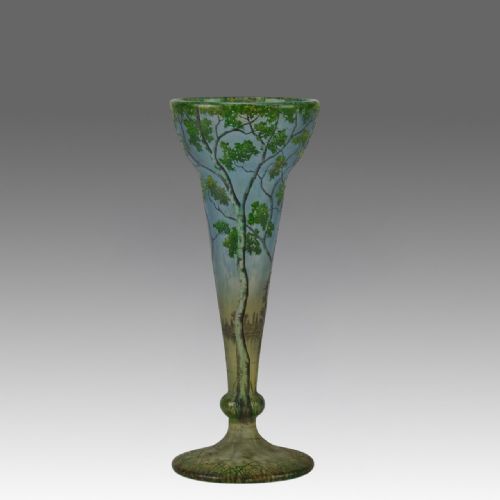
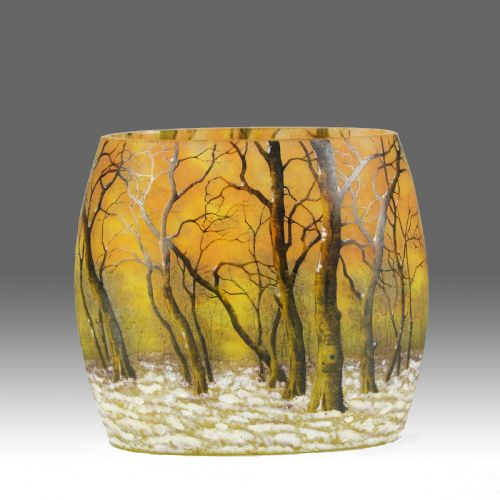


Enamelled Cameo Glass Vase
An enamelled cameo glass vase brings rich colour and layered depth to a room through the combination of acid-etched glass and fine enamel painting.
Enamelled Cameo Glass Vase
When you search for an enamelled cameo glass vase, you are looking at decorative vessels shaped by French glassmakers during the late nineteenth and early twentieth centuries. These pieces combine multi-layered cameo glass with surface enamel decoration to depict natural motifs and landscapes. Art Nouveau pieces dominate the selection, capturing organic forms and botanical subjects through fluid lines and vibrant colour palettes.
The vases seen on this page primarily date from the 1890s through to the 1920s, reflecting the height of French cameo glass production. Common forms range from small miniature vessels to large oviform shapes designed to showcase detailed scenery. Botanical subjects such as iris, thistles, blackberries, and winter landscapes appear frequently across the available examples.
How they were made
Makers built these pieces using glass blanks of contrasting colours, which were subsequently carved or acid-etched to create raised designs against a background. This chemical and mechanical reduction created the characteristic relief work seen on cameo glass. Acid-etched glass techniques allowed artisans to achieve precise depth and texture before any surface embellishment began.
Materials recorded across the available selection include standard glass, acid-etched glass, cameo glass, enamel, and gold leaf.
What varies in quality
The distinction between standard production and the finest work lies in the complexity of the glass layering and the precision of the acid-etching. Superior examples display multiple contrasting strata of glass that allow for subtle tonal shifts in the background and foreground. Lesser pieces rely on simpler two-layer configurations with less depth in the carved relief.
The skill of the enamel painting further separates the output, as hand-applied details require steady execution to define delicate floral structures and winter scenes. Vases featuring integrated gold leaf alongside careful enamel work represent the more ambitious output of the period workshops. The crispness of the signature and the overall harmony between the glass carving and the surface painting dictate the standing of each piece.
Daum Frères·Legras·CLIO
The Enamelled Cameo Glass Vase Glossary
- Cameo glass
- A form of luxury glassware produced by carving or acid-etching through fused layers of different coloured glass to create a raised design. This technique requires considerable skill to avoid cutting through the thin exterior layer into the background.
- Acid-etched glass
- Glass decorated by applying acid to eat away exposed surfaces while protected areas remain intact. This method allowed makers to produce intricate, consistent background textures and relief patterns quickly.
- Enamel
- Opaque or translucent glass-based paint applied to the surface of a finished vessel and fired in a kiln to fuse permanently. It introduces vibrant colour and fine linear details that carving alone cannot achieve.
- Art Nouveau
- An international style of art and decoration characterised by flowing, organic lines inspired by natural forms. It heavily influenced French glassmakers working around the turn of the twentieth century.
- Oviform
- Egg-shaped, describing vases with a rounded body that tapers towards the base and neck. This classic form provided a generous curved canvas for continuous landscape scenes.
Enamelled Cameo Glass Vase: Frequently Asked Questions
What is an enamelled cameo glass vase?
An enamelled cameo glass vase is a decorative vessel featuring multi-layered glass carved in relief and embellished with painted enamel details. These pieces emerged from French glasshouses during the late nineteenth and early twentieth centuries.
Maker signatures and distinctive botanical or landscape motifs help identify individual pieces from this period of production.
How were these vases used?
These vases served primarily as decorative display items within domestic interiors rather than functional vessels for cut flowers. Their detailed surface work and artistic merit made them centrepieces for mantelpieces and display cabinets.
Collectors today continue to exhibit them in similar settings to appreciate their craftsmanship and colour.
How do I care for my vase?
Cleaning requires only gentle dusting with a soft, dry cloth to protect the delicate enamel and gold leaf surface decorations. Avoid using harsh chemical cleaners, abrasive cloths, or immersion in water, which can damage the historic pigments.
Placement should be away from direct sunlight to prevent fading of the enamelled colours over time.
How do I identify the period?
Dating relies on stylistic markers such as Art Nouveau plant motifs, signature formats, and the specific acid-etching techniques characteristic of the years around nineteen hundred. Pieces from the 1920s often show slight shifts in form while retaining the core cameo manufacturing methods.
Comparing known workshop signatures provides a reliable guide to the exact decade of production.