

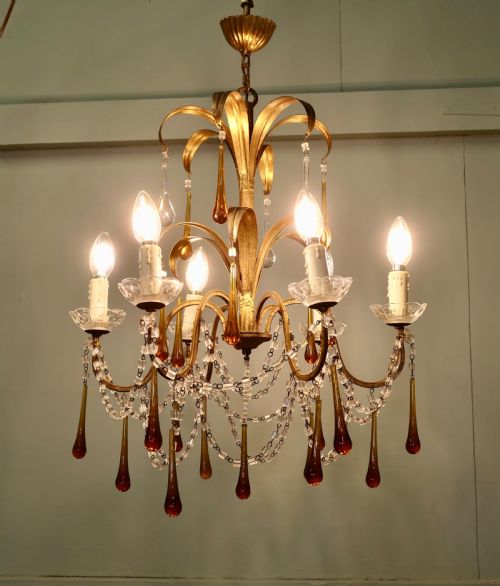
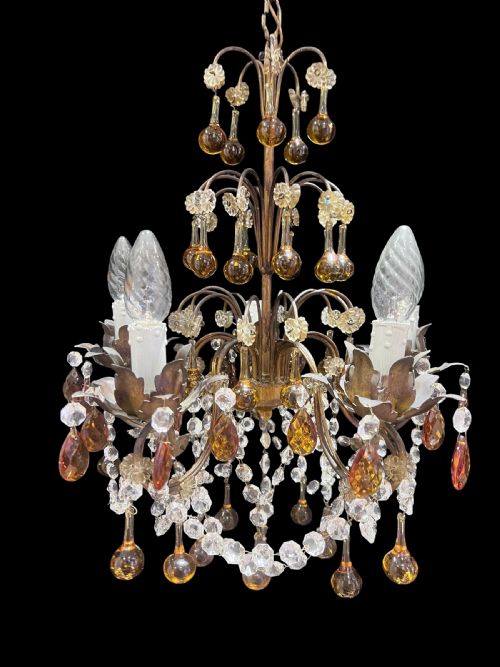
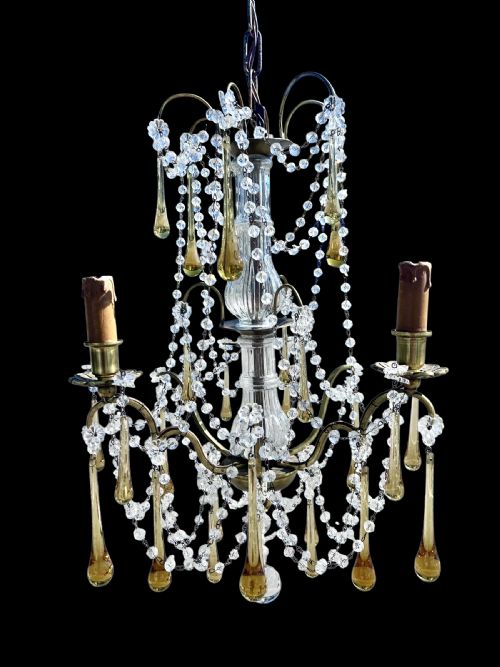


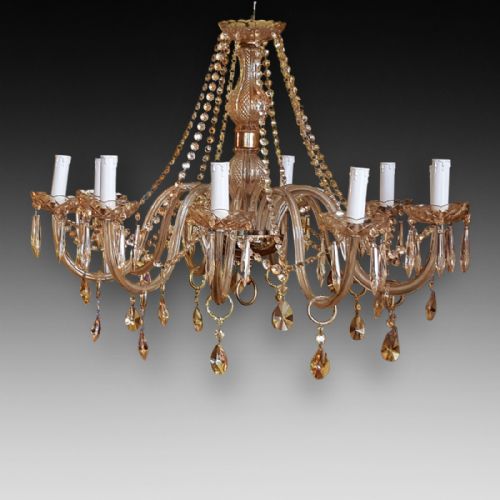
Amber Crystal Chandelier
These amber crystal chandelier pieces bring rich warmth and dramatic light into a room.
Amber Crystal Chandelier
When you search for amber crystal chandelier fixtures, you encounter magnificent ceiling lights that combine tinted glass elements with traditional metal frames. These pieces originate from periods spanning the late nineteenth century through to the Art Deco era, bringing distinct historic character to any interior space.
The selections available here predominantly feature French and Italian designs, ranging from intimate three-light formats to monumental twelve-arm installations. You will frequently find fixtures adorned with coloured crystal teardrops, fruit motifs, and toleware accents that define their classic aesthetic.
Materials and construction
Workshop creation relies on heavy brass and gilt metal frameworks designed to support substantial arrays of cut glass and lead crystal drops. Metal armatures provide the structural backbone for multi-light configurations while gilt finishes add a layer of surface reflection.
The decorative elements utilise precision-cut crystal alongside moulded glass fruits and toleware components, often wired directly into the main metal frame. Artisans suspended these coloured droplets to maximise the refraction of light across the room.
Amber Crystal Chandelier Retail Price Guide 2026
Typical asking prices for amber crystal chandelier among the pieces listed under this phrase on Sellingantiques today, from the lower quarter to the upper quarter. They describe what is for sale here now, not the wider market.
Listings feature pieces spanning from eighteen-ninety through to nineteen-thirty, incorporating French, Italian, and English design traditions.
Judging quality and craftsmanship
Superior examples demonstrate meticulous hand-cutting on the crystal drops, yielding crisp facets that catch and scatter light with exceptional brilliance. The density and clarity of the glass itself separates standard production from finer artisan work.
Construction solidity in the frame and mounts dictates longevity and stability in larger installations. Finer pieces maintain substantial gilt metal or brass armatures that securely anchor complex tiers of glass without structural compromise.
The Amber Crystal Chandelier Glossary
- Toleware
- Painted or lacquered sheet metal often shaped into floral or decorative details on lighting fixtures. This technique introduces soft colour accents alongside traditional crystal elements.
- Lead crystal
- Glass containing metal oxide that increases weight, clarity, and refractive brilliance. It forms the heavy, sparkling drops suspended from historic chandelier frames.
- Cut glass
- Glass shaped by grinding and polishing facets onto the surface to enhance light reflection. This method defines the sharp, glittering appearance of antique prisms.
- Gilt metal
- Base metal treated with a thin layer of gold leaf or gilt paint to simulate solid gold. It provides a warm, reflective surface that complements coloured crystal drops.
Amber Crystal Chandelier: Frequently Asked Questions
What rooms suit an amber crystal chandelier?
Dining rooms, grand hallways, and drawing rooms provide ideal spaces for these dramatic ceiling lights, where their warm coloured crystals create an inviting atmosphere. Smaller three-light formats also function effectively in bedrooms or intimate sitting areas.
The rich amber tones complement spaces featuring classic woodwork, rich wall colours, and traditional furnishings.
How do I clean an antique chandelier?
Maintenance involves gently wiping individual crystal drops with a mild glass cleaner and a soft lint-free cloth while the fixture hangs in place. Avoid harsh chemicals that might damage the gilt metal or painted toleware surfaces.
Regular dusting prevents grime accumulation and preserves the brilliant light refraction characteristic of cut glass.
How can I date an antique chandelier?
Dating relies on examining the metal casting techniques, wiring styles, and specific design markers such as Art Deco geometries or Edwardian brass fittings. The presence of hand-cut crystal drops and particular construction fasteners often points to specific decades around the early twentieth century.
Comparing the frame structure and glass characteristics against known period examples helps confirm the era of manufacture.