


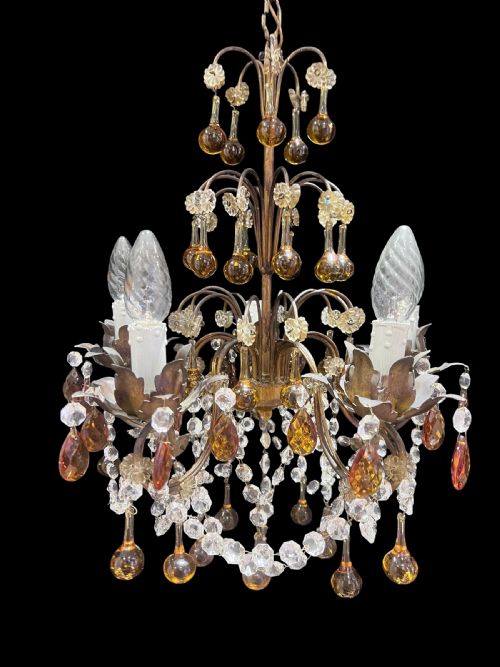
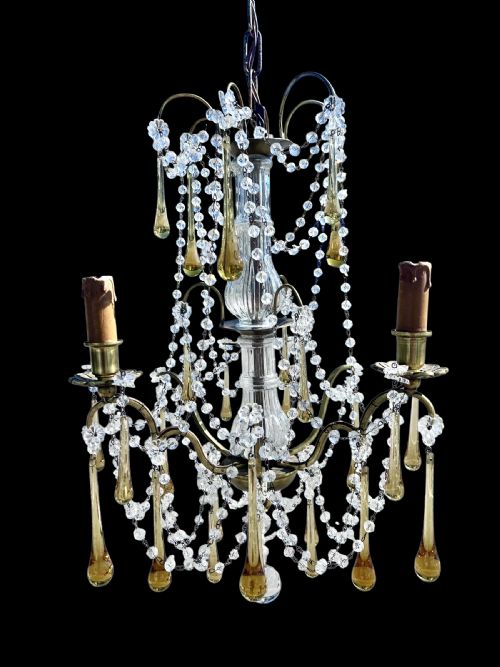


Beaded Glass Light Fitting
These beaded glass light fitting designs bring together sparkling crystal drops and delicate metalwork to brighten any room with period charm.
Beaded Glass Light Fitting
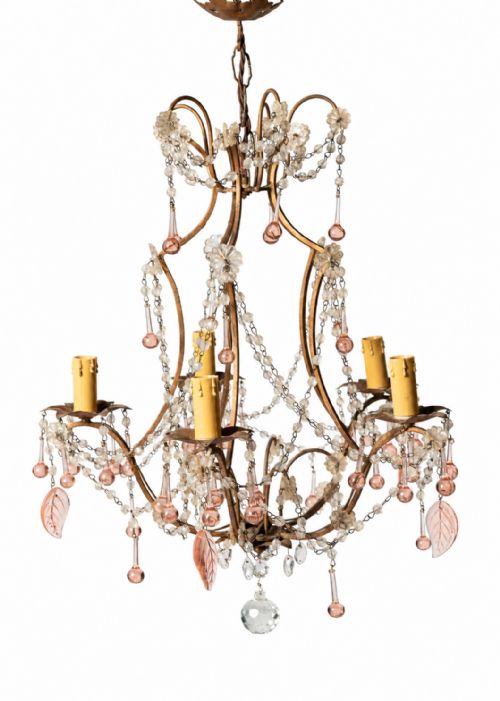
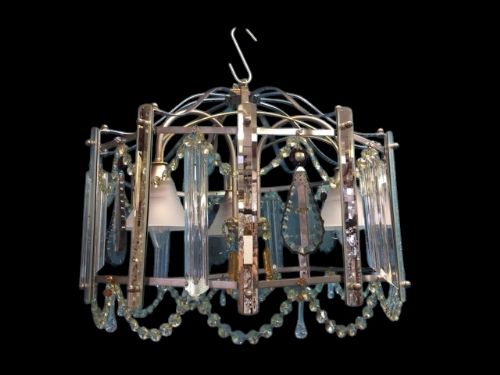
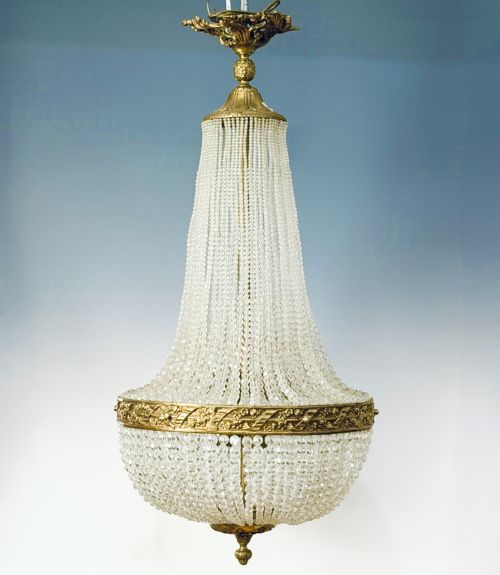
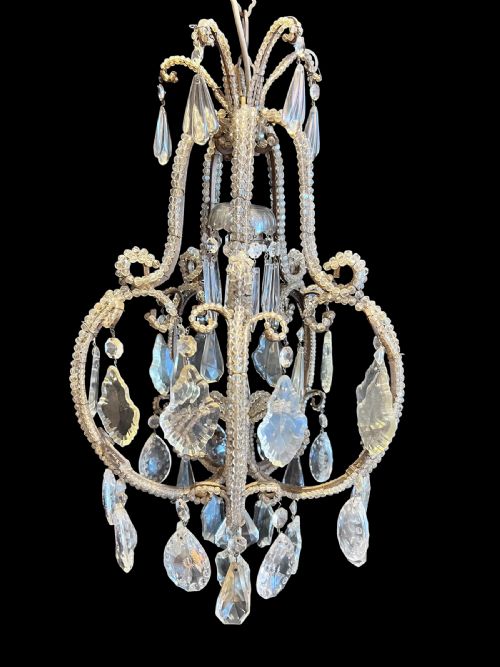
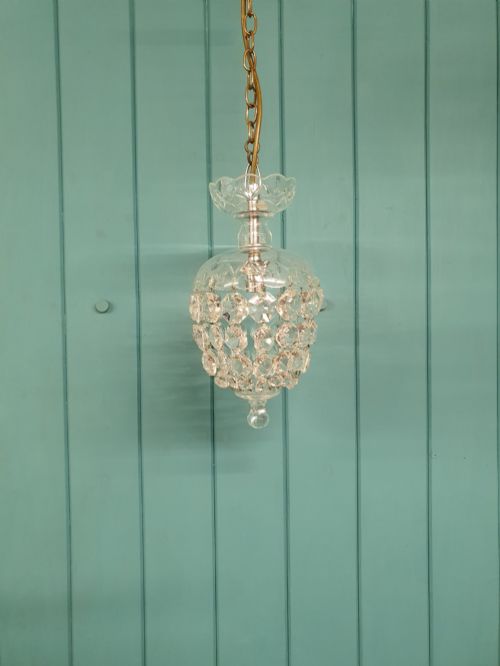
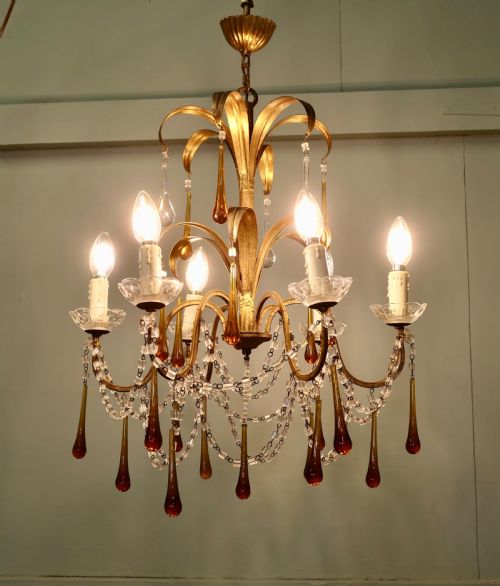
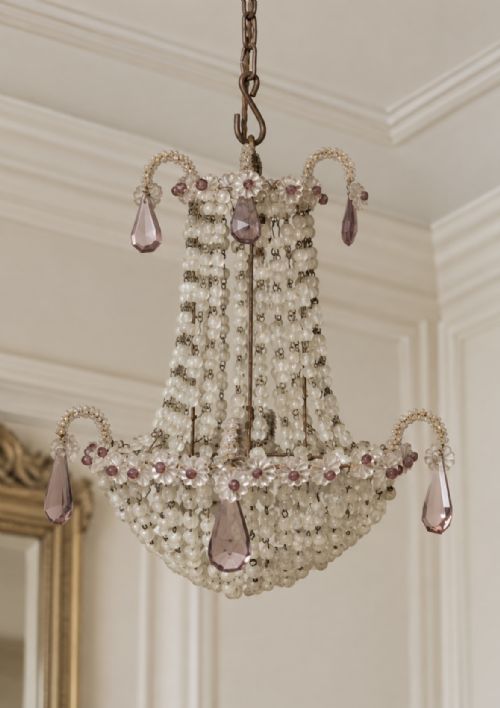
Buyers will frequently encounter compact bag chandeliers alongside larger multi-light fixtures adorned with crystal swags, teardrops, and coloured glass fruits. Brass, gilt metal, and iron frames form the structural basis for these hanging lights.
Origins span across English, French, and Italian workshops, displaying diverse decorative approaches from simple dome tops to elaborate galleon shapes. The Edwardian period and the 1920s and 1930s represent the core eras visible in these pieces.
How manufacturers constructed these fittings
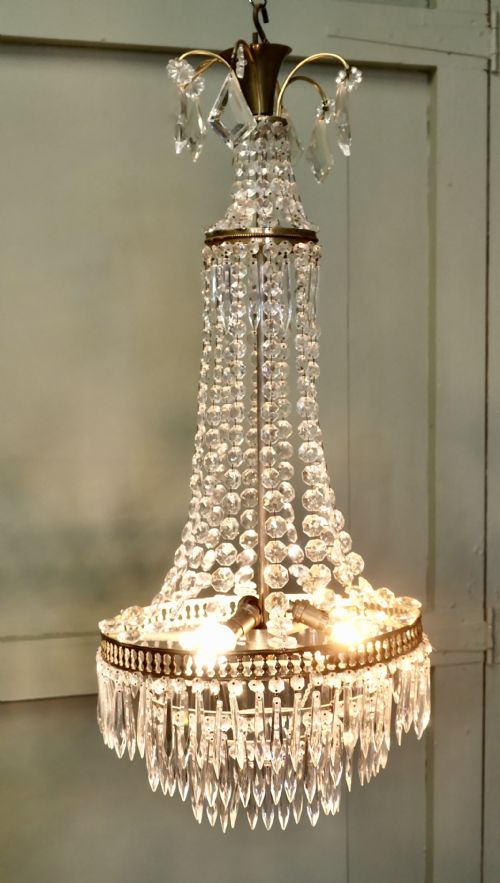
Glass and crystal elements are wired or pinned together to create cascading tent and waterfall effects or dense beaded surfaces. Metal frames in brass, gilt metal, and toleware provide the underlying support for the glass components.
Cut glass drops, amber crystals, and coloured prisms catch the light, suspended from wired arms or delicate metal frameworks. Artisans combined iron, brass, and gilt finishes with moulded and cut crystal pieces to achieve the desired silhouette.
Beaded Glass Light Fitting Retail Price Guide 2026
Typical asking prices for beaded glass light fitting among the pieces listed under this phrase on Sellingantiques today, from the lower quarter to the upper quarter. They describe what is for sale here now, not the wider market.
Certain chandeliers abandon traditional teardrops entirely to hang heavy with moulded glass grapes, apples, and pears.
What distinguishes finer examples
The density and quality of the crystal glass drops, alongside the intricacy of the metal framework, separate standard pieces from more ambitious creations. Elaborate Florentine gilt frames or complex multi-tier tent and waterfall constructions require greater craftsmanship than simple dome top fittings.
The presence of hand-cut crystal, coloured crystal fruits, and integrated beaded arms points to a higher level of decorative ambition. Preservation of the original wiring structure and completeness of the glass bead swags dictate the integrity of the piece.
The Beaded Glass Light Fitting Glossary
- Bag chandelier
- A light fitting shaped like a inverted bag or basket, formed of numerous glass beads hanging from a circular ring down to a central bottom point. This form concentrates the sparkle of cut glass within a compact outline.
- Tent and waterfall
- A lighting configuration featuring an upper tent of strung beads above a cascading waterfall of crystals. This arrangement creates a multi-layered shimmer across the fixture.
- Toleware
- Painted sheet metal used in decorative light fittings and household objects. It often appears in coloured finishes complementing the glass drops.
- Drop
- A small piece of cut glass or crystal suspended from a chandelier to reflect light. Drops come in various shapes including teardrops, prisms, and fruit motifs.
Beaded Glass Light Fitting: Frequently Asked Questions
How do I hang a heavy beaded glass light fitting?
Professional installation by a qualified electrician is essential for supporting the weight of multi-arm chandeliers and ensuring the ceiling fixings are secure.
Heavier fixtures require proper joist support rather than standard plaster fixings to bear the load safely.
What rooms suit a bag chandelier?
Compact bag chandeliers suit hallways, bedrooms, or lower ceilings where a flush or semi-flush profile is practical.
Their enclosed shape provides focused illumination without hanging too low into the living space.
How do I clean the glass beads?
Gently wipe individual glass beads and crystals with a mild soapy solution using a soft cloth, supporting each drop from beneath.
Avoid immersing entire vintage metal frames in water to protect the structural integrity and original finishes.
How do I date an Edwardian glass light fitting?
Examine the metalwork construction, wiring channels, and the specific cut of the crystal drops for period manufacturing traits.
Edwardian pieces often combine brass frames with delicate swags and distinctive early twentieth-century glass forming techniques.