

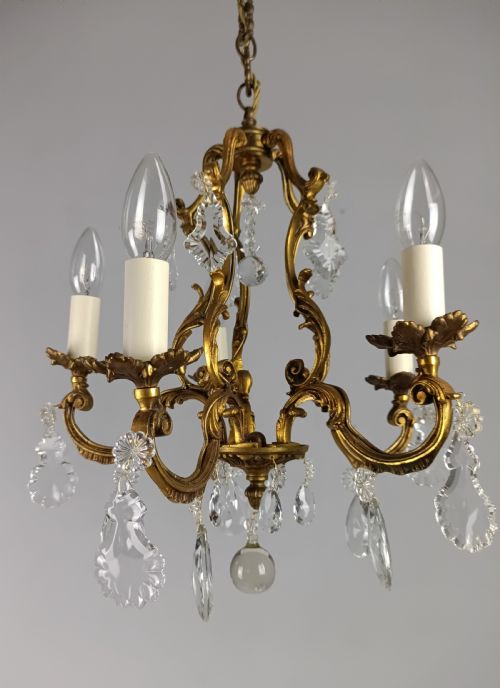
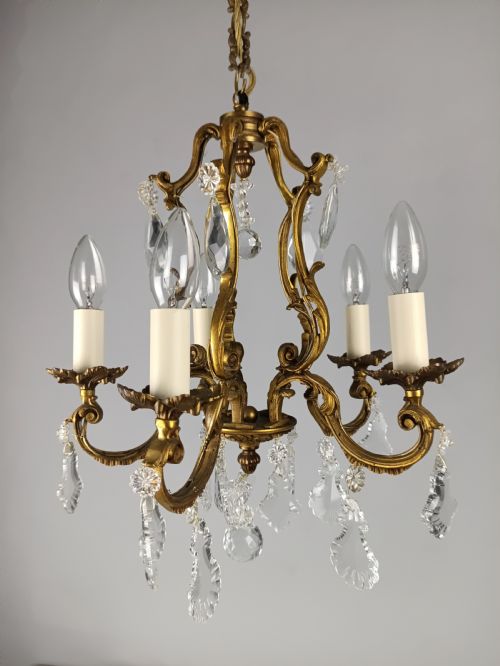


Five Light Crystal Chandelier
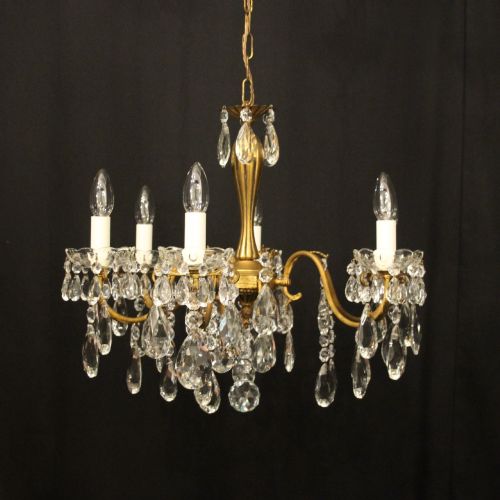
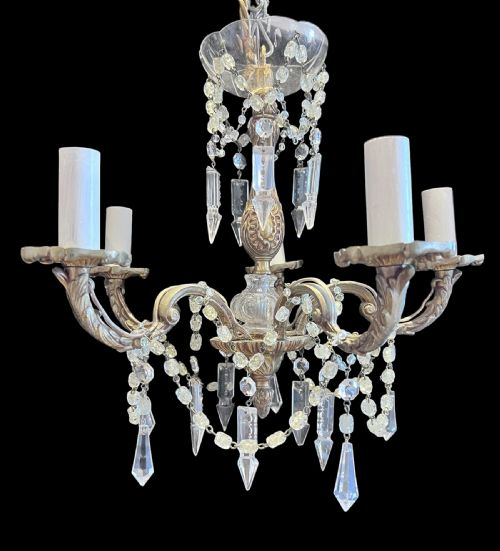
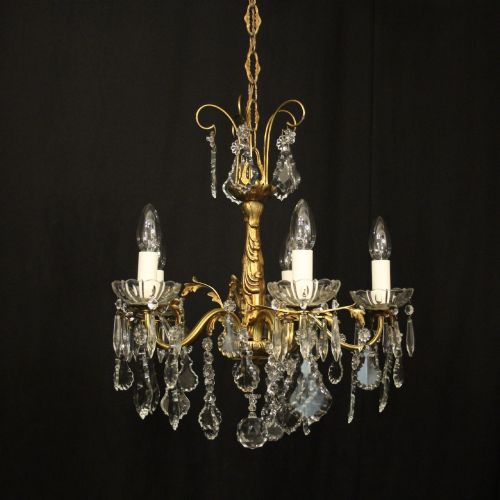
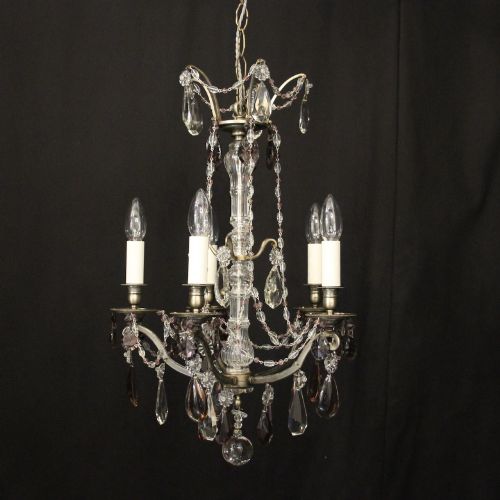
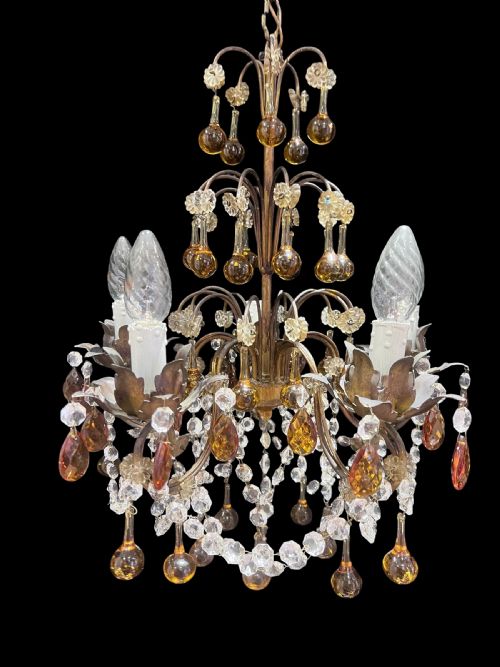
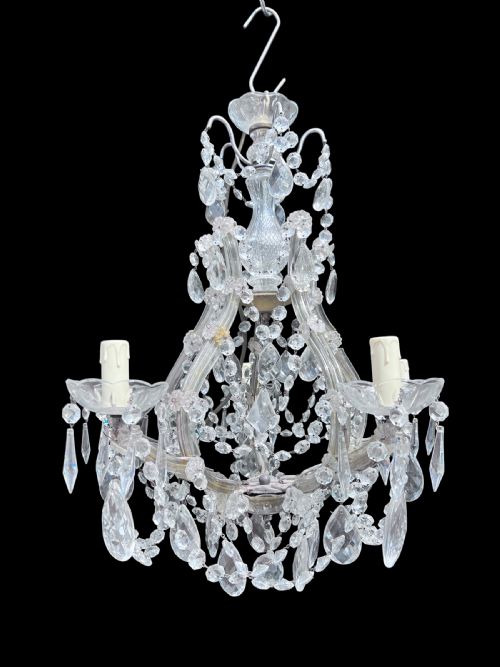
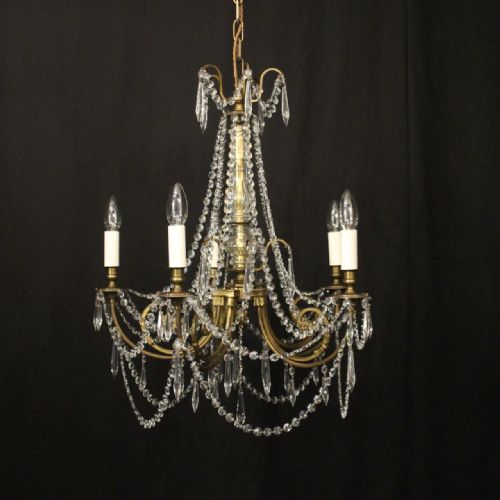
A five light crystal chandelier brings distinct period illumination to a room through cut glass drops and gilt frames.
Five Light Crystal Chandelier
A five light crystal chandelier is a hanging light fixture featuring five candle arms or bulb holders adorned with glass and crystal elements. When searching this phrase, buyers encounter pieces originating from the nineteenth century through the early twentieth century, including the 1910, 1920, and 1930 decades.
The pieces appearing on this page showcase varied regional characteristics, spanning French Chateau, French Rococo, Italian Antique, Italian Rococo, Florentine, and Art Deco styles. Most examples lean towards French gilded designs or Italian variants featuring coloured crystals.
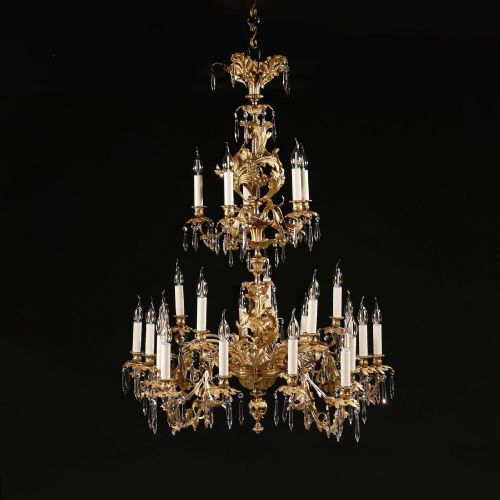
Forms range from small five arm chandeliers with swags and drips measuring twelve inches to tiered crystal glass constructions. Buyers are most likely to meet French gilded brass frames holding cut glass drops dating from the nineteen-twenties and nineteen-thirties.
Materials and construction methods
Construction relies upon metal armatures cast or forged in brass, bronze, and gilt metal, often finished with silver gilding or gold leaf. These frames support the weight of multiple glass and crystal components while providing secure wiring paths for five illumination points.
Decorative elements combine moulded glass and hand-cut crystal drops suspended from arms and crowns. Metal components frequently feature cast ornamentation aligned with French Rococo and Italian antique traditions.
Five Light Crystal Chandelier Retail Price Guide 2026
Typical asking prices for five light crystal chandelier among the pieces listed under this phrase on Sellingantiques today, from the lower quarter to the upper quarter. They describe what is for sale here now, not the wider market.
Current listings span the nineteenth century through the nineteen-thirties, featuring materials like gilt brass, cut glass, and crystal.
Factors determining quality
Quality reveals itself in the clarity and precision of the cut glass elements. Superior examples utilise high-lead crystal that refracts light sharply, whereas simpler pieces employ standard moulded glass with softer edges.
The intricacy of the metal framework distinguishes finer pieces. Masterful chasers create gilt bronze and brass mounts with deep relief, while lesser examples rely on simpler stamped or cast metal components with flat surface detailing.
The Five Light Crystal Chandelier Glossary
- Crystal
- A high-clarity glass containing lead oxide, used to create brilliant prismatic light refractions.
- Gilt Brass
- Brass treated with a thin layer of gold or gold-coloured leaf to produce a rich metallic surface finish.
- Cut Glass
- Glass shaped and faceted using abrasive wheels to create sharp geometric patterns that catch light.
- Swag
- A decorative chain or garland of crystal beads draped gracefully between the arms or tiers of the fixture.
- Marie Theresa
- A classic chandelier style characterised by a flat metal frame completely covered in crystal jewels and plaques.
Five Light Crystal Chandelier: Frequently Asked Questions
How do I clean a crystal chandelier?
Cleaning requires a specialist glass cleaning solution applied carefully by hand with a soft cloth. Removing the drops individually allows thorough washing without damaging the metal frame.
Care must be taken around vintage wiring and delicate gilt surfaces. Professional restoration cleaning is often recommended for nineteenth-century and early twentieth-century examples.
Are these chandeliers suitable for low ceilings?
Many period examples measure compactly, such as small twelve-inch fixtures designed for rooms with restricted vertical clearance. Short drop chains can also be adjusted to fit tighter spaces.
Proportion remains key when hanging a five light fixture in a modest room. Ensuring adequate clearance beneath the lowest crystal drop prevents accidental contact.
How do I date a crystal chandelier?
Dating relies on examining manufacturing techniques, metal alloys, and stylistic indicators such as Art Deco tiers or Rococo scrollwork. Archive examples and listings demonstrate distinct shifts from nineteenth-century heavy bronze casting to nineteen-thirties streamlined glass tiers.
Wiring methods and ceiling canopy types also offer clues regarding age. Original components provide the most reliable evidence for period attribution.
Can modern bulbs be used in these?
Modern LED candle bulbs fit standard vintage sockets while generating minimal heat. Lower wattage options protect old glass and lacquer finishes from thermal stress.
Consulting a qualified electrician ensures the antique brass and metal wiring safely accommodates contemporary electrical standards. Many fixtures are re-wired to meet current safety codes upon acquisition.