





Air Twist Glass
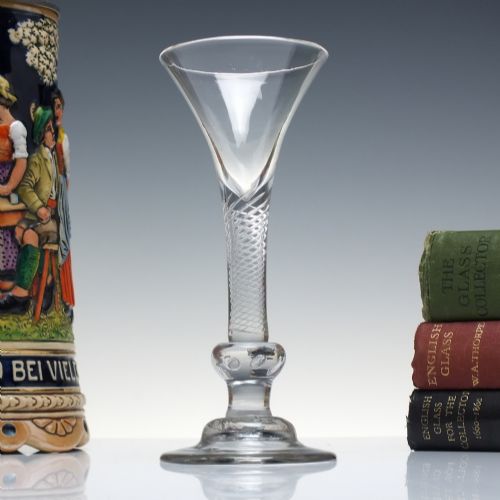
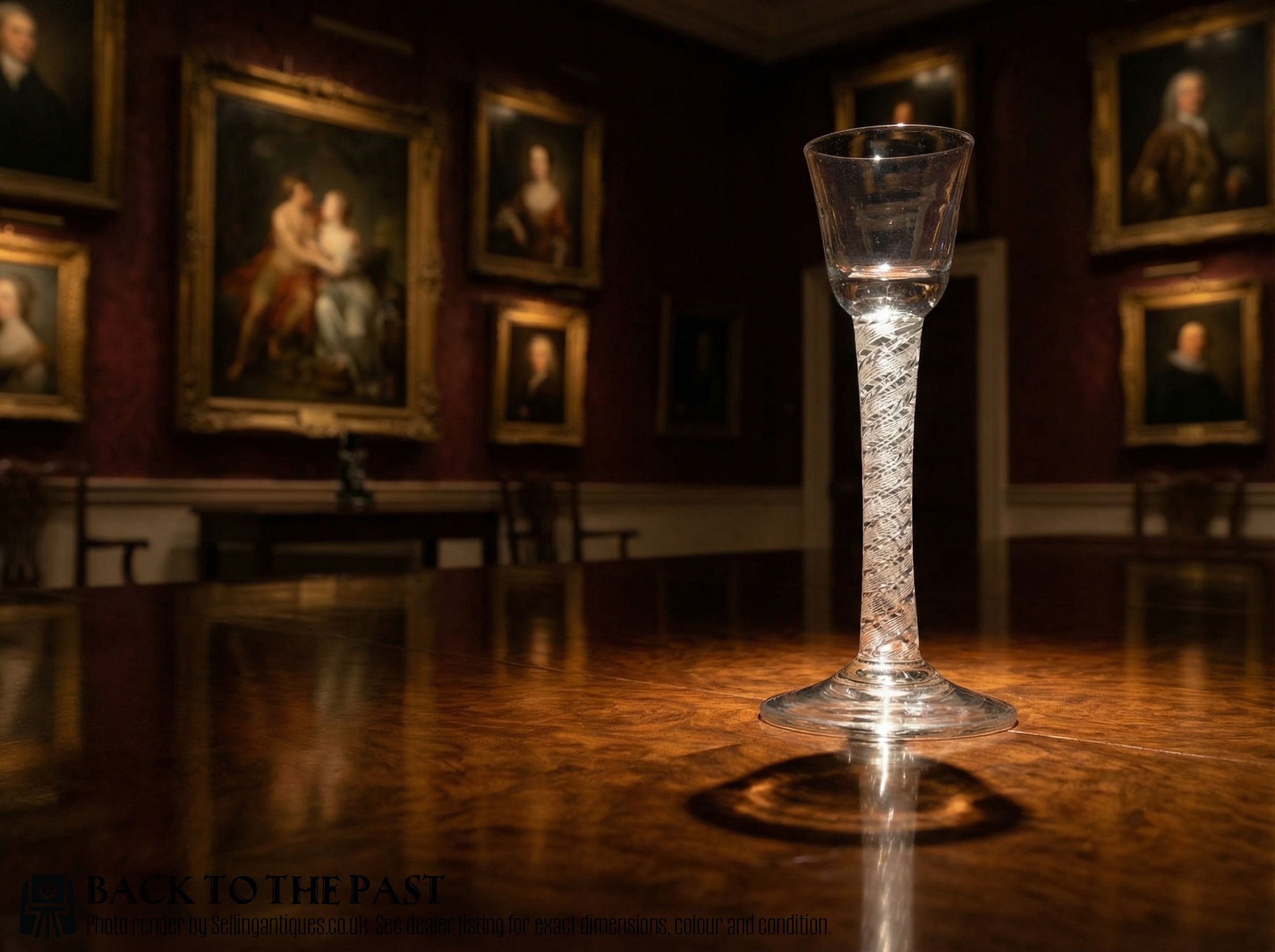
An air twist glass brings drinking vessels of the Georgian era to life through the optical movement trapped inside their stems.
Air Twist Glass
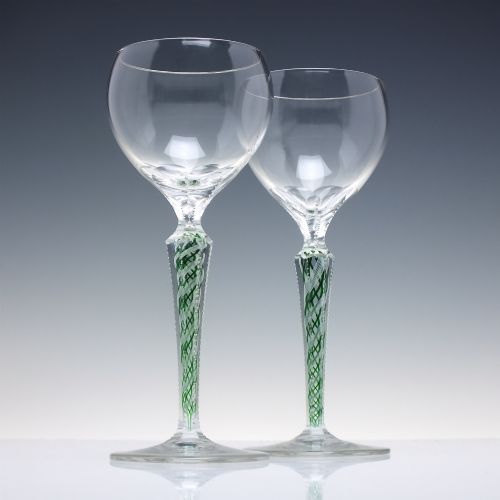
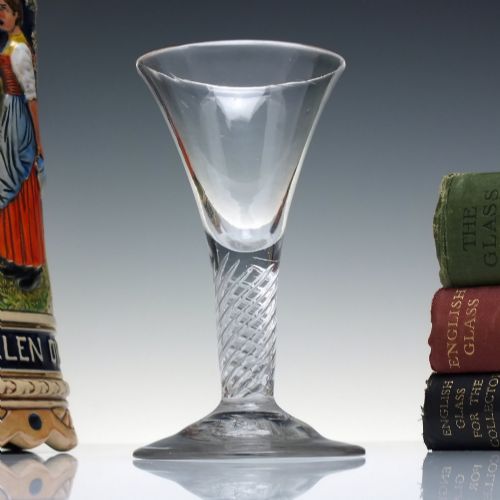
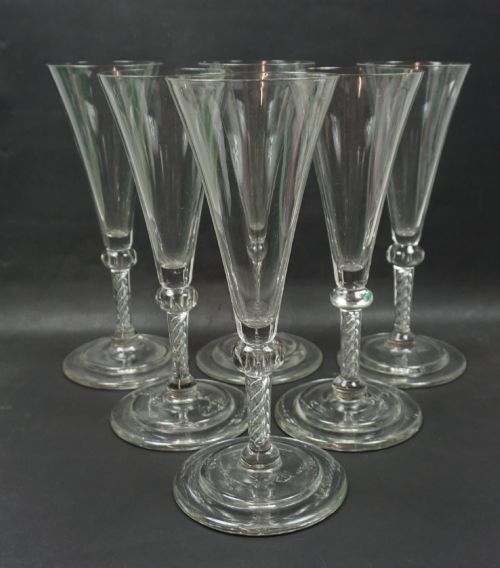
When browsing an air twist glass, collectors examine stemware produced primarily during the eighteenth century alongside later Georgian Revival examples. These pieces typically take the form of wine glasses, ale glasses, cordials, and champagne flutes designed for dining and toasts.
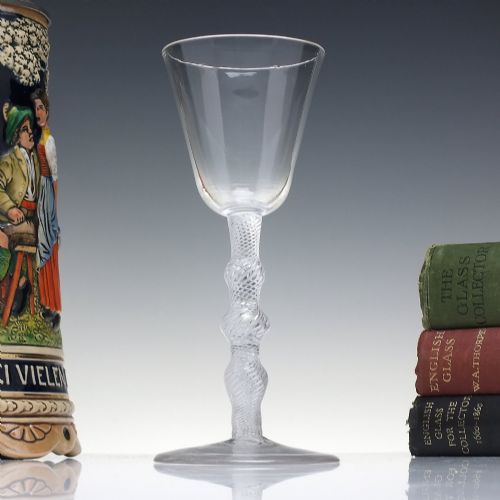
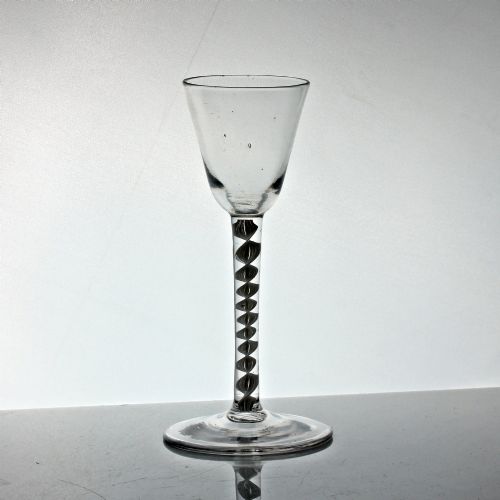
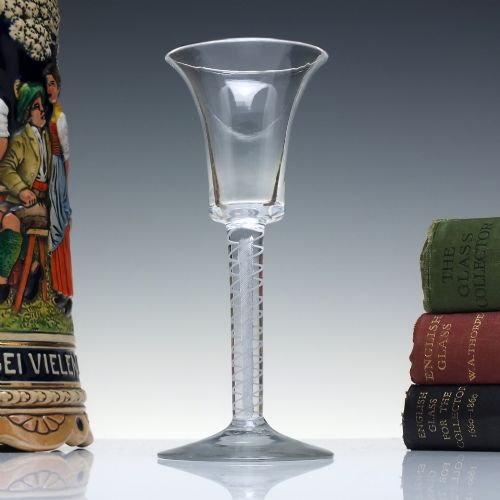
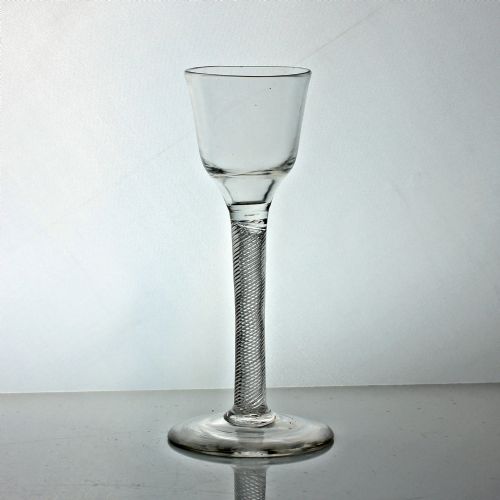
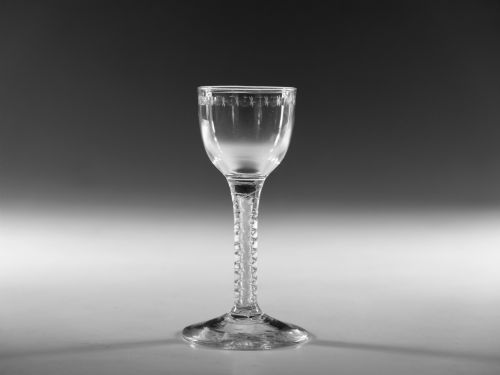
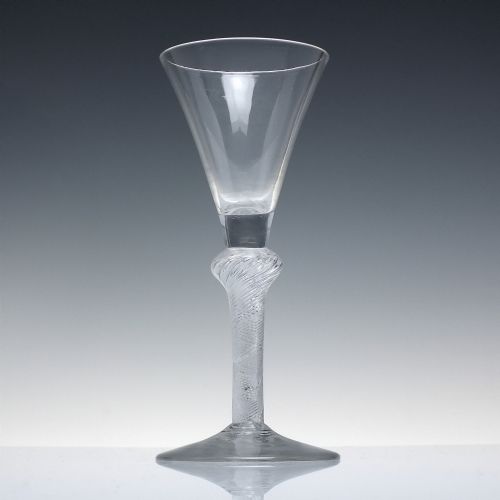
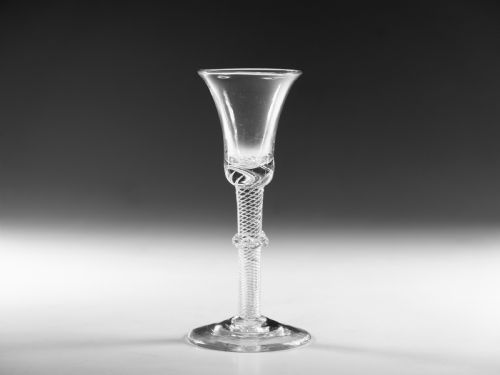
The defining feature is the internal channel of air drawn through the stem, taking the shape of single threads, multiple spirals, or opaque white enamel twists. Bowls vary from ogee and bell shapes to pan top and trumpet profiles, often resting on plain, domed, or folded feet.
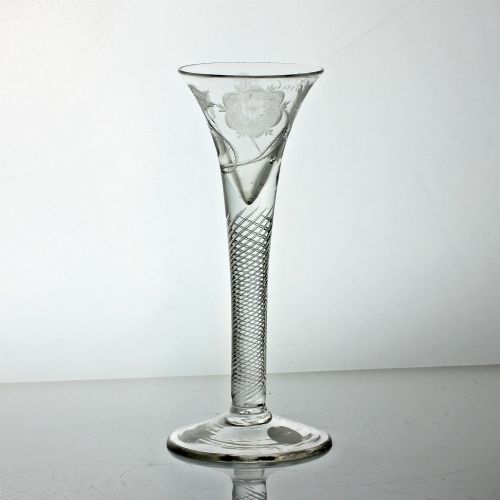
Many examples bear diamond-point or wheel engraving, ranging from Jacobite motifs and hop and barley designs to hunting scenes and floral decoration. The form persists into twentieth-century interpretations, notably seen in tall wine flutes dated around nineteen thirty.
How they were made
Glassmakers created the characteristic internal threads by forming air bubbles within a gather of molten metal before drawing and twisting the glass into shape. This technique utilised lead glass, clear lead glass, or flint glass to achieve high optical clarity and allow the spiral channels to catch the light.
Stems were often shaped with knops, shoulders, or collars before being fused to distinct bowl forms and heavy feet. Enamel twists introduced white threads alongside clear air channels, while composite stems combined drawn air twists with knopped or moulded sections.
Air Twist Glass Retail Price Guide 2026
Typical asking prices for air twist glass among the pieces listed under this phrase on Sellingantiques today, from the lower quarter to the upper quarter. They describe what is for sale here now, not the wider market.
Eighteenth-century drinkers sometimes hid secret political allegiances inside a swig of ale using etched oak trees and hidden rosebuds.
What varies in quality
Quality rests upon the precision and complexity of the internal twist, distinguishing simple single threads from dense multi-spiral formations and composite stems. Exceptional clarity in the metal enhances the visual depth of the trapped air channels.
Proportion and form dictate desirability, particularly where bowls feature balanced knops, folded feet, or sophisticated collars. Fine wheel or diamond engraving executed with crisp detail elevates a piece beyond standard utilitarian drinkware.
The Air Twist Glass Glossary
- Air twist
- A stem containing elongated air bubbles drawn into helical threads. This optical effect creates the illusion of moving columns of air inside the glass.
- Opaque twist
- A stem incorporating white enamel glass threads rather than air channels. These threads appear singly or combined within clear glass.
- Knop
- A knob or swelling on the stem of a glass. Makers shaped these to improve grip and aesthetic balance.
- Folded foot
- A base formed by turning the outer edge of the glass underneath itself. This creates a rounded rim that adds stability and weight.
- Ale glass
- A tall, slender vessel intended for drinking ale rather than wine. They frequently feature hop and barley engraving.
Air Twist Glass: Frequently Asked Questions
How do I identify an air twist glass?
Look closely at the stem to find spiralling channels of air trapped inside the clear metal. These threads run from the top of the stem down to the foot.
Examine the weight and clarity of the glass, as eighteenth-century examples utilise lead metal that feels heavier than standard soda glass.
What is a Jacobite glass?
Jacobite glasses feature covert political engravings supporting the exiled Stuart dynasty. Common motifs include the rose, buds, and specific symbols like the stricken oak.
These pieces were used for secret toasts and carry distinct historical association within eighteenth-century stemware.
Are these glasses safe to use?
Georgian stemware is fragile and susceptible to thermal shock, making modern use inadvisable. Hand washing in tepid water is necessary if handled at all.
Most collectors prefer to display these pieces in cabinets rather than utilise them for dining.
What is a composite stem?
A composite stem combines two or more distinct manufacturing styles within a single glass stem. You might find an air twist section joined above a plain knop or baluster section.
This variation demonstrates the technical skill of the eighteenth-century glasshouse.