





Afshar Tribal Wool Bag
An afshar tribal wool bag is a woven textile woven by nomadic groups in South Persia, prized for rich patterns and tactile depth.
Afshar Tribal Wool Bag
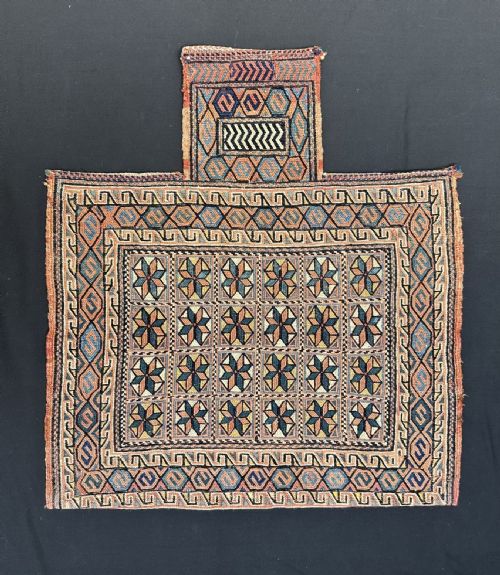
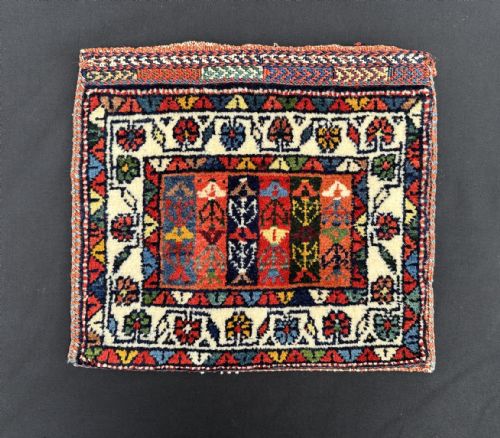
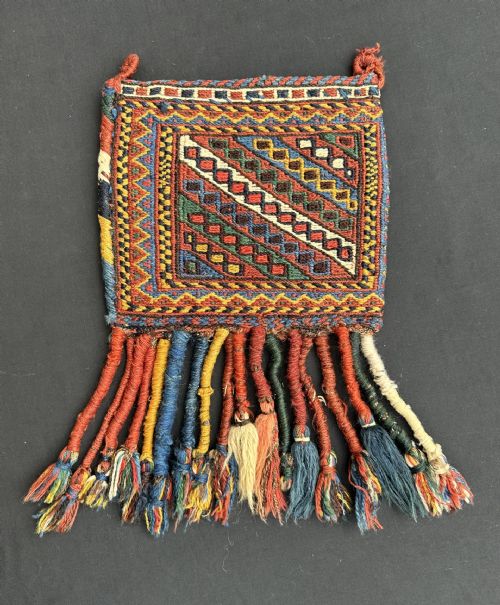
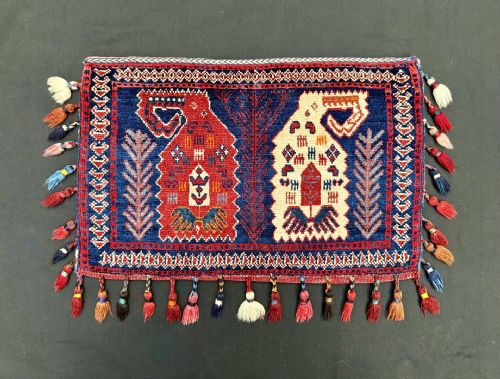
An afshar tribal wool bag encompasses utilitarian storage pieces, vanity bags, and saddle bags produced by nomadic and village weavers across the Kerman province in South Persia. These woven textiles serve functional roles in daily nomadic life, ranging from personal tobacco pouches to large saddle bag faces.
The selections encountered here span from the mid nineteenth century to the early twentieth century, representing traditional Persian tribal artistry. Common domestic and personal forms include salt bags, chanteh personal bags, and pipe bags originating from specific regional groups such as the Bardsir region and Jebal Barez mountains.
What varies in quality
Quality rests upon the fineness of the knotting or weave density and the handling of the wool material. Lustrous, luminous wool demonstrates superior fibre selection and preparation by the weaver.
The integrity and complexity of the regional design, such as clear boteh motifs and balanced natural dye colours, distinguish finer examples. Preservation of complete formats, including plain weave backs and original shell adornments, marks the higher tier of these weavings.
Production dates span from eighteen sixty through to nineteen twenty, representing decades of Persian nomadic weaving.
The Afshar Tribal Wool Bag Glossary
- Chanteh
- A small personal bag or pouch woven by tribal groups for carrying small possessions. These pieces often feature fine knotting and decorative face designs.
- Soumak
- A flat-weave technique where coloured weft threads are wrapped over and under the warp threads to create a textured, durable surface. This method produces crisp geometric patterns on bags and trappings.
- Boteh
- A traditional Persian teardrop or almond-shaped motif with a curved upper end, frequently seen on tribal weavings. It symbolizes life and eternity in textile design.
- Salt-bag
- A utilitarian storage container traditionally used by nomads to hold rock salt, characterised by a narrow neck and wide body. These vessels combine functional durability with intricate regional patterns.
- Kerman Province
- A historical weaving centre in South Persia known for producing distinct tribal and village textiles. The region encompasses specific districts like Bardsir and mountainous areas utilised by Afshar nomads.
Afshar Tribal Wool Bag: Frequently Asked Questions
What is an afshar tribal wool bag used for?
These woven objects served practical nomadic functions such as carrying personal items, tobacco, pipes, or salt during seasonal migrations. They functioned as portable storage within tents or as mounted saddle bags on animals.
Over time, collectors transitioned these utilitarian pouches into decorative wall hangings or table displays to appreciate the nomadic craftsmanship and regional dye work.
How do I care for a wool bag?
Protect the antique wool and cotton fibres by keeping the textile away from direct, prolonged sunlight to prevent natural dye fading. Gentle vacuuming with a mesh screen attachment helps remove dust without damaging the weave.
Avoid hanging heavy bags by a single point to prevent structural distortion of the foundation. Professional textile conservators should handle any necessary cleaning.
How can I tell the age of these bags?
Age is assessed through material characteristics like the use of hand-spun wool and authentic natural dyes typical of nineteenth and early twentieth century production. Structural clues, such as natural wear patterns on the pile and the presence of original cotton or wool backs, provide further context.
Stylistic elements and regional attributions recorded in the evidence help narrow down the period of manufacture between eighteen sixty and nineteen twenty.
Where were these textiles made?
Production centres on South Persia, specifically within the Kerman province and surrounding areas inhabited by Afshar nomads and sub-tribes. Specific locales include the Bardsir region and the Jebal Barez mountains.
These geographic zones fostered distinct tribal weaving traditions that utilised local wool supplies and traditional dyeing methods.