




Antique Tribal Textile Pouch
When selecting an antique tribal textile pouch, collectors encounter utilitarian woven receptacles created by nomadic and village makers across Persia, Central Asia, and the Caucasus.
Antique Tribal Textile Pouch
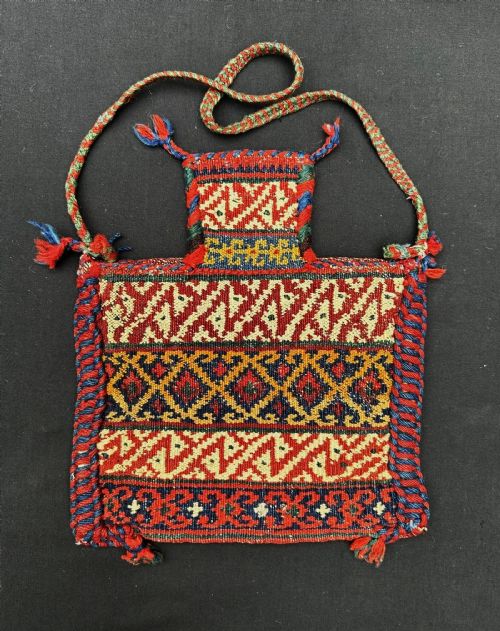
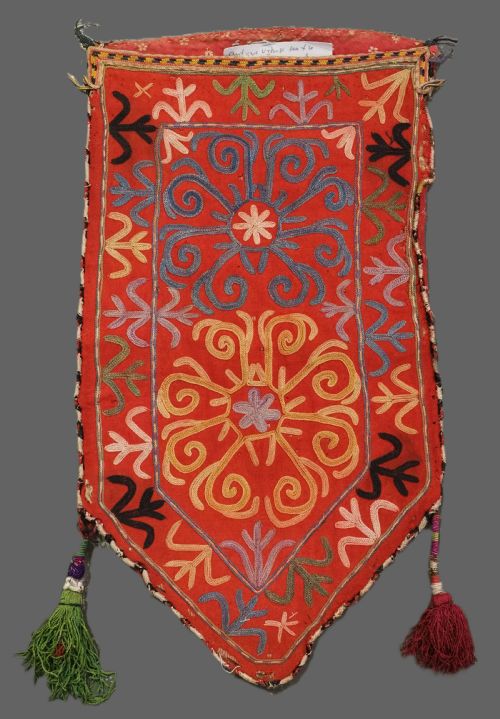
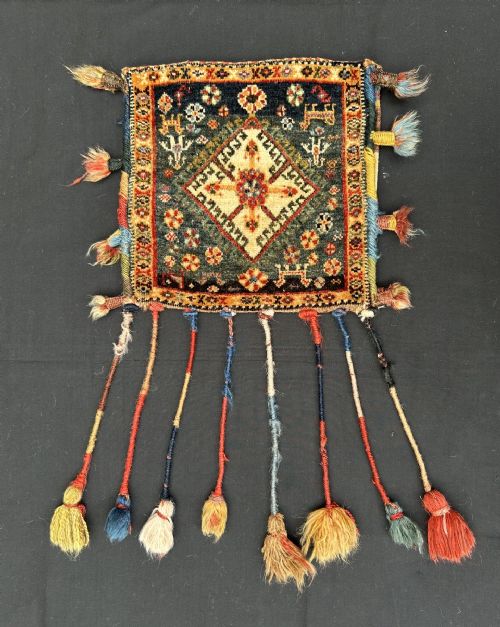
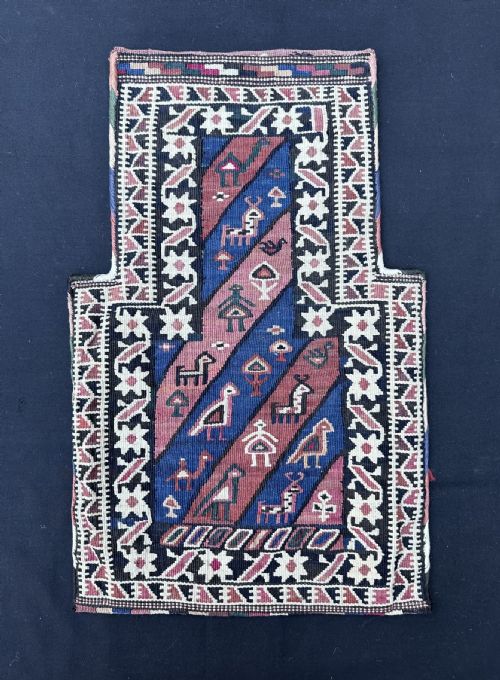
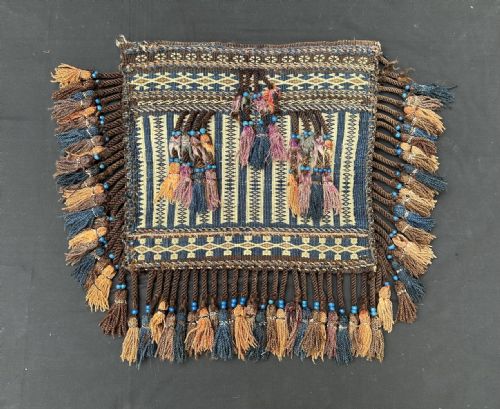
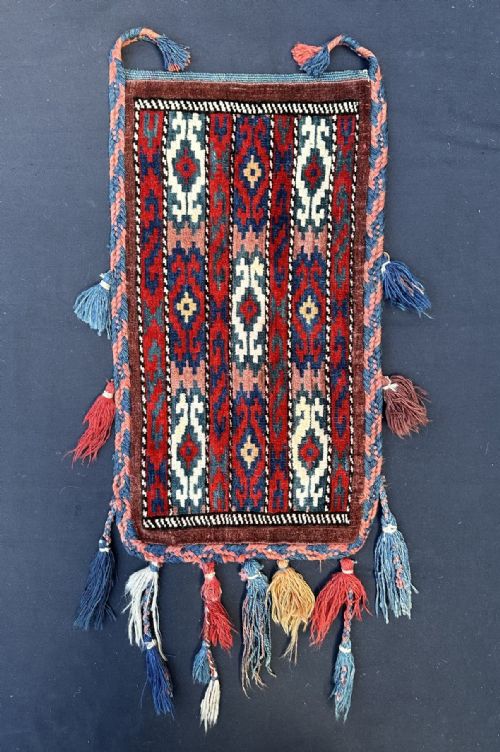
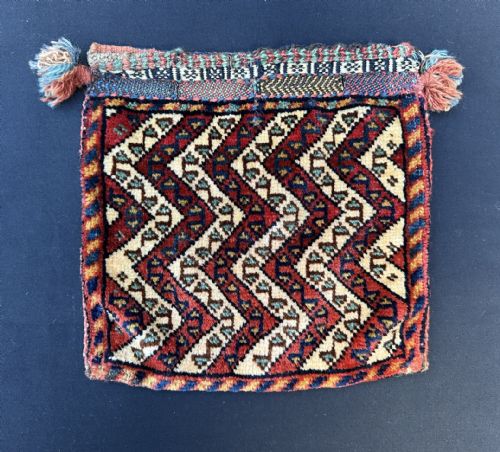
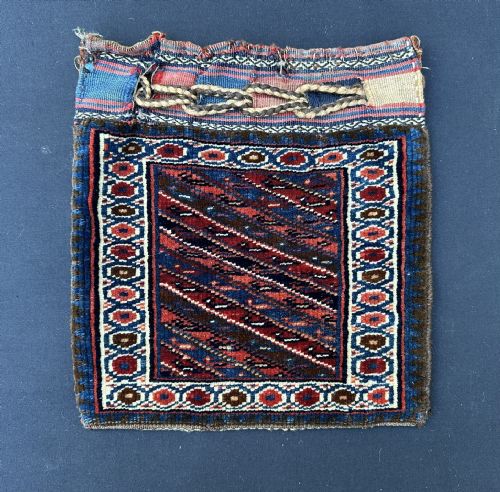
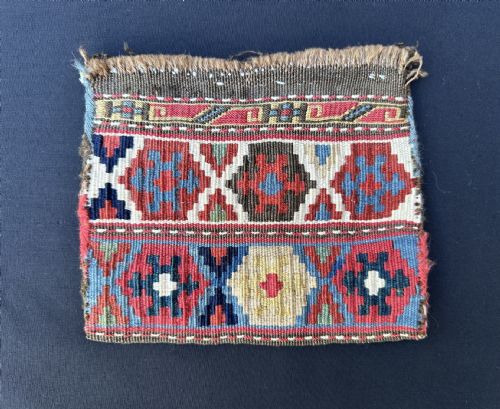
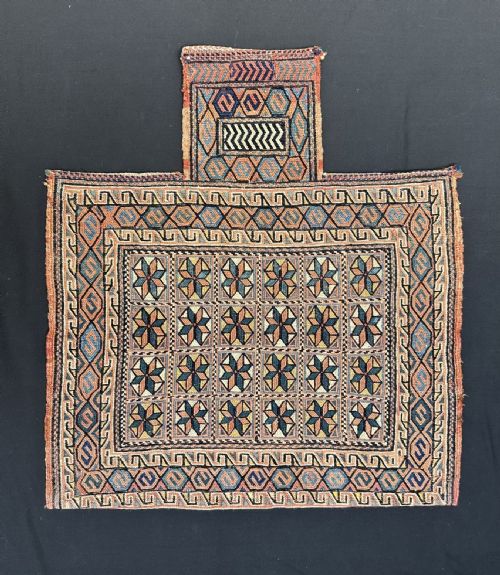
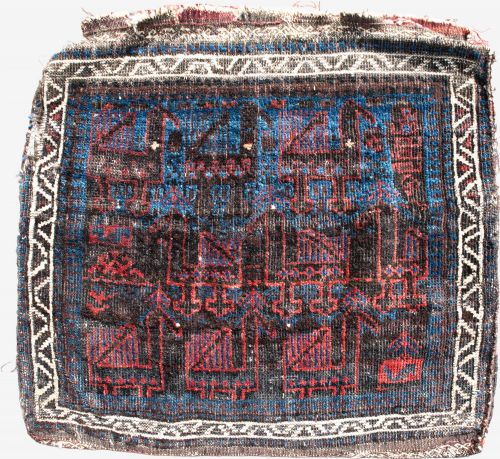
An antique tribal textile pouch encompasses small functional containers such as salt-bags, vanity-bags, and spindle-bags woven by confederacies including the Qashqa'i, Afshar, and Yomut Turkmen. These pieces served practical daily roles in pastoral households, functioning as transportable storage for personal items, salt, or spinning tools.
Most examples available belong to the late nineteenth and early twentieth centuries, reflecting regional weaving traditions from regions such as Fars, Kerman, and the Trans-Caspian steppes. The forms range from miniature saddle-bags and chantehs to double-faced hanging bags.
Makers utilised characteristic tribal geometries, animal motifs, and specific structural formats unique to their sub-tribes and nomadic groups. Surviving pouches frequently retain original plain weave backs or complete construction details that document their domestic utility.
Materials and construction methods
Weavers constructed these pouches primarily using hand-spun wool for durability, frequently incorporating cotton foundations and occasional silk highlights. Natural dyes provided the palette, producing deep reds, indigos, and earth tones that developed rich patinas over time.
Decoration relied on specialised techniques such as soumak work, banded weft work, and pile weaving. Artisans occasionally embellished surfaces with glass beads and cowrie shells to enhance the ornamental character of utilitarian objects.
Nomads wove diminutive salt-bags with narrow bottlenecks to ensure the salt stayed put even when bouncing across the steppes on a camel.
Factors of quality and distinction
Quality in an antique tribal textile pouch rests upon the tightness of the weave, the clarity of the natural dye palette, and the precision of the tribal iconography. Pieces exhibiting finely spun wool and complex structural techniques like soumak work display superior technical mastery.
Completeness significantly elevates an example, particularly the survival of original flat-weave backs, closing mechanisms, and suspension loops. The integrity of the tribal attribution, down to specific sub-tribes and confederacies, distinguishes standard utility pieces from exceptional textile art.
The Antique Tribal Textile Pouch Glossary
- Chanteh
- A small tribal woven bag or vanity pouch used by Persian nomads for personal possessions. These small receptacles often feature intricate pile or flat-weave designs.
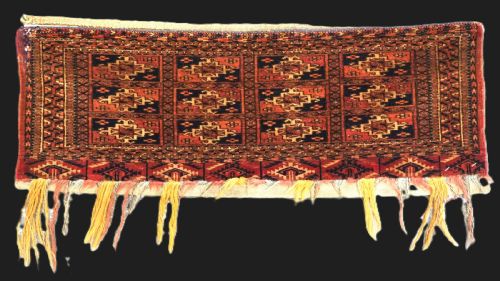
- Torba
- A Turkmen tent-bag or storage pouch traditionally hung against the yurt wall. They display characteristic gul motifs and precise geometric layouts.
- Soumak
- A flat-weave technique where coloured weft threads wrap around the warp threads in a continuous wrapping motion. This method creates a dense, durable surface with a braided appearance on the face.
- Namakdan
- A specialised Persian salt-bag characterised by a narrow neck and bottle-like profile designed to prevent salt spillage during migration. These were woven by groups such as the Afshar and Baluch.
- Igsalyk
- A specific Turkmen spindle-bag utilised for holding wool-spinning equipment. Yomut weavers produced these narrow pouches with plain weave backs.
Antique Tribal Textile Pouch: Frequently Asked Questions
What were antique tribal textile pouches used for?
Nomadic groups utilised these woven pouches for storing salt, tobacco, pipes, spindles, and personal vanity items during seasonal migrations.
Their compact formats allowed them to be hung inside tents or strapped securely to pack animals for daily transport.
How do I identify the tribe that made a pouch?
Attribution relies on specific structural characteristics, colour palettes, and repeating geometric motifs unique to groups like the Shahsevan, Baluch, or Uzbek Lakai.
Examining the border patterns and weaving techniques often reveals the specific regional confederacy or sub-tribe of origin.
How should I display a pouch in my home?
Many collectors mount these textile pouches flat against walls as fibre art or suspend them to showcase their three-dimensional construction and original backs.
Pouches with surviving suspension loops or complete double-faced formats adapt well to hanging display systems.
Why do some pouches feature shells and beads?
Makers added cowrie shells and glass beads to provide protective apotropaic qualities and decorative enhancement for valued personal containers.
These embellishments reflect the cultural traditions and aesthetic preferences of nomadic weavers across Central Asia and Persia.