




Aesthetic Movement Overmantel
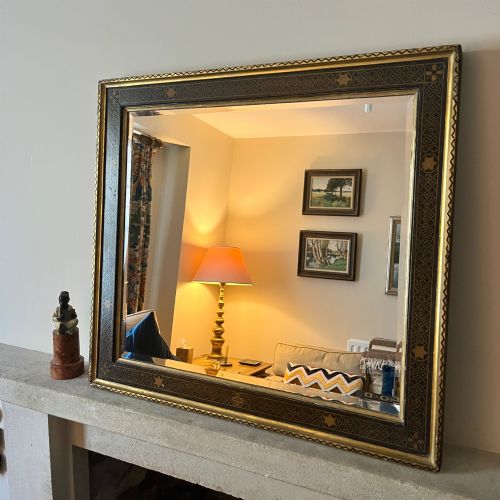
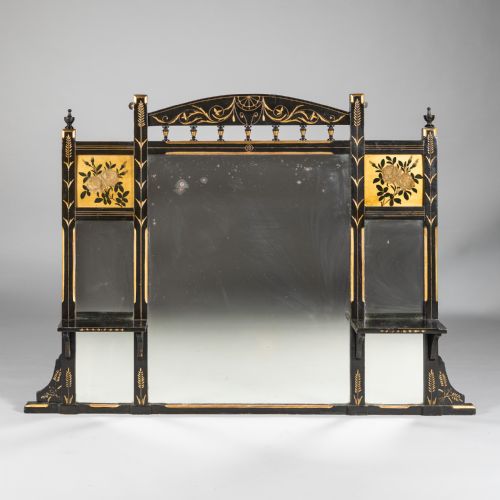
These aesthetic movement overmantel mirrors bring striking focal points to a room, offering rich ebonised finishes and gilt highlights that anchor a traditional fireplace.
Aesthetic Movement Overmantel
An aesthetic movement overmantel is a fireplace mirror designed to sit above a mantelpiece, drawing together the decorative philosophies of the late nineteenth century. These pieces primarily date from the Victorian era, specifically emerging around eighteen eighty and eighteen ninety.
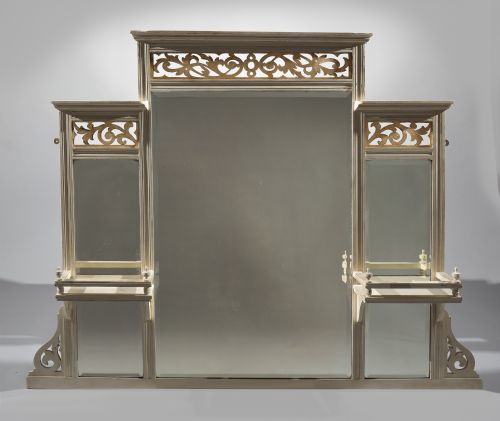
The version most commonly met on this page is the large ebonised wood mirror, frequently enhanced with parcel gilt or paint. Alongside traditional mirror glass, buyers also encounter related forms such as display cabinets and wall mirrors shaped by Victorian aesthetic and arts and crafts principles.
How they were made
Maker's workshops built these frames predominantly using woods such as walnut, oak, mahogany, and ebonised timber. These surfaces were frequently elevated through the application of gold leaf, parcel gilt, silvering, and paint.
Carved details and architectural mouldings define the construction, housing heavy mirror glass. The integration of display cabinets alongside mirrored glass demonstrates the joinery skills of the period.
One remarkably honest Victorian mirror frame arrived with enough historic soot trapped in the carvings to authenticate its fireplace origins.
What varies in quality
The distinction between standard examples and superior pieces rests on the depth of the carving and the sophistication of the surface finish. Finer pieces display meticulous parcel gilding or paintwork upon ebonised wood.
Proportion and scale dictate the visual impact of the overmantel within a room. Larger frames that maintain structural integrity and balanced decorative highlights stand apart from simpler wall mirrors.
The Aesthetic Movement Overmantel Glossary
- Ebonised
- Wood treated with a dark stain or finish to imitate ebony. This dark surface provided a stark contrast for gilt highlights.
- Overmantel
- A mirror or decorative piece designed to sit directly upon a mantelpiece. These items were essential centerpieces in Victorian drawing rooms.
- Parcel Gilt
- A technique where only specific portions of an object receive a coating of gold leaf. This selective application accentuates carved details.
- Aesthetic Movement
- A late nineteenth-century design style emphasising visual beauty over narrative subject matter. It drew inspiration from Japanese art and simplicity.
Aesthetic Movement Overmantel: Frequently Asked Questions
Where should an overmantel be hung?
These mirrors are traditionally positioned directly above a fireplace mantelpiece to reflect light and fill vertical wall space. They can also be secured to a main wall as a standalone focal point.
Ensuring proper wall fixings is essential given the substantial weight of the timber frames and mirror glass.
How do I date these mirrors?
Dating relies on examining the construction methods of the wood, the characteristics of the mirror glass, and the decorative style. Pieces associated with the aesthetic movement typically date from the late nineteenth century.
Stylistic markers like ebonised finishes and parcel gilt point directly to the Victorian period between eighteen eighty and eighteen ninety.
Are all these pieces made of ebonised wood?
While ebonised wood is common, the listings include alternative materials such as walnut, oak, and mahogany. Some examples feature painted surfaces or traditional giltwood.
Makers selected different timbers depending on the specific aesthetic or arts and crafts commission.
What is the difference between an overmantel and a wall mirror?
An overmantel is specifically proportioned to sit above a fireplace, often featuring a wide format to match the width of the mantel shelf. General wall mirrors are designed for independent placement across various room spaces.
Both forms utilise similar Victorian decorative styles and mirrored glass.