



Aesthetic Movement Mahogany Table
An aesthetic movement mahogany table brings structured simplicity and Anglo-Japanese line to a room through dark timber, slender supports and geometric tiering.
Aesthetic Movement Mahogany Table
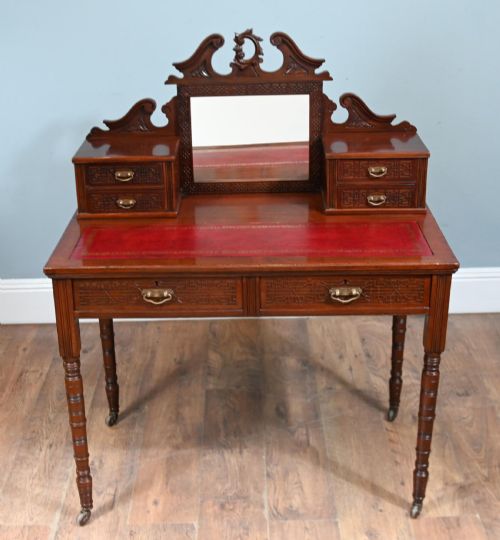
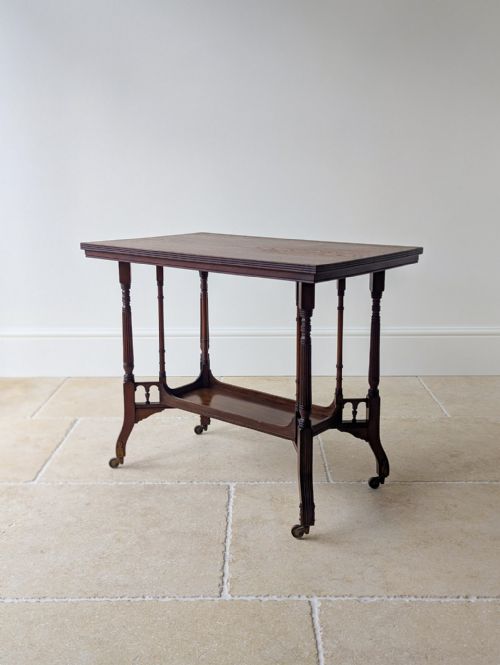
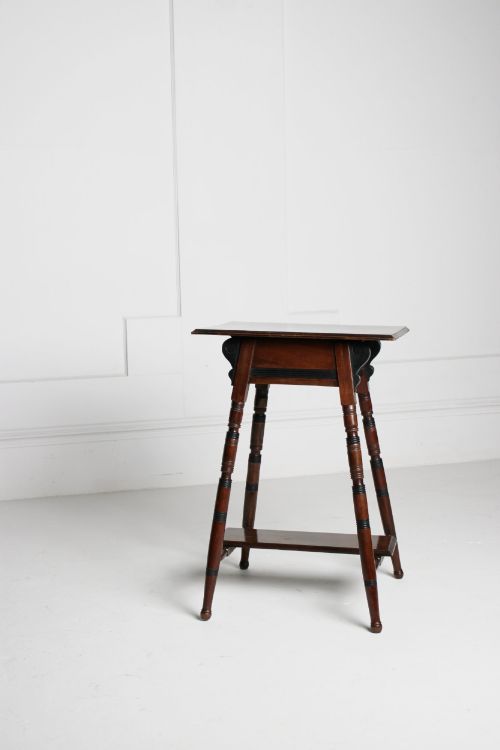
An aesthetic movement mahogany table takes many forms across the Victorian and Edwardian periods, appearing most often as an occasional table, side table, or writing desk. These pieces emerge primarily from the late nineteenth century, spanning decades from eighteen seventy into the early nineteen hundreds.
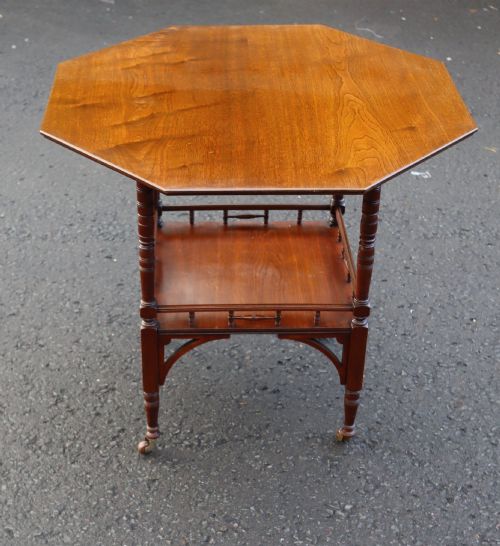
Buyers encounter two-tier occasional tables, circular tripod gypsy tables, and octagonal surfaces alongside desks, card tables, and washstands. Many items reflect the Anglo-Japanese style or draw inspiration from designers such as E W Godwin, blending functional utility with decorative restraint.
Materials and construction
Cabinetmakers constructed these pieces primarily from solid and veneered mahogany, frequently employing ebonised wood, satinwood, or brass accents to create contrast. Workshops utilised marquetry, inlay, and ceramic tile inserts to enrich flat surfaces without obscuring the grain of the timber.
Structural designs prioritize lightness and geometry, seen in slender turned legs, galleried tiers, and pagoda-inspired silhouettes. Joinery follows traditional nineteenth-century methods, supporting delicate multi-tiered frames and heavy writing surfaces alike.
Aesthetic Movement Mahogany Table Retail Price Guide 2026
Typical asking prices for aesthetic movement mahogany table among the pieces listed under this phrase on Sellingantiques today, from the lower quarter to the upper quarter. They describe what is for sale here now, not the wider market.
The listings show frequent use of multi-tiered formats, with two-tier and three-tier occasional tables appearing alongside side tables and writing desks.
Craftsmanship and design
Quality separates ordinary production from exhibition pieces through the precision of inlay, the choice of timber figure such as fiddleback mahogany, and the rigour of the design pedigree. Pieces associated with notable retail houses or specific architect-designers demonstrate superior execution in every joint and surface.
Design integrity governs the hierarchy, distinguishing standard multi-tiered tables from balanced works reflecting avant-garde artistic direction. The integration of secondary materials like brass hardware, leather writing inserts, or hand-painted ceramic tiles distinguishes the ambitious commission from the domestic staple.
Gregory & Co·Druce & Co London·Liberty and Co·George Faulkner Armitage·Marsh, Jones & Cribb·Collinson & Lock·Edwards and Roberts·Shoolbred
The Aesthetic Movement Mahogany Table Glossary
- Aesthetic Movement
- A late nineteenth-century design philosophy prioritising visual beauty over narrative or moral function. It drew heavily from Japanese art and simplicity of form.
- Anglo-Japanese
- A hybrid style combining British furniture construction with Japanese decorative motifs, asymmetry, and ebonised finishes. This aesthetic shaped much of the seating and table design of the period.
- Ebonised Wood
- Timber treated with chemical stains or pigment to imitate ebony. Cabinetmakers applied this finish to contrast against natural mahogany or satinwood.
- Fiddleback Mahogany
- A figured mahogany timber displaying a rippled grain pattern resembling the back of a violin. It commands attention for its optical depth under light.
- Tripod Table
- A small freestanding table supported by three legs radiating from a central pillar. These formats allowed for movable placement in Victorian parlours.
Aesthetic Movement Mahogany Table: Frequently Asked Questions
What defines an aesthetic movement mahogany table?
An aesthetic movement mahogany table relies on clean structural lines, dark timber surfaces, and decorative elements inspired by Japanese design rather than heavy Victorian ornamentation. These pieces often incorporate geometric tiers, brass details, or inlaid motifs.
Makers built them to serve specific domestic functions while satisfying late nineteenth-century artistic ideals. Their slender proportions set them apart from earlier, bulkier furniture styles.
How do I use a two tier table at home?
A two-tier table provides dual surface space without occupying a large floor footprint, making it suited for narrow hallways or beside seating. The lower shelf offers storage for books or decorative objects while the top holds lamps or tea items.
Their lightweight construction allows them to move easily between rooms as living arrangements require. They function effectively as plant stands or bedside surfaces.
How do I distinguish Godwin designs?
Pieces after designs by E W Godwin typically feature stark rectilinear frames, open shelving, and strong Japanese structural influences. Ebonised finishes and minimal turning characterise his approach to occasional furniture.
Original proportions remain exceptionally balanced, avoiding redundant ornamentation in favour of architectural clarity. Comparing pieces to documented drawings helps confirm their stylistic lineage.
What is fiddleback mahogany?
Fiddleback mahogany is a specialised cut of timber exhibiting a tight, undulating grain pattern that creates a striped optical effect. Cabinetmakers reserved this prized material for prominent surfaces on high-end desks and tables.
The grain catches light differently as the viewer moves around the piece, adding texture to otherwise plain planes. It signals superior material selection by the maker.
How do I care for ebonised wood surfaces?
Ebonised wood requires dusting with a soft dry cloth and protection from direct sunlight to prevent fading. Avoid using harsh chemical polishes that can degrade the dark surface treatment over time.
Maintaining stable room humidity protects the underlying mahogany from seasonal expansion and contraction. Minor scuffs respond well to specialist tinted waxes applied sparingly.