
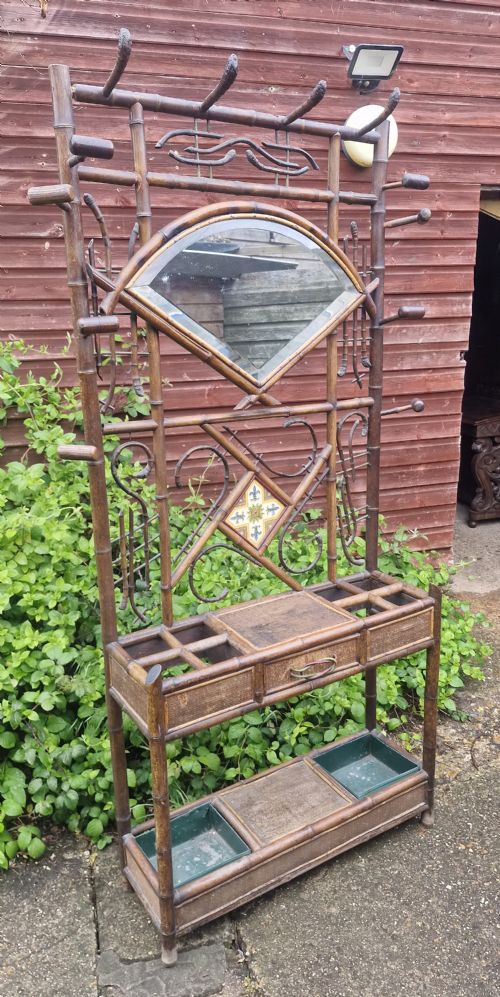


Aesthetic Movement Hall Tree
An aesthetic movement hall tree is a striking piece of hallway furniture combining utility and bold design, essential for a stylish entryway.
Aesthetic Movement Hall Tree
When you search for an aesthetic movement hall tree, you are looking at entrance furniture designed to hold coats, hats and umbrellas while setting a distinct visual tone in a home.
The pieces you are most likely to meet on this page date from the Victorian era and the nineteenth century, spanning periods such as 1860, 1890, 1900 and 1910.
Forms in this selection include hall stands, hallstands, and hall stand variants that reflect Victorian aesthetic movement and Arts and Crafts influences.
How they were made
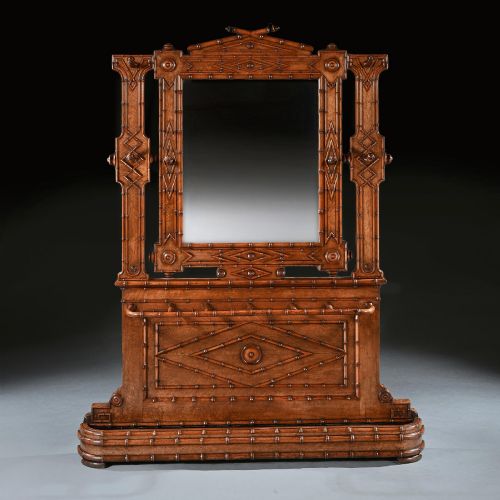
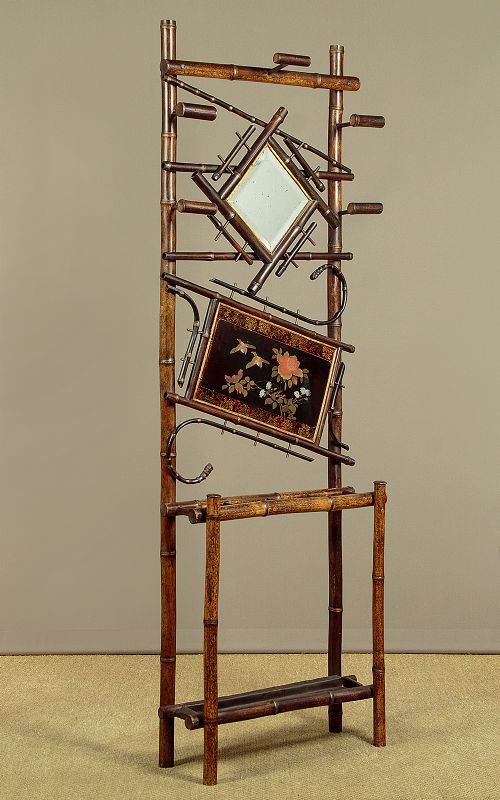
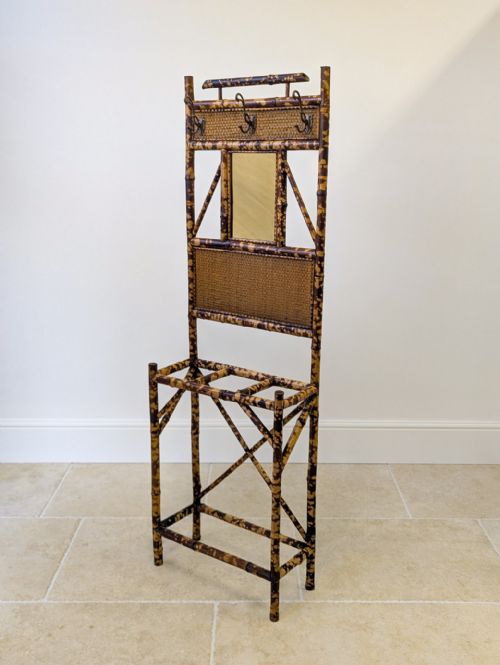
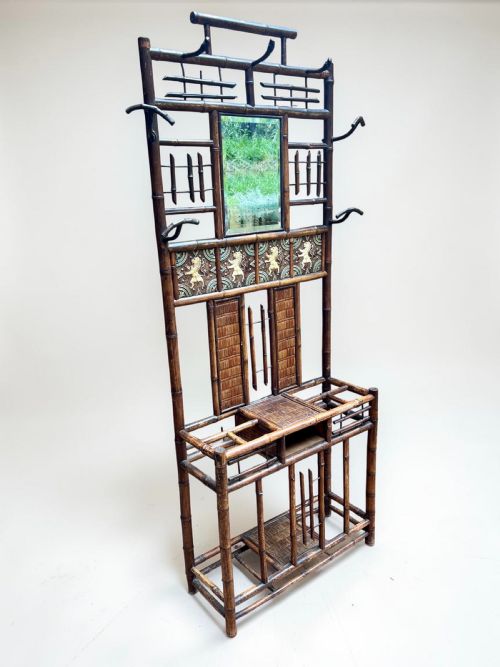
Maker construction relies heavily on bamboo and faux bamboo framework, sometimes paired with oak timber or birdseye maple.
Surface decoration incorporates ceramic tile panels, lacquered panels, glass, and mirror glass, alongside metal and brass elements for hooks and trays.
What varies in quality
Quality rests upon the ambition of the design and the integrity of the materials, distinguishing simple bamboo frames from large, impressive examples attributed to prominent makers.
Gillows·Ellen E Houghton·Minton·Christopher Dresser
The Aesthetic Movement Hall Tree Glossary
- Aesthetic Movement
- A late nineteenth-century design style emphasising visual beauty over narrative subject matter. It draws heavily on Japanese art and natural motifs.
- Bamboo
- A lightweight, flexible plant stem utilised extensively for structural framework and decorative framing. Faux bamboo replicates this organic look in turned hardwood.
- Hall Stand
- A piece of hallway furniture integrating coat hooks, a mirror, umbrella racks, and often a small glove box or drip tray. It anchors the entrance space.
- Japonisme
- The study and influence of Japanese art and aesthetics on Western works. This influence appears directly in forms, motifs, and lacquer techniques.
- Chinoiserie
- European artistic interpretation of Chinese and East Asian artistic traditions. It often manifests in decorative lacquered panels and pictorial scenes.
Aesthetic Movement Hall Tree: Frequently Asked Questions
What is an aesthetic movement hall tree?
An aesthetic movement hall tree is an entrance hall stand produced during the late nineteenth or early twentieth century. These pieces combine practical storage with the artistic sensibilities of the period.
They typically incorporate mirrors, umbrella stands, and coat hooks within a distinctive framework of bamboo, wood, or metal.
How were these hall stands used?
These pieces served as the primary greeting point in a Victorian hallway, holding outdoor garments and walking gear. Guests would place hats on hooks and leave umbrellas in the integrated stands.
The central mirror allowed individuals to check their appearance before stepping out into the street.
Where should I place one?
An entrance hall or spacious landing provides the ideal setting for this furniture, allowing it to function as intended. Ensure adequate wall clearance and protection from dampness if the umbrella wells are utilised.
Positioning the piece opposite a light source helps illuminate the central mirror and highlight the decorative details.
How do I identify the period?
Dating relies on examining construction methods, materials, and stylistic markers such as bamboo framing or ceramic tile work. Pieces often carry stylistic links to Victorian design and Arts and Crafts ideals.
Specific dates range from the mid nineteenth century through to the early twentieth century based on form and decorative flourishes.